
The Pack-A-Day Club, Reconsidered
Editor's Note: This article was first drafted in October 2017 and published in January 2018. Here we are
Editor's Note: This article was first drafted in October 2017 and published in January 2018. Here we are


"Constant procedural tinkering does not, I fear, lead to efficiency or simplicity." Long before the recently announced Forest
You, dear reader, are reading our Evergreen posts - (we love that) - for free (we would like to change

Before you read our latest article, join the 100 readers who support Evergreen.
If you’re reading this, you’re part of a much larger community that values independent forestry journalism and public education. If you are not a contributor - now is the time.
Evergreen is reader supported.
Articles like this - grounded in experience, accountability, and a clear-eyed look at forest policy - are made possible through reader support.
Independent journalism matters - especially when the subject is the health and resilience of our forests and public lands.
For more than 40 years, Evergreen has explored forestry, stewardship, science, and rural communities with curiosity and respect for the people closest to the land.
If you value our work, subscribe.
Support forest-to-community health.
Support Evergreen.
EDITOR’S NOTE:
Frank Carroll is President and Chief Forester, FRMc Wildfire Pros, Pueblo, Colorado. He is a long-time friend and colleague. His op-ed speaks for itself—and we agree with his interpretation of the newest Trump Administration regulations concerning the use of Potential Operational Delineations (PODS) in wildfire management on federal lands.
The U.S. Forest Service’s adoption of Potential Operational Delineations, or PODs, is now official. Chief Randy Moore’s successor, Chief Schultz, has endorsed the program, and the agency is moving forward. That means the public debate is no longer about whether PODs will be implemented. It now focuses on whether they will be used as intended—or misused in a far more dangerous way.
That question deserves urgent attention.
In theory, PODs are a practical planning concept. They divide the landscape into manageable units based on terrain, roads, ridges, rivers, vegetation patterns, and other operational features. Used effectively, they can help firefighters think ahead, recognize opportunities and constraints, and prepare for safer, smarter suppression. As a preplanning tool, PODs can support decision-making. They can help agencies customize responses to local conditions and improve communication before a fire starts.
That is the promise.
But in practice, many communities fear that PODs are turning into something else: de facto “big boxes,” predetermined burn zones that incident management teams can use to justify firing operations or allow large areas to burn under vague claims of “resource benefits,” “firefighter safety,” or “strategic opportunity.” In that version of the program, POD boundaries cease to be planning aids and start becoming preselected sacrifice zones.
That is not what the public was promised.
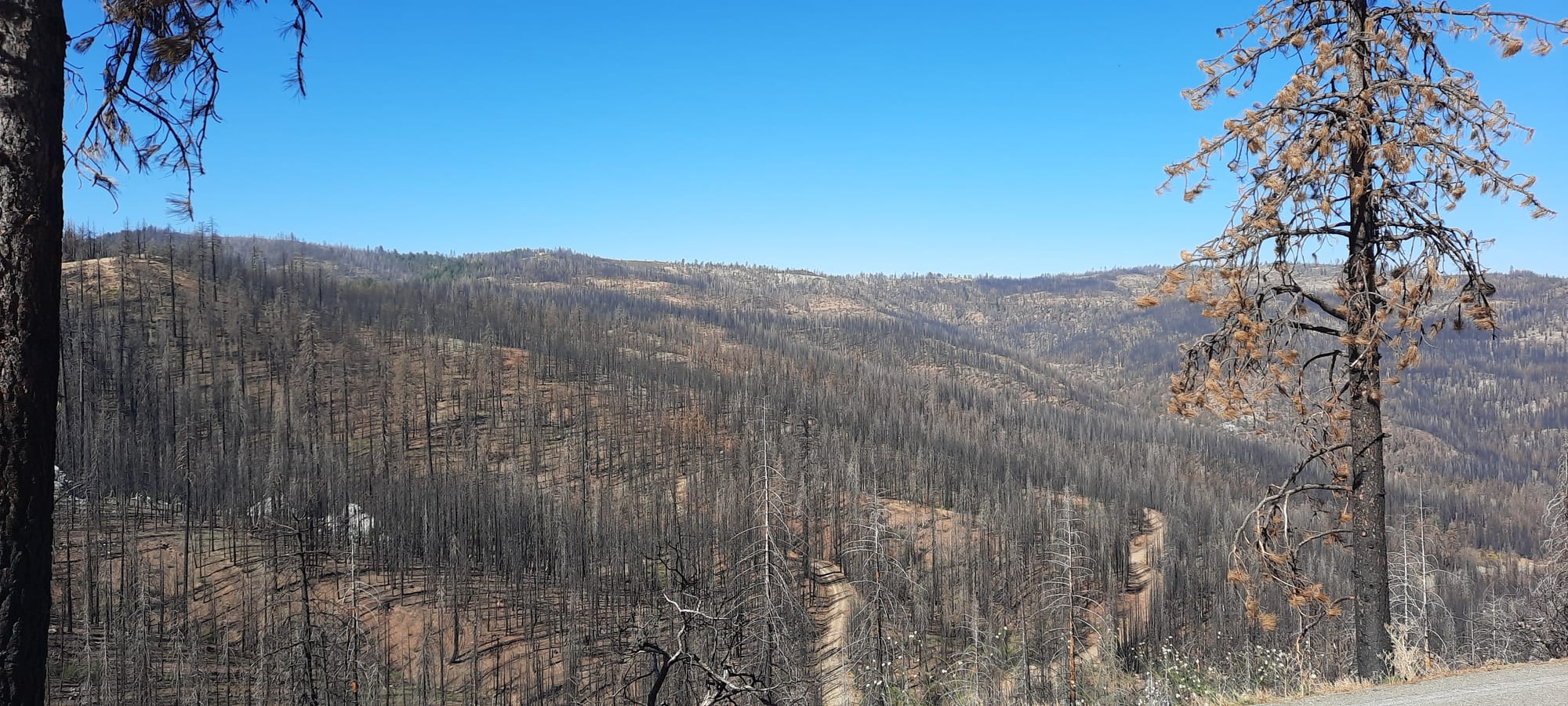
The concern is real, not hypothetical. In Northern California and beyond, residents have watched how wildfire-related language and policy have changed over time. Terms once clearly linked to emergency suppression now have more flexible meanings. “Full suppression” no longer always means what ordinary people believe it does. Agencies increasingly label fires as full suppression events even while using tactics such as monitoring, confinement, point protection, or strategic firing that fall short of direct suppression across the entire fire perimeter. The public hears one thing; the operational reality is often different.
The Forest Service can’t earn public trust with that kind of double-speak.
If a fire is fully suppressed, the goal is simple: contain and extinguish it as quickly as conditions safely permit. If, on the other hand, a team uses a mix of tactics to achieve broader land management objectives, the agency should state that clearly. That is not full suppression in the everyday sense of the term. It is a managed fire. The difference is important—to the public, to local governments, and to taxpayers.
PODs make that distinction even more crucial because they establish the framework for these decisions. If a POD includes or borders the wildland-urban interface, communities should insist that the default management approach is full suppression, year-round, with no ambiguity and no quiet shift toward modified tactics. If land managers believe part of that area requires fire for ecological reasons, it should occur only under prescribed fire conditions: defined boundaries, clear objectives, specific weather conditions, explicit start and end times, environmental compliance, and a detailed rehabilitation plan.
A wildfire during peak fire season is not a prescribed fire. It is not a controlled experiment. It is not a policy sandbox for testing abstract theories that “all fire is good fire.”
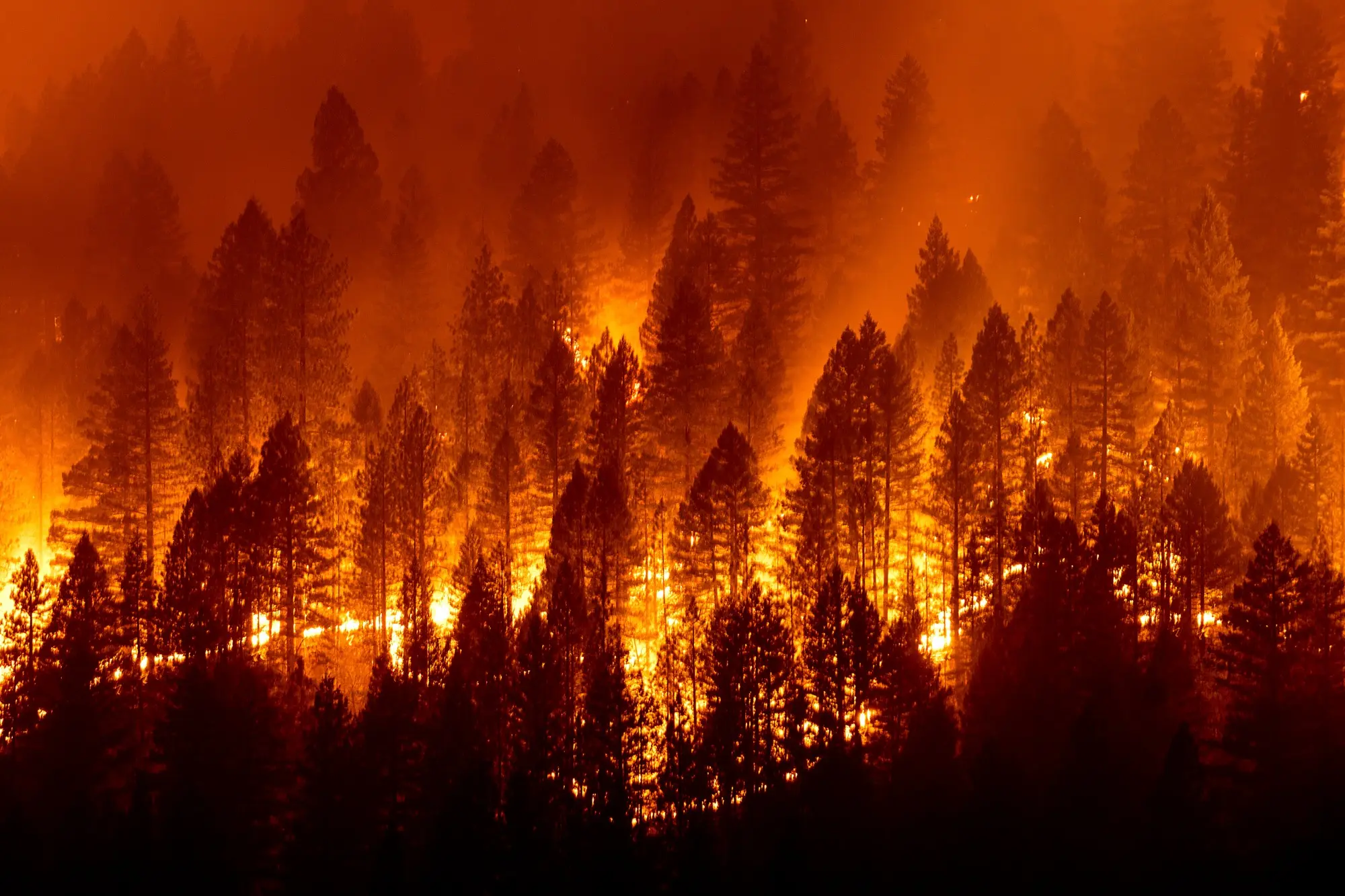
The recent history of Western fire management is full of cases in which fires tolerated under moderate conditions later escaped into extreme conditions and became months-long, destructive incidents. Once a fire is established and the weather shifts, the original reason for managing it often becomes irrelevant. At that point, what was framed as strategic restraint becomes a regional emergency. Communities are threatened, resources are depleted, and firefighters are stretched thin across multiple incidents. The costs—ecological, financial, and human—are borne not by theory, but by the public.
This is why PODs must not become a bureaucratic shortcut for insufficient suppression during peak season. A line on a map is not a scientific justification for burning everything within it. A POD is an operational planning unit, not a blank check. It was never meant to give incident teams permission to treat entire landscapes as disposable just because boundaries are convenient.
And yet, that is precisely the fear many residents harbor: that once a fire enters a POD, teams will increasingly rely on indirect line construction and firing operations to contain the fire, especially in remote areas where the agency can invoke “resource benefit” or “firefighter safety” with little real accountability. These concerns are heightened by incidents such as the Horton Fire story map, which shows how strategic line choices and firing operations can significantly alter outcomes across a landscape. These are important decisions, not neutral technical actions. When made under vague or shifting objectives, the public is justified in questioning whether PODs are truly supporting suppression—or replacing it.
There may be a valid role for flexibility in wilderness or remote backcountry areas. Some PODs may appropriately implement Minimum Impact Suppression Tactics, limits on retardant use, or other location-specific restrictions. However, honesty still matters. If the agency opts for modified suppression to meet land management goals, it should acknowledge that the fire is no longer being treated solely as an emergency. It has, at least in part, become a management operation. The public should not be misled about this.
That is why local input is crucial. Communities must play a meaningful role in POD planning before the next fire occurs. County officials, fire districts, landowners, and residents should know where POD boundaries are, what management responses are planned within them, and under what conditions tactics might shift from direct suppression to indirect or modified strategies. This cannot be just an internal mapping exercise followed by public relations afterward. If PODs are going to influence real-world fire decisions, they need genuine accountability.
The main guiding rule should be simple: uncontrolled wildfire threatens forests, watersheds, wildlife habitats, air quality, infrastructure, and human health. It should not be accepted as a normal part of managing public—and by extension, private—lands during peak fire season. We lack the resources, workforce, or reliable predictions to manage large wildfires safely and effectively under severe summer and fall conditions. We have repeatedly learned this lesson at great cost.
PODs could still be useful if they stay true to their original purpose: planning tools that enable quicker, safer, and more transparent suppression decisions. However, if they turn into preauthorized “big boxes”—areas where incident teams can ignite entire interiors or allow large sections to burn under vague objectives—the program will have shifted from an advancement in fire management to a dangerous bureaucratic cover-up of past failures.
The Forest Service says PODs are about better planning. Fine. Then the agency should prove it.
That means clear language. It means not pretending that modified suppression is full suppression. It means avoiding using emergency funding for what are essentially management fires. It means not treating communities near POD boundaries as collateral damage in a landscape experiment. And it means not allowing wildfire to burn during peak season for vague “resource benefit” goals that can quickly collapse under real fire weather.
The public can accept planning, but it should not accept surrender masquerading as strategy.
Your 100% tax-deductible subscription allows us to continue providing science-based forestry information with the goal of ensuring healthy forests forever.