
The Pack-A-Day Club, Reconsidered
Editor's Note: This article was first drafted in October 2017 and published in January 2018. Here we are
Editor's Note: This article was first drafted in October 2017 and published in January 2018. Here we are


"Constant procedural tinkering does not, I fear, lead to efficiency or simplicity." Long before the recently announced Forest
You, dear reader, are reading our Evergreen posts - (we love that) - for free (we would like to change

What follows is a two-part article — longer than our usual format — written with the hope that it offers meaningful insight into the histories and responsibilities that shape Evergreen’s work and mission.
If Evergreen’s value to you lies not only in the content, but in the fact that it comes from a trusted, vetted, and independent voice, we hope you’ll consider subscribing. Help us expand our voice to the places that need reliable communication about forests-to-community health.
When Evergreen uses words like science and stewardship, we are not talking about a single cultural method or an academic gate. We are talking about a braided approach:
Explanation does not create truth. The land does.
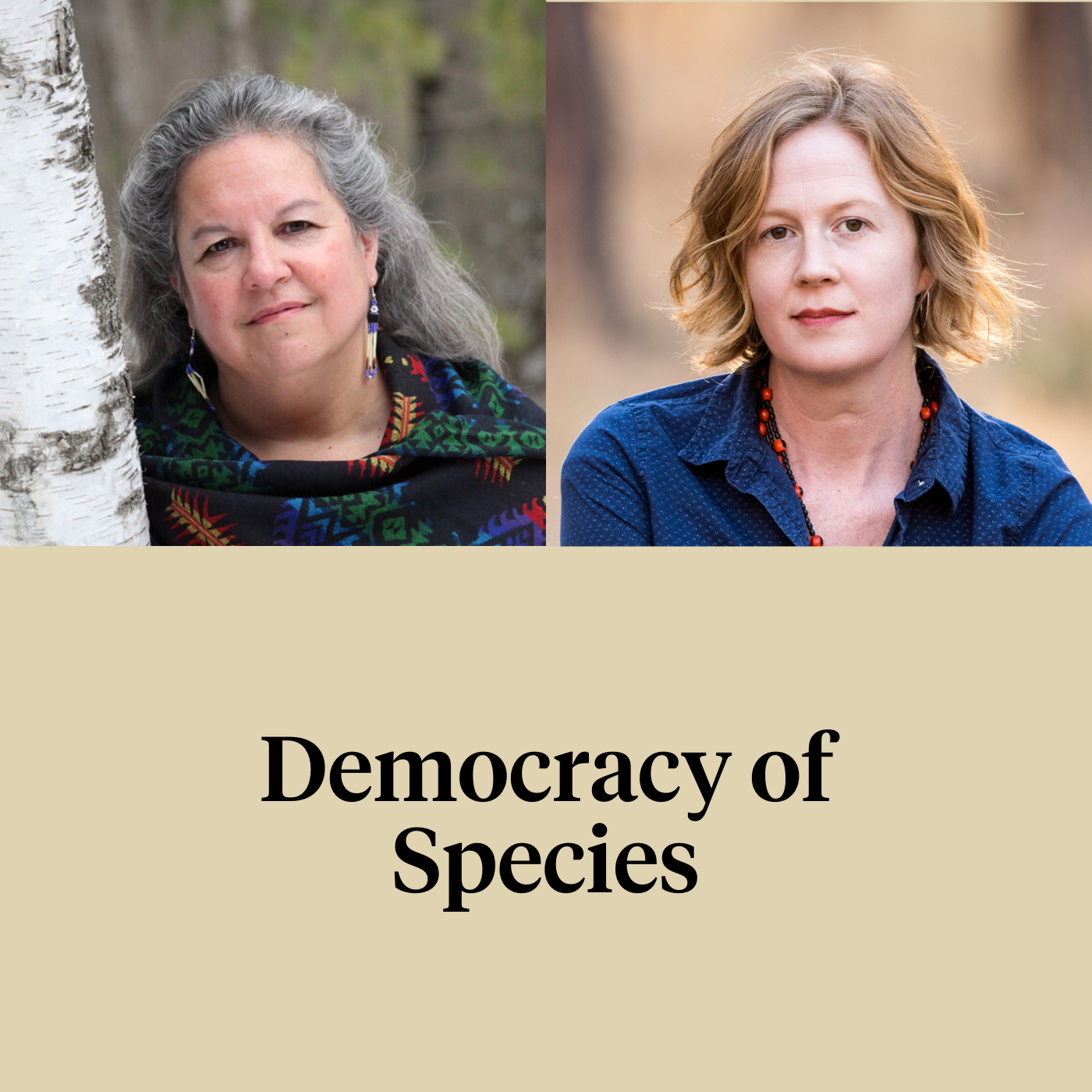
Robin Wall Kimmerer (Citizen Potawatomi Nation; ecologist and author) offers a clear image for this braid: a “knowledge garden” where Western science grows stronger when it is guided by Indigenous traditional knowledge rather than competing with it. Grand Canyon Trust
Evergreen’s position is simple: if a practice improves forest conditions and strengthens community resilience, it belongs in the center of a science-based conversation. Science that cannot learn from proven results is not science.
It is ideology.
Western science can be excellent at mechanism: how fuel loads change fire behavior, how thinning alters stand density, how hydrology and habitat respond over time. Indigenous stewardship adds the throughline modern institutions often lack: what it means to live as a good relative in a living world.
Kimmerer’s essay “The Serviceberry” frames reciprocity as an ecological and social ethic: harvest is not only taking, it is participating in a relationship where giving back is part of staying in balance. Emergence Magazine
This is not sentimental. It is operational. It is what makes management durable.
A core Indigenous principle that matters directly for forestry is this: rights require responsibility. Stewardship is not merely “having access” to land and resources. Stewardship is being accountable to what that access produces over time.
The “Honorable Harvest” teachings, as widely summarized in Kimmerer-related discussions, include practical rules such as taking only what is needed, minimizing harm, and reciprocating the gift. YES! Magazine These teachings are a direct corrective to extractive logics that treat forests as inventory instead of living systems.
Evergreen’s belief in forest-to-community lands here: communities are healthiest when their forest relationship is honest, reciprocal, and accountable. When forests are mismanaged, communities pay in cascading ways: lost resilience, lost local opportunity, increased hazard, and long-term ecological repair costs that are never fully recovered.
Evergreen does not operate from an anti-human story. People can harm forests, and people can heal forests. Indigenous stewardship does not treat “man” as the enemy; it calls humans back into membership and obligation.
The braid matters because technical capacity without responsibility produces the very problems we then attempt to solve with more capacity. Stewardship requires tools, yes, but it also requires ethics that constrain what we do with those tools.
Evergreen exists to make the cause-and-effect relationship between forests and communities visible, credible, and usable. That includes:
This is what “science-based” means to us: evidence, clarity, and responsibility braided into a standard the forest can verify.

At Evergreen, we see forestry as a braided practice - where science, responsibility, and legacy are inseparable - where Indigenous and Western knowledge systems both carry essential truths.
This belief is not abstract for me. I inherited it.
My father was a forestry economist and founder of Wesley Rickard Incorporated (WRI). He was recognized, in his era, as one of the best. I grew up listening to stories of the projects and cases he worked on - watching him work alongside Tribes, others in the forestry field, attorneys, and policymakers. His guiding intention was to ensure that the truth about forests must be measurable, defensible, and just.
For Wes, tribal forestry was never romanticized or dismissed.
It was respected - because it worked.
When federal mismanagement violated treaty promises, he revealed the harm—in verifiable economic terms that stood up in court and in Congress.
I very proud of my father's work, his principled way of going after the truth, and what he accomplished. He never spent a lot of time basking in his success - that wasn't his way. Once he had done what he had set out to do, he was on to the next challenge.
Evergreen’s work—our insistence on science, our advocacy for Indigenous stewardship, and our refusal to treat forestry as ideology—is rooted in the understanding that forests live within systems of law, economics, power, and culture, and that responsibility must match impact.
Our guiding question — “What do you want from your forest?” — began with my dad.
He believed that you can only get what you want from a forest if you are willing to work within the principles that sustain it: ecological health, economic viability, and social responsibility.
For him, stewardship was a discipline — a set of practiced commitments that make the outcomes you desire possible.
It was also a contract: if you want something from your forest, you owe it what it needs to stay alive.
In federal hearing documentation, WRI is identified as the appraiser/analyst whose report was part of settlement documentation for Nelson Act timber losses. The record describes years of historical reconstruction work and references “over 300 boxes of research” supporting market-based appraisal methods. GovInfo+1
Related committee testimony also describes Wesley’s role as providing consulting, analysis, and expert witness support tied to historic mismanagement and damages, including fair market value work and band-by-band loss differences. Natural Resources Committee
A Senate-posted testimony document likewise references the Tribe commissioning Wesley Rickard, Inc. and includes the band damage percentages used in the narrative of distribution debates. Indian Affairs Committee
Shee Atiká’s published corporate history describes hiring Wesley as an independent timber appraiser and contrasts the “Rickard appraisal” figure (noted as $176.7 million) with an IRS-commissioned appraisal (noted as $67 million). Sheeatika
Stewardship is more than a sentiment. Stewardship also has a spreadsheet-and-statute side, because real forests live inside real governance systems.
Academic work on Indigenous influence in forestry cites WRI-authored management review reports for the Menominee Tribal Forest (1986). UW Courses “Indigenous influence on forest management on the Menominee Indian Reservation” (Trosper 2007)
Indigenous stewardship can be measured without being diminished—made legible to outsiders while still rooted in relationship and responsibility.
A BYU / Harold B. Lee Library finding aid includes a collection structure that references “Wesley Rickard – Reports and Materials” and contains tribal headings/strings such as Crow, Yakama, Yankton, and Goshute references. Harold B. Lee Library
Separate institutional records at the University of Washington include an entry for a “Wesley Rickard Report (Jan. 1972)” in College of Forest Resources records. Archives West
These records reflect the same approach Evergreen brings to stewardship, land use, and conservation: rigorous analysis, clear valuation of consequences, and accountability when forests and rights are mishandled. That is not abstract. It is the foundation of forest-to-community health.
Many people think of legacy and inheritance as wealth, property, or reputation. My father believed that you pass on is not what you possess, but the responsibility you are willing to carry. We inherit the forest and the work that keeps it alive and vibrant.
His career reflected that ethic. He didn’t see forests as resources to be optimized for just the present, but as systems with histories, obligations, and consequences. His work made damage visible, quantified loss, and insisted that those who benefited from the forest were accountable for what they did to it. Evidence wasn’t just data; it was a means of making responsibility real.
Evergreen’s work has always embraced this philosophy. We treat science as a tool for responsible relationships, not as a neutral exercise or ideological weapon.
Our commitment is simple and demanding: if you want something from your forest, you owe the land what it needs to remain healthy, productive, and resilient.
We do not inherit this work for ourselves; we inherit it so there is something for next generations to inherit.


Curiosity, Connecting the Dots, and the Work of Stewardship I have written several articles that touch on the value of

This is a repost of the second half of Braided Stewardship: Science, Responsibility, and Legacy. In hindsight, if I had

A century after the conservation idea took root, its renewal lies where it began — in connection, community, and care for one another and the land.

Our mission is public education as it relates to all things forestry. Your support ensures we can provide the quality
Your 100% tax-deductible subscription allows us to continue providing science-based forestry information with the goal of ensuring healthy forests forever.