
Playing with Fire
Before you read our latest article, join the 100 readers who support Evergreen. If you’re reading this, you’re
Before you read our latest article, join the 100 readers who support Evergreen. If you’re reading this, you’re

From Wild Bill Hagenstein to the Big Bang, a reflection on curiosity, science, and belief. A Question from a Reader.
Bill Hagenstein and I were friends for 43 years. He inspired my early interest in forestry. I first interviewed him

We recently came across a spirited exchange between two people we do not know—but wish we did.
The debate unfolded in dueling op-eds written by Dustin Miller, Director of the Idaho Department of Lands, and Dr. James Lea, a Coeur d’Alene physician and board member of the Priest Lake Nordic Club.
Dr. Lea’s piece, published in the Idaho Capital Sun, accuses the Idaho Department of Lands and the Land Board of mismanaging Idaho’s endowment trust lands and concludes that “our schoolchildren’s sacred trust is being profaned.”
Miller’s response directly challenges those claims, outlining the constitutional mandate, fiduciary responsibilities, and science-based management practices that guide IDL’s work.
Together, the two articles offer a revealing snapshot of a familiar and recurring tension in the West: how public forests are understood, how wildfire risk is perceived, and how uncomfortable facts are often received when they collide with deeply held beliefs.
That tension is not new at Priest Lake.
In a 2015 Evergreen interview, Liz Johnson-Gebhardt, then Executive Director of the Priest Community Forest Connection, described many of the same conflicts now resurfacing—between scenic preservation and active management, between fear of change and fear of fire, and between emotional certainty and ecological reality. Her perspective remains both instructive and, at times, surprisingly prescient.
Together, these voices—separated by perspective but rooted in the same place—frame a debate that is not really about personalities or politics.
It is about land, responsibility, and the obligations that come with both.
To understand what is at stake at Priest Lake—and why the facts matter—we have to begin with what Idaho’s trust lands are, how they came to be, and what the state is legally and morally required to do with them.
The Idaho Department of Lands (IDL) manages 2.5 million acres of Endowment Trust Lands granted to Idaho by President Benjamin Harrison when Congress approved Idaho’s statehood petition on July 3, 1890, under Article IV, Section 3 of the U.S. Constitution.
The driving forces behind westward expansion were the Homestead Act and the Pacific Railway Act, both signed in 1862 by President Abraham Lincoln. Homesteaders received 160 acres either outright for $1,200 or for $18 if they agreed to live on and improve the land for five years.
Statewide, 60,221 homesteads were granted, spanning approximately 9.7 million acres. Idaho received 2.5 million acres of Public Domain land, and Boise became a major transportation hub for the Union Pacific—one of the two railroads involved in building the first transcontinental railroad.
Today, Idaho’s endowment assets—including its timberlands—fund public schools, an agricultural college, a normal school, several charitable institutions, penitentiaries, the State Hospital South, a School of Science, the University of Idaho, and Idaho’s Permanent Capital Fund.
IDL sustainably harvests more than 100 million board feet of timber annually from Trust Lands forests in Bonner County. Most of IDL’s timberlands are located in northern Idaho and are major contributors to Trust Fund revenue shared by multiple public institutions. Priest Lake lies entirely within Bonner County.
This information rarely sees the light of day. As a result, many Idahoans believe their taxes fund these institutions. As Miller points out in a recent op-ed, Idaho’s trust lands are “managed by Idahoans with care and scientific vigor.”
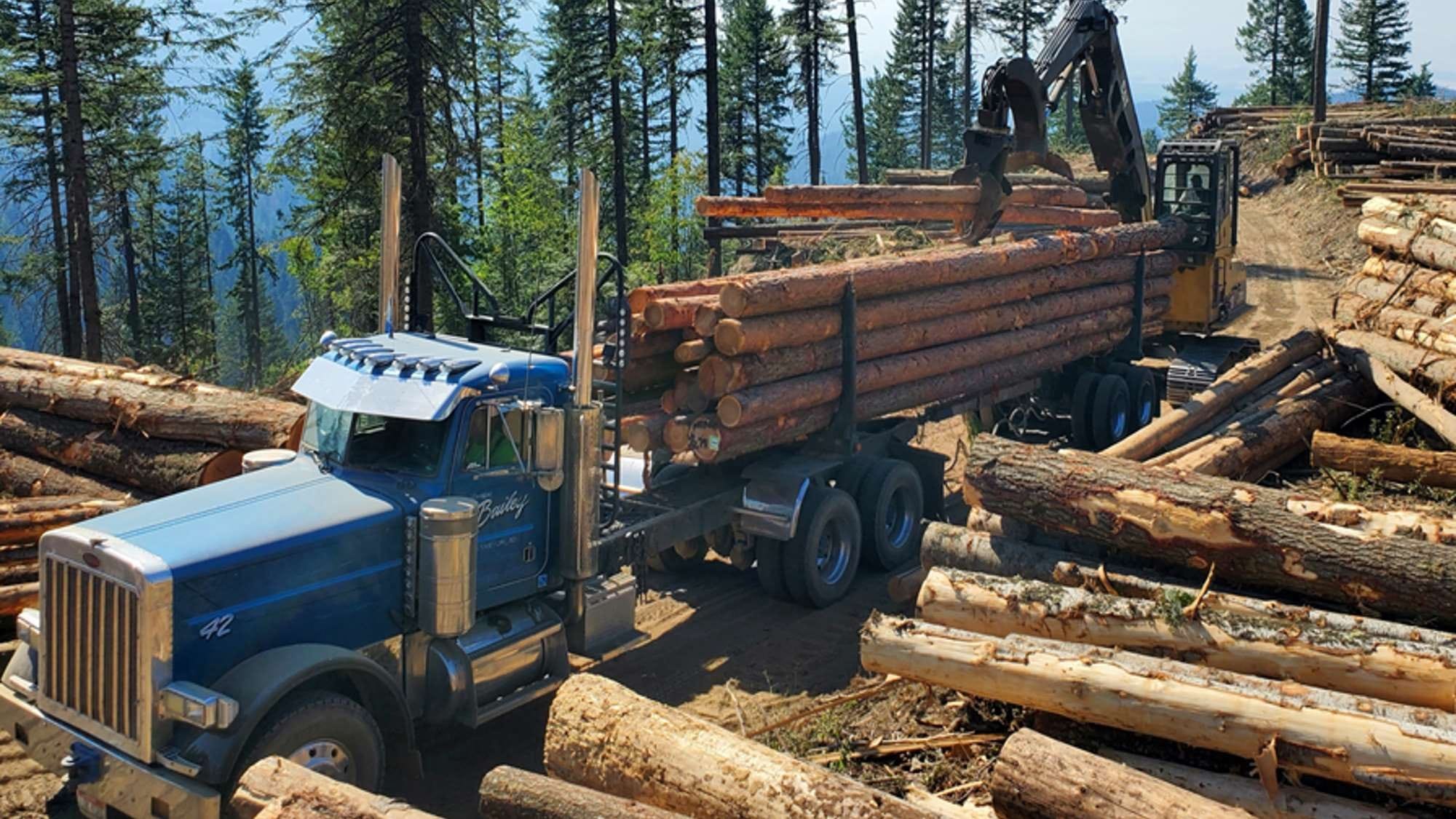
We are well acquainted with the brouhaha at Priest Lake that prompted Miller’s op-ed. More on that in a moment—but first, the backstory.
Several years ago, IDL invited Julia and me to attend a meeting at the Forest Service Ranger District office on Highway 57 north of Coolin. IDL foresters explained a thinning project planned west of a turf airstrip near Coolin—an airstrip that doubles as a snowmobile race track during winter.
The objective was straightforward: reduce wildfire risk in areas surrounded by homes.
“Thin the threat,” as the Idaho Forest Products Commission has long said.
Not everyone around Priest Lake agrees.
A vocal few believe “their” forests should be left entirely to nature, wildfire included. They enjoy the lake’s beauty and do not perceive wildfire as a serious risk.
The last major wildfire here occurred in 1967, when the Sundance Fire burned roughly 56,000 acres of old-growth forest. It was a wind-driven inferno that crested Sundance Mountain around 11 p.m. on September 1.
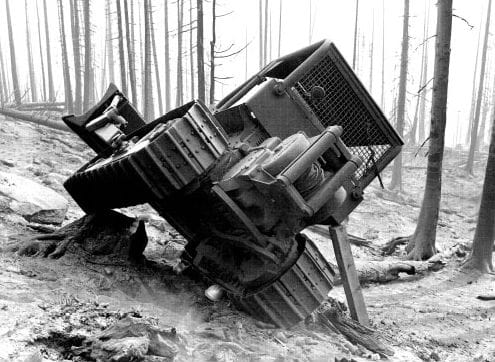
I watched it from the swimming dock at Hill’s Resort on the west side of Priest Lake, unaware that it had already killed two firefighters sheltering beneath a bulldozer. Fish were boiled alive in Soldier Creek. A steel bridge across upper Pack River was twisted into scrap.
Two Sundance Fire firefighters—Luther Rodearte, 36, and Lee Collins, 53—died that night. It is believed the fire consumed the oxygen beneath their bulldozer before flames reached them.
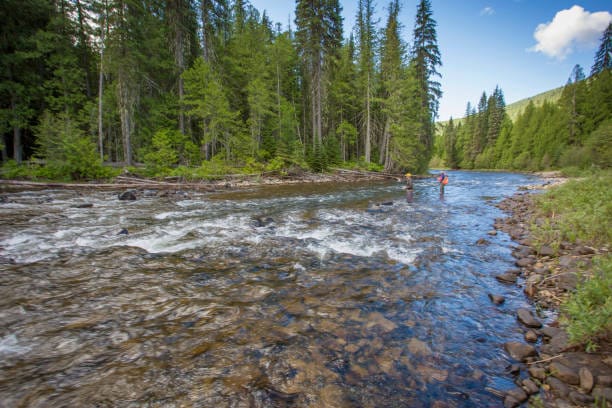
My late father and I fished Granite Creek, Soldier Creek, and the Priest River more than sixty years ago.
Back then, the view from Highway 57 into the river canyon south of the lake’s outlet was spectacular. Today, if you drive from Priest River north to Nordman—a distance of 36 miles—you see little beyond dead and dying cedar, pine, larch, and fir lining both sides of the road.
Granite Creek and Soldier Creek were once exceptional fisheries. The entire Soldier Creek drainage was destroyed by the Sundance Fire. Its cutthroat trout were boiled alive.
At least half a million acres on both sides of Priest Lake now fall into what fire ecologists classify as Condition Class 2 or 3.
Summer homes, resorts, and large state and Forest Service campgrounds line both sides of the lake—most within federally designated Wildland-Urban Interface zones.
These are fire traps—plus.
IDL owns and manages approximately 4,000 acres of timberland in Bonner County, much of it interspersed among homes built on private and leased land.
Protecting those trust assets from insects, disease, and wildfire is not optional—it is a fiduciary obligation.
That obligation explains IDL’s participation in the Forest Service’s Lakeface-Lamb Creek Land Stewardship Project—and Dustin Miller’s detailed rebuttal of an op-ed published last November in the Idaho Capital Sun by Dr. James Lea.

Dr. Lea accuses IDL and the Land Board of mismanaging trust assets, concluding that “our schoolchildren’s sacred trust is being profaned.”
We agree Idaho teacher salaries must remain competitive. Governor Brad Little has taken steps in that direction, and both salaries and trust land contributions to education are increasing.
But many of the facts cited in Dr. Lea’s op-ed are simply incorrect.
Trust forests are not senescent, as he claims. Senescent forests are in biological decline. IDL’s trust responsibility requires maintaining healthy, productive forests to ensure long-term revenue and ecological resilience.
Dr. Lea also asserts that public and private forestland owners—including Weyerhaeuser—manage forests on an 80-year rotation.
That has not been true for decades.
Weyerhaeuser’s current rotation age in high-site Douglas-fir forests in western Oregon and Washington is 29–35 years. IDL’s rotation ages range from 35 to more than 85 years, depending on site-specific data, including LiDAR analysis.
“There is no arbitrary timeframe. Rotation age is determined by site-specific biological growth, sustainability modeling, and long-term revenue considerations—not a single statewide target.”
— Dustin Miller
Miller also challenges Lea’s claim that IDL is dangerously reliant on timber.
We do not know a single forest landowner who has lost money by purchasing timberland, investing in regeneration and thinning, allowing trees to grow longer, and producing higher-quality wood at final harvest.
IDL also diversifies its portfolio through commercial leasing, land exchanges, and limited disposition of assets, including timberland.
Some summer residents are alarmed by the checkerboard appearance of lands west of Priest Lake. Much of that pattern reflects railroad-era land grants nearly 150 years old. The Forest Service conducts little harvesting here; most activity consists of collaboratively developed thinning projects designed to reduce wildfire risk.

Dr. Lea rightly praises engineered wood structures such as ICCU Arena at the University of Idaho and the new concourse at Portland International Airport.
What he appears not to realize is that both required high-quality second- and third-growth timber harvested from state and private forests.
Yes—just like Idaho’s trust lands.
Facts are not about popularity.
Idaho’s trust lands exist to serve real people, real communities, and real institutions—over the long term. Responsible management requires confronting uncomfortable realities about fire, forests, and risk. Ignoring those realities may feel virtuous, but it fails the obligation that stewardship requires.
Evergreen is supported by readers who value independent, science-based forestry reporting.
(Donate or Subscribe)
Your 100% tax-deductible subscription allows us to continue providing science-based forestry information with the goal of ensuring healthy forests forever.