
Counting the Cost
A congressional inquiry into 19 environmental organizations deserves scrutiny - as do the claims about their litigation practices. Are you a
A congressional inquiry into 19 environmental organizations deserves scrutiny - as do the claims about their litigation practices. Are you a

Rob DeHarpport makes the case for a clear, honest national campaign showing Americans what catastrophic wildfire is costing our forests,
What the hell is wildfire economics? The answer runs from firefighting aircraft and litigation to salvage logging, sawmills, replanting, and

Every Evergreen story takes time and money to report and publish. Those costs don’t disappear just because they go uncounted.
If Evergreen is going to stick around, we need your help. We can’t survive on faith and wind pudding.
Count the cost.
Subscribe today and be part of what happens next for Evergreen.
Subscribers receive access to many of Evergreen’s back issues in our Archives.
Our archives hold a deep record of forestry reporting, history, policy, people, and practice.
Prefer PayPal?
You can set up an ongoing donation.
Bruce Westerman, chairman of the House Natural Resources Committee - and, according to his office, the only licensed forester in Congress - has opened a congressional oversight investigation into nineteen environmental organizations.
On September 4, the committee announced that it had sent the organizations letters seeking written answers and in-person testimony about their business practices and their use of taxpayer-funded fee awards. That is an inquiry, not a finding of wrongdoing. The answers matter. So does the evidence behind the allegations.
The timing is hard to ignore. The northern spotted owl was listed as threatened on June 26, 1990. Since then, federal forest policy, litigation, wildfire, and the loss of mature forest have been argued over for more than three decades. But the timeline alone does not prove that lawsuits caused the fires or the damage.
If Congress wants to establish what litigation has delayed, changed, or prevented, it needs project-by-project records and outcome data - not slogans from either side.
That is the question we began examining in Mike Garrity Can't Count:
What happened after nine forest projects were challenged, and what remains uncounted?
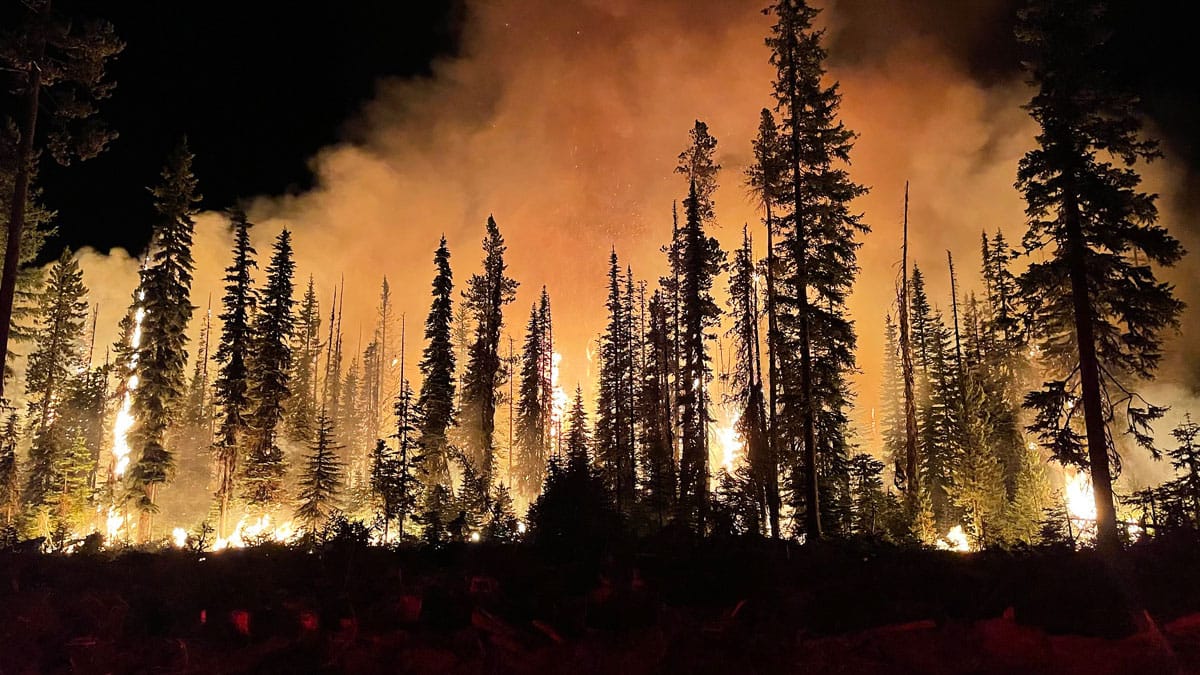
The National Interagency Fire Center’s national series reports 212,592,856 acres burned in wildland fires from 1990 through 2025.
That is the sum of annual reported acreage across the country. NIFC cautions that its current reporting series begins in 1983; it does not provide comparable official figures before then.
That number is enormous. It is also easy to misuse.
The figures cover wildland fires nationwide, not only federal forests. They are annual totals, so a place that burns more than once can be counted more than once. They do not establish that 212.6 million unique acres were lost, that all the acreage was forest, or that it was all left untreated after a fire. And subtracting the National Forest System’s roughly 193 million acres from the cumulative fire total does not tell us how many acres reburned.
Those distinctions do not make the fire record less serious. They make accurate accounting more important.
How much burned forest was replanted?
Where was salvage logging appropriate and completed?
Where did fuels treatment occur?
How did severity, watershed condition, and habitat change over time?
These are the questions that can show what worked, what failed, and what should happen next.
The 2001 Roadless Area Conservation Rule covers approximately 58.5 million acres of inventoried roadless areas in the National Forest System.
The final rule was published on January 12, 2001, and took effect on March 13.
It generally prohibits road construction, road reconstruction, and timber harvesting in those areas, subject to exceptions. It does not prohibit all road maintenance, close every existing road, or make every roadless area inaccessible to firefighters.
The distinction between a statute and an administrative rule matters.
Congress passed NEPA and EAJA as statutes.
The Forest Service adopted the Roadless Rule through administrative rulemaking under its authority.
A rule has legal effect while in force, but an agency can amend or rescind a rule through lawful rulemaking. In August 2026, the Forest Service proposed rescinding the national rule.
As of this draft, that is a proposal - not a completed rescission.
That proposal is now part of the political fight over forest management.
Supporters say the rule limits local managers’ options for treatment and access. Opponents say road construction and logging threaten the values the rule protects.
Those claims should be tested against the rule’s actual text, the proposed changes, and the conditions on individual forests. Saying that the rule categorically prevents firefighters from reaching fires goes beyond what the rule says.
The House committee’s inquiry does not amend NEPA or EAJA.
It is an oversight investigation: the committee is asking organizations to explain their practices. The September announcement says the committee requested written answers and in-person testimony from nineteen groups.
A request for testimony is not the same thing as a subpoena, and the investigation’s announcement is not proof that any group broke the law.
The committee named these organizations:
The committee has the tools to pursue oversight under House rules.
If it seeks sworn testimony or uses compulsory process, the legal obligations and consequences will depend on the specific proceeding. That is another reason to keep the record precise.
Protecting people, land & property from the devastation of wildfires.
We don’t back down when the mission is daunting; we’re in until the fire is out.
The Equal Access to Justice Act became law in 1980, when President Jimmy Carter signed it - not Ronald Reagan. In relevant cases, EAJA allows a qualifying prevailing party to seek reasonable fees and expenses when the government’s position was not substantially justified, unless special circumstances would make an award unjust. It does not automatically reimburse organizations whether they win or lose.
That does not settle the policy debate.
Congress should examine who receives EAJA awards, how much they receive, what work the awards cover, and whether the law is being applied as Congress intended.
We followed that fee and funding trail in What Mike Garrity Won't Count: Congress Takes Aim at EAJA Abuse.
If organizations use litigation and settlement practices to extract public money or obstruct lawful restoration, the evidence should show it. If the accusations do not hold up, the public deserves to know that too. Regardless, taxpayers are entitled to a transparent accounting.
NEPA, signed by President Richard Nixon in 1970, declares a national policy for environmental protection and informed federal decision-making. Its stated purposes include preventing environmental damage and improving understanding of the nation’s ecological systems and natural resources.
Whether agencies or litigants have used its procedures in ways that frustrate those purposes is a question for evidence and, ultimately, the courts and Congress - not a conclusion established by an angry press release.
The same standard applies to the Roadless Rule.
The rule is not a law passed by Congress, but it is not meaningless. It is a federal regulation that governed land management until changed through the proper process.
The fight over its future should be argued on facts: what the rule prevents, what it allows, what the proposed rescission would change, and what consequences follow on the ground.
I want this investigation to get past press releases and into the documents: fee applications, settlement agreements, project timelines, agency records, and measurable outcomes.
How many projects were delayed?
For how long?
What happened to the forest and watershed during the delay?
What did the court decide?
What did the agency change?
And what did taxpayers pay?
Those are questions worth asking of environmental organizations. They are also questions worth asking of federal agencies and the elected officials who oversee them. No organization should be beyond scrutiny, and no accusation should be treated as proof.
The November 3 midterm elections will shape which party leads the House and who sets the committee’s agenda. The inquiry may continue, change direction, or end depending on what the next Congress decides.
Voters who care about forest management should pay attention - not only to the slogans, but to the evidence each side is willing to put on the record.
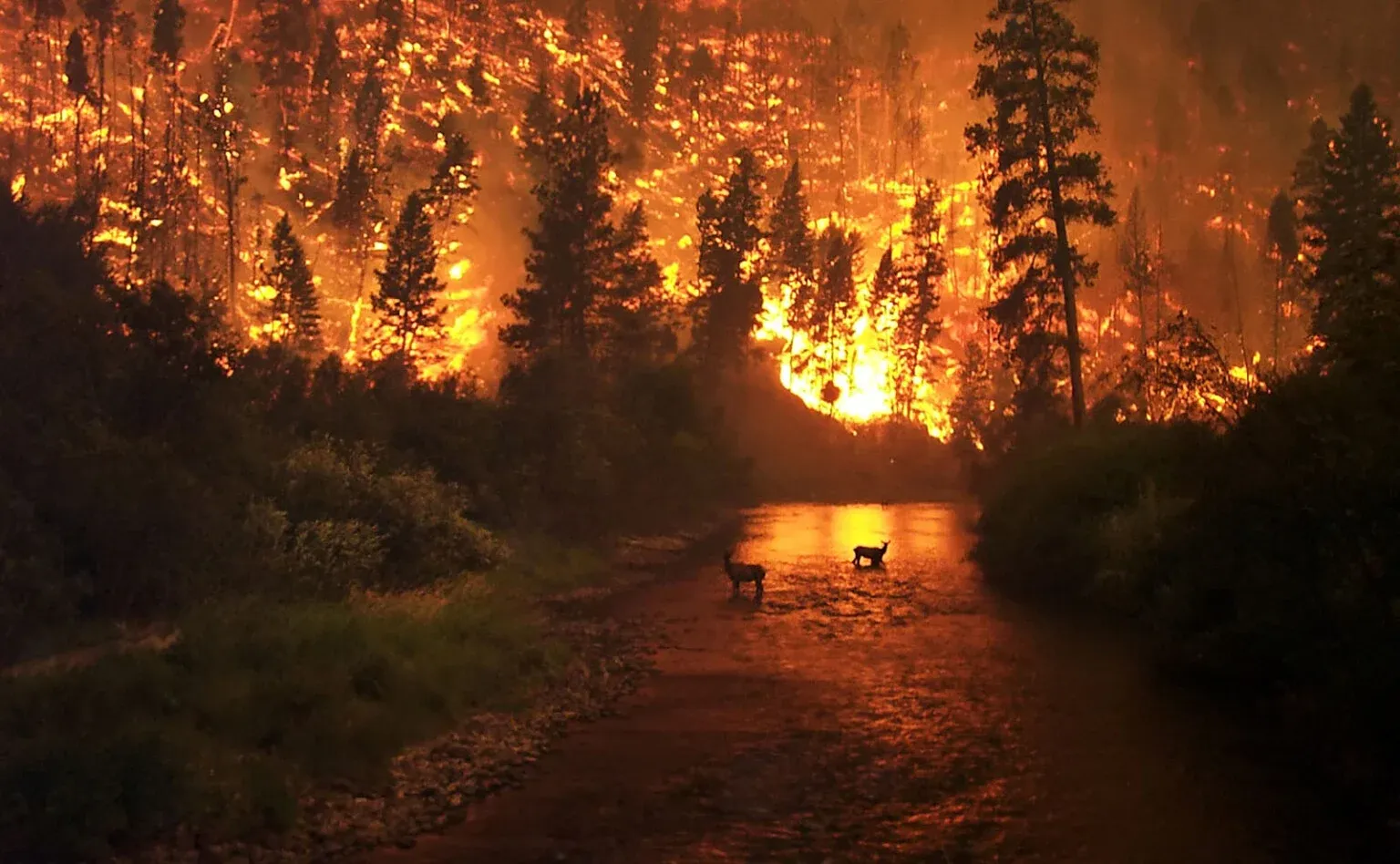
Evergreen readers have seen John McColgan’s photograph many times. In our opinion, it is one of the most unforgettable wildfire photographs ever taken.
On August 6, 2000, McColgan photographed two Rocky Mountain elk standing in the East Fork of Montana’s Bitterroot River as flames burned the hillsides near Sula during the Bitterroot fires. The Bitterroot River’s watershed covers about 2,900 square miles in Ravalli and Missoula counties, and its main stem is a renowned trout fishery. fs.usda.gov
The photograph captures one moment: the elk had found refuge in the river. It cannot tell us whether they survived or what happened to wildlife and habitat afterward. So much for declaring habitat “saved” without asking what happened next.
Your 100% tax-deductible subscription allows us to continue providing science-based forestry information with the goal of ensuring healthy forests forever.