
Counting the Cost
A congressional inquiry into 19 environmental organizations deserves scrutiny - as do the claims about their litigation practices. Are you a
A congressional inquiry into 19 environmental organizations deserves scrutiny - as do the claims about their litigation practices. Are you a

Rob DeHarpport makes the case for a clear, honest national campaign showing Americans what catastrophic wildfire is costing our forests,
What the hell is wildfire economics? The answer runs from firefighting aircraft and litigation to salvage logging, sawmills, replanting, and

How Wildland Fire Policy Shifted Danger from Firefighters to Everyone Else - and How the Forest Service Lost the Public Along the Way
This essay is going to read more like a profile of Frank Otis Carroll than one of his marvelous and very thoughtful essays.
This is intentional on my part. Frank is well known for his direct nature and even more renowned for his expertise in extinguishing wildfires quickly.
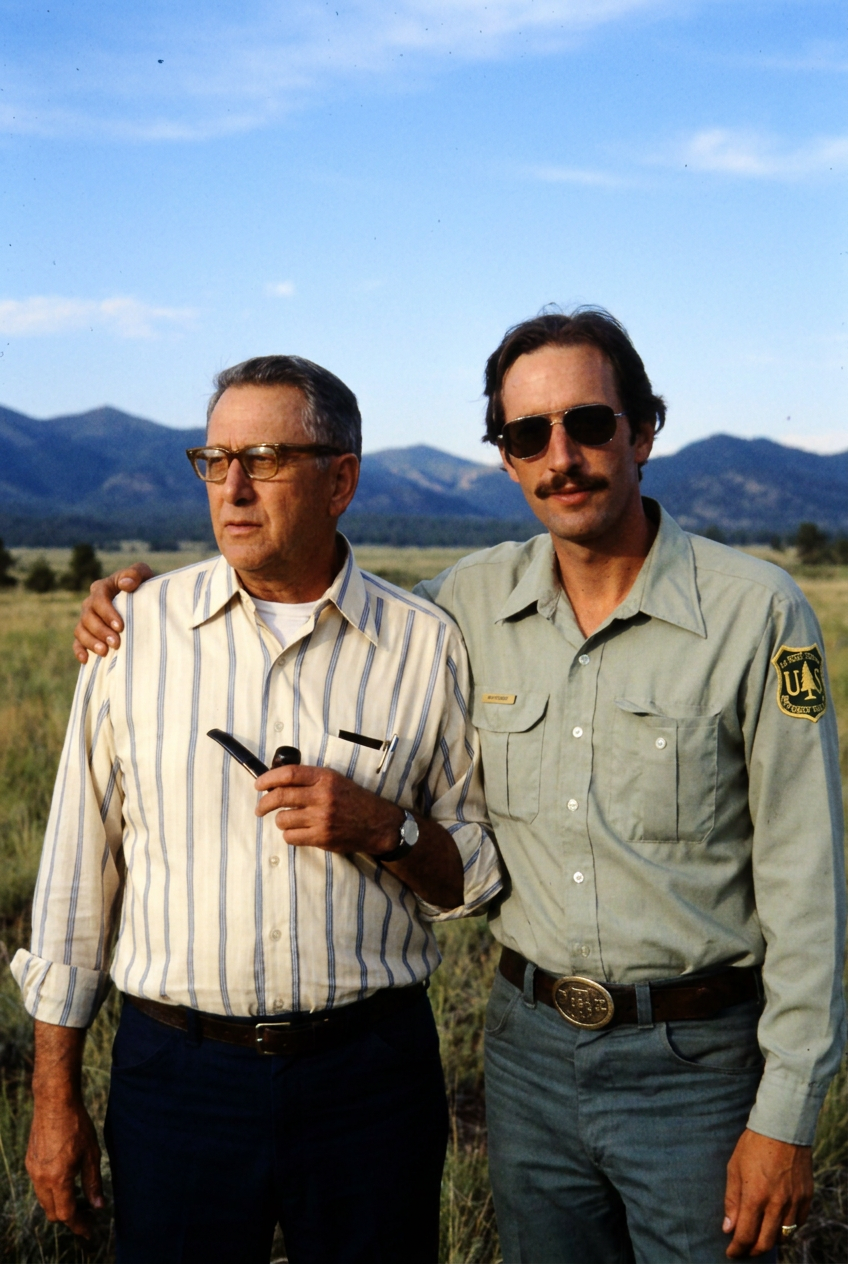
Like me, Frank lives in the shadow of his father. Franklin Oscar Carroll, was a World War II veteran who later served as the U.S. Forest Service’s Deputy Director of Fire and Aviation Management from 1963 until his retirement in 1978.
Frank’s description of his father suggests that he had a wicked sense of humor. So does Frank, and so did my father.
Dad hated going out on New Year’s Eve. Mother loved it, so his going was never optional, and he knew it. In 1958, she pranced out of their bedroom in a beautiful sequined dress and asked him what color it was.
He surveyed her for a few seconds and said, “It’s the color of a mouse’s fart.” It was very quiet in our home for the next 30 minutes.
Frank’s dad had that same talent: “Say, did you hear about the ranger who was so dumb that even other rangers noticed?” Or, “You can always tell an FMO, but you can’t tell him much.”
FMOs are Fire Management Officers. Many in Frank Oscar Carroll’s time were World War II veterans. They later ran wildland fire crews the same way they ran companies or battalions in the Second World War. Organization, specifically a command-and-control structure, was the key to winning battles.
We are including several sidebars in this essay because they add insight and perspective to the professional life of my friend, Franklin Otis Carroll, whose long Forest Service career led him to co-found Professional Forest Management–Wildfire Pros in Pueblo, Colorado, in 2013. Frank serves as Chief Forester, President, and Managing Partner.
The ghost of Frank’s father shows up several times in Frank’s essay. Watch for it, and you’ll see his heritage in personal and professional ways.
Frank’s essay begins almost apologetically with this bit of background:
“I have tried to keep the numbers honest,” he wrote. “Where I cite a casualty count, a fatality trend, an acreage figure, or a scientific finding, it is drawn from the historical record: National Interagency Fire Center [NIFC] and National Wildfire Coordinating Group [NWCG] fatality data, published fire-behavior research, contemporaneous incident reporting, and peer-reviewed wildlife studies.
“I have also tried to represent that record accurately, including the parts of it that complicate my own argument. But this is not a neutral document, and I am not going to pretend otherwise.
“I spent thirty years in the Forest Service. My father was a ranger before me. I have watched this agency’s mission collapse in real time, and I have an opinion about why and about what it has cost. What follows is that opinion, built on the numbers, not in place of them.”
Somewhere in the last three decades, American wildland fire agencies made a trade. We stopped asking crews to run at fires and hold them small, and we started asking them to fall back, build containment lines miles from the flame front, and either wait for the fire to arrive or burn toward it ourselves in massive firing operations.
We called this indirect attack, or point protection, or managing fire for resource benefit, or a dozen other names meant to make it sound like restraint rather than retreat. And on the one metric the agency itself has always cared most about (firefighter body count), it worked. Entrapment and burnover deaths, the mass-casualty fire line disasters that define this profession’s worst days, have fallen for ninety years, and they kept falling straight through the indirect-attack era. I am not going to dispute that data point. I compiled enough of it myself.
What I dispute is the story we tell about why, and the ledger we refuse to keep on the other side of that trade. We did not eliminate the risk in wildland fire. We moved it: off the fire line and onto civilians who never signed up for it, onto watersheds and wildlife that had no vote, onto the lungs of people a thousand miles away breathing smoke from fires we let burn for months, and onto an agency mission that is now so hollowed out that the federal government itself is dismantling the Forest Service as we knew it. That is the trade. I think it was the wrong one, and I think the numbers, read honestly, say so.
Let me give the historical trend its due, because I built this summary from the same sources any honest researcher would use, and it does not flatter my argument on its face.
1926–1956 | Average entrapment deaths per year: 6.2
Big Blowup legacy era; CCC crews; and early Smokejumpers (1940) and Hotshots (1948).
1957–1966 | Average entrapment deaths per year: 4.4
1956 Inaja Fire; 10 Standard Fire Orders and 18 Watch Out Situations (1957).
1967–1979 | Average entrapment deaths per year: 4.5
1966 Loop Fire; Downhill Line Construction Checklist.
1980–1994 | Average entrapment deaths per year: 4.7
Late-1970s multi-fatality fires; fire shelters mandated; and 1994 South Canyon.
1995–2003 | Average entrapment deaths per year: 2.0
South Canyon; LCES adopted; and risk-management doctrine formalized.
2004–2012 | Average entrapment deaths per year: 1.6
Thirtymile (2001) and Cramer (2003); Facilitated Learning Analyses and SAFENET.
Entrapment and burn over deaths per year fell from 6.2 in the 1926–1956 baseline to 1.6 by 2004–2012, and no wildfire since Yarnell Hill in 2013 (nineteen Granite Mountain Hotshots were killed when a thunderstorm outflow reversed the wind on a fire they had been working) has killed twelve or more firefighters in a single entrapment. That is a real, ninety-year decline.
But total firefighter deaths from all causes have not fallen anywhere near as fast, because vehicle accidents, aircraft accidents, and cardiac events, not entrapment, are now the leading killers of wildland firefighters, consistent with longer assignments, more total person-days per fire, and crews spending weeks driving long indirect-attack circuits instead of days on a direct initial attack. And in June of this year, three firefighters died in a burn over near Knowles, Colorado, not far from Storm King Mountain, where fourteen died in 1994. This is a reminder that the entrapment risk we say we’ve engineered away has not actually gone to zero, even now.
So here is my first claim, and it is a modest one: the decline in mass firefighter casualties is real, but it is not the whole safety story, and it was never the whole point of the tactical shift. The point, as agency doctrine itself now states outright, was to “restore fire to fire-depleted ecosystems” and manage fire for “resource benefit,” which is a way of saying we decided, as a matter of policy, that letting fires burn bigger and longer was more valuable than keeping them small. Whether that trade actually served the public is the real question, and firefighter safety statistics alone cannot answer it.
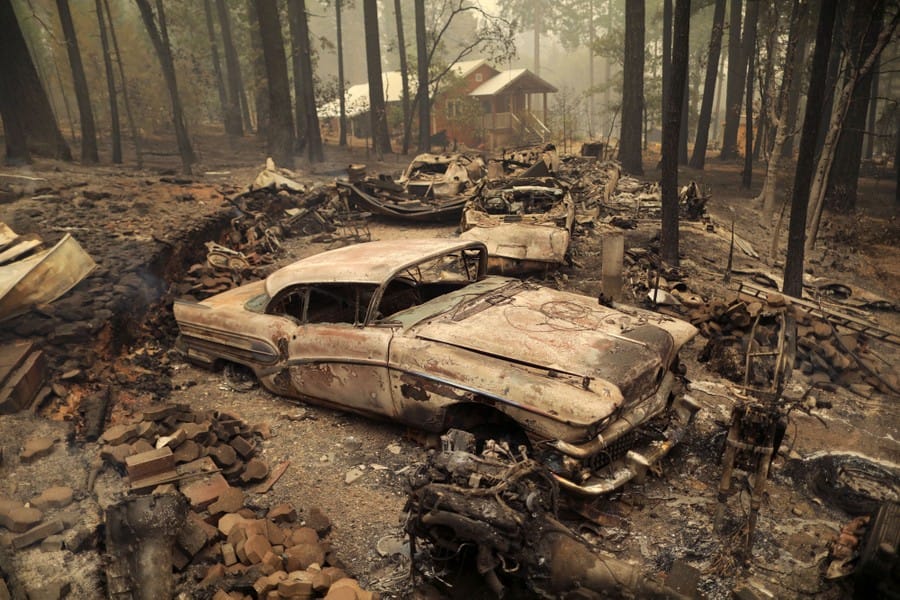
I built the wildfire impact analysis for Camp Okizu, the children’s cancer camp destroyed in the North Complex Fire, and I stand behind it. Here is the sequence, corroborated by contemporaneous incident reporting and our own investigation: the Bear and Claremont Fires burned in remote country for three weeks under a deliberate policy of minimal engagement.
In early September 2020, crews used a firing operation to merge the two fires along the Middle Fork Feather River. A Red Flag Warning for a dry cold front and dangerous northeast winds was forecast and publicly announced days in advance.
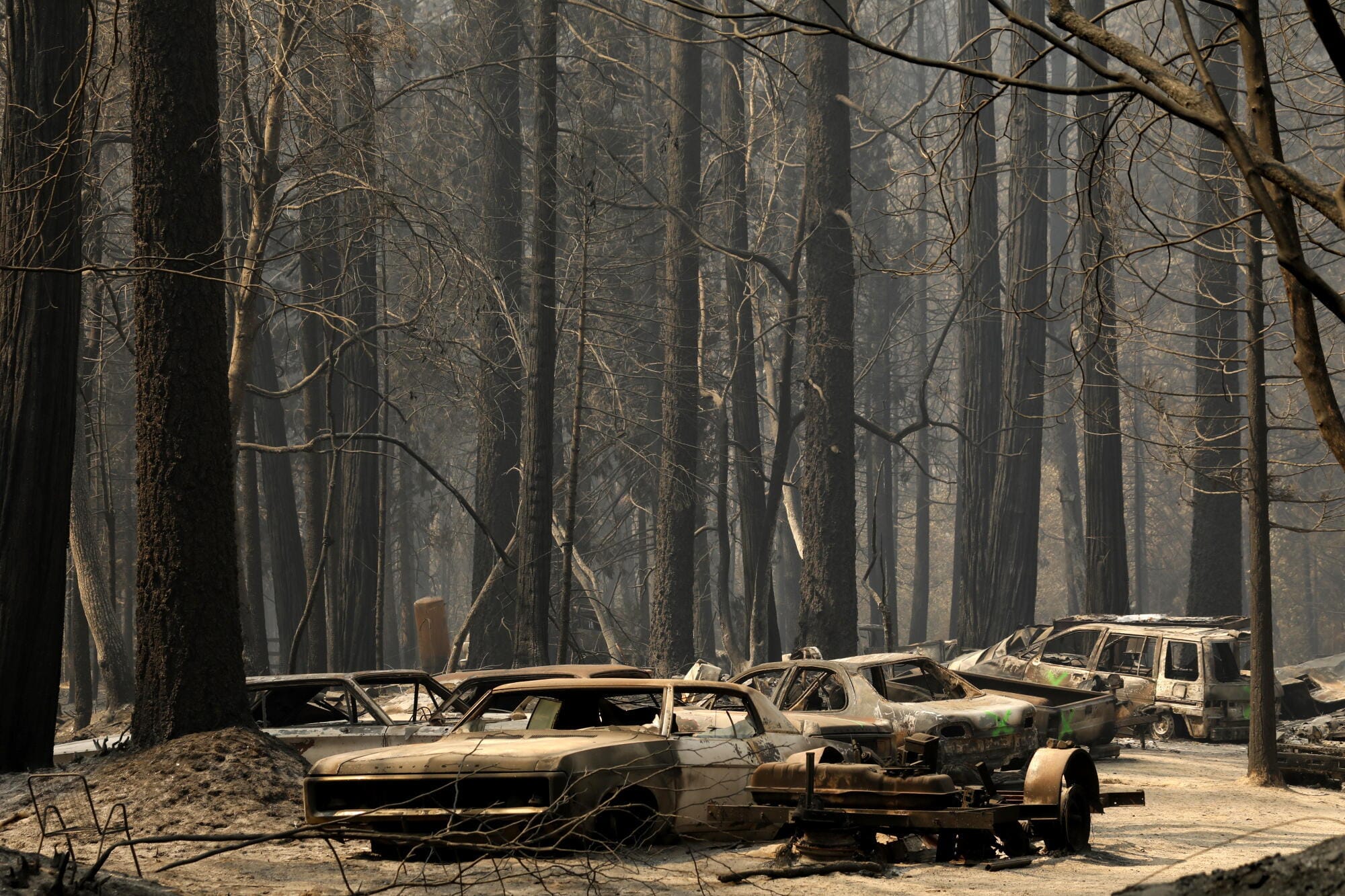
On September 8, with those forecast winds arriving on schedule, the fire jumped the river, grew by roughly 100,000 acres in hours, and reached Berry Creek with little or no evacuation warning. Sixteen people died. Camp Okizu’s 503 acres burned at 87 percent high severity.
More than 41,000 square feet of buildings, including a camp built to give children with cancer a place to just be children, were destroyed.
What the record proves is the sequence: a firing operation to merge two fires, executed in the days immediately before a forecast blowup, followed by exactly the blowup that was forecast, followed by sixteen deaths.
What I believe, and what I have asserted in a formal claim against the government, is that this was not an act of God. It was a choice, made with the forecast in hand, to grow the fire rather than to keep fighting it small while there was still time.
I know the agency’s defenders will say the discretionary function exception protects that judgment call, and that courts have historically given incident commanders wide latitude.
I am arguing that latitude should not extend to a decision made with a red-flag forecast already in the incident briefing. That argument is still alive because I don’t believe the families of the victims or the Butte County Sheriff understood what happened that day.
Moreover, the Forest Service never investigated its own catastrophe (the Federal Tort Claims Act deadline commences two years after the date a harmed individual becomes aware they are the victim of a tortious action).
I did not need a court to tell me what I saw in that watershed a year later: standing dead timber, stripped soil, a creek that no longer holds fish the way it used to, a camp that had to relocate rather than rebuild, and a burned community where the survivors are still living in camp trailers six years later.
We don’t back down when the mission is daunting; we’re in until the fire is out.
Firefighter casualty statistics are the easiest numbers to find because the agency tracks them obsessively, as it should. But they are not the only casualties of this policy shift, and I want to put the rest of the ledger before the reader because I do not think the public has ever been asked to weigh it as a whole.
Camp Fire, 2018: 85 dead. North Complex/Berry Creek, 2020: 16 dead. The January 2025 Los Angeles fires: 31 dead. Tecolote Creek, New Mexico, 2022: three more, drowned in a flood on a watershed the Forest Service itself had scorched with an escaped prescribed burn.
The government has since accepted responsibility and appropriated roughly $5.4 billion in compensation. These are not acts of nature that we simply failed to predict. Several of them followed forecast weather, in terrain the agency knew, on fires the agency had chosen not to fully engage while they were still small.
Longer-duration fires do not just burn longer; they smoke longer, and that smoke does not respect a fire perimeter or a state line. In June and July of 2023, and again in the summers since, smoke from Canadian wildfires blanketed the Midwest and East Coast, pushing air quality to hazardous levels for over 100 million Americans in cities as far from any fire line as New York, Washington, and Chicago. The result was orange skies, canceled outdoor school days, and, by the standard public-health accounting of fine particulate exposure, real cardiovascular and respiratory harm to people who never lived within a thousand miles of a fire.
I recognize these are Canadian fires and a different jurisdiction; I raise them because they illustrate, at a continental scale, exactly the exposure pathway I am describing here at home. Fires we let burn longer produce more smoke-days, and more smoke-days mean more people breathing dangerous air, whether the fire is in Plumas County or Manitoba.
The California spotted owl, a species nominally responsible for our cumulative loss of more timber to irretrievable destruction than any cause except wildfires, lost more than half a million acres of habitat to high-severity fire in the 2020 and 2021 megafires alone, more than in the previous thirty-five years combined. This was a principal reason the U.S. Fish and Wildlife Service proposed listing it under the Endangered Species Act in 2023.

Since 2020, more than 1.7 million acres have burned in the Sierra Nevada. We adopted a fire policy substantially justified by ecological restoration, and one of its clearest measurable results has been to push toward federal listing of the very owl that the entire multiple-use planning apparatus of the last thirty years was built to protect. I do not think that is restoration. I think it is the opposite, dressed up in the language of restoration.
Severe, high-residence-time fire does not just burn the canopy; it bakes the soil, destroys the organic layer and root structure that hold a hillside together, and creates hydrophobic soils that shed rain instead of absorbing it.
That is the mechanism behind Tecolote Creek, and it is a mechanism we are creating more often, on purpose, when we choose to let fires burn hot and long rather than catch them small. Post-fire debris flows and flooding are not a footnote to a wildfire’s damage; on some watersheds, they cause more property destruction, over a longer period, than the fire itself, and they are barely counted in any official wildfire casualty or cost tally I have ever seen.
The City of Flagstaff, Arizona, is still struggling with the post-fire flooding from the 2010 Schultz Fire, as are many other locations where burned soils and water combine to produce reliably disastrous results.
Every acre of merchantable timber that burns in a megafire is an acre we did not thin, log, or otherwise treat for fuel reduction. Just as important, it is timber revenue that never came back into the communities and the agency budgets that used to fund exactly the kind of proactive fuels work that might have kept these fires smaller in the first place.
We have spent three decades being told that logging 5,000 acres under a sustained-yield harvest plan is a disaster, while a million-acre wildfire burning at high severity is simply nature taking its course. I have never understood how both of those things can be true, and I do not think most of the public understands it either. That is precisely the problem.
No discussion of this ledger is complete without addressing salvage logging, because that fight is where the deeper argument actually lives. After a stand-replacing fire, thousands of acres of dead timber are left standing.
That timber has commercial value for a short window, after which it degrades. Left standing and then falling, those highly valuable trees become exactly the kind of heavy, continuous fuel bed that produces the next hot, long-residence fire, the kind that bakes soil and strips away the organic material and seed source, even vaporizing some mineral soil.
Chad Hanson and colleagues have published research arguing the opposite: that spotted owls persist and even benefit in post-fire landscapes, that salvage logging removes structure that the owls and other post-fire specialists actually use, and that severe fire is not the ecological catastrophe foresters like me describe.
I have read that research, and I do not find it persuasive as a basis for national policy, for one simple reason: it treats the interior of a single burned stand as if it existed in isolation from the fuel load, the fire history, and the communities around it.
Other wildlife researchers, including the very biologists who documented the 2020–2021 megafire losses to spotted owl habitat, have reached a different and, in my view, more sober conclusion: that severe fire has persistent negative effects on owl populations, and that thinning and fuels management reduce the odds of the next catastrophic run.
This is a real, ongoing scientific dispute, and I want to be honest that it is one, rather than pretend the science is as settled as either Chad or I may claim.
I have spent fifty years walking these stands, and I trust what stripped soil, dead root systems, and a creek gone silent tell me over a journal argument that a burned forest is fine because an owl was still found nesting in it two years later.

Macabre proof may lie in the U.S. Fish and Wildlife Service’s decision to shoot 450,000 barred owls, which are almost indistinguishable from spotted owls, in an incomprehensible effort to favor a weak species by biological ethnic cleansing of a stronger species from the burned forests where barred owls thrive and, apparently, so do spotted owls.
Evergreen cannot run on good intentions alone.
Independent forestry journalism takes time, travel, research, interviews, editing, photography, web publishing, and decades of earned trust.
It is work - and like the work you do, it has to be supported.
If Evergreen helps you understand the decisions shaping our forests, communities, and future, please subscribe or contribute today.
Subscribe. Contribute.
Help keep Evergreen independent.
Subscribers receive access to many of Evergreen’s back issues in our Archives.
Our archives hold a deep record of forestry reporting, history, policy, people, and practice.
Looking for a specific issue or topic?
Let us know, and we will help you find the Evergreen
coverage you need.
Prefer PayPal?
You can set up an ongoing donation, and we will honor it as a subscription with the same benefits.
The Forest Service I knew operated under a mission Congress actually wrote down: multiple use and sustained yield. Timber, water, wildlife, range, and recreation were managed together for the greatest good for the greatest number of people over the long run.
That mission assumed people belonged on and used the land, because they do, and because a resource nobody uses is a resource nobody defends. Over the last three decades, a relatively small number of well-funded activist organizations, backed by a still smaller number of wealthy donors, won a long string of court victories and administrative rule changes that pushed the agency away from that mission and toward a presumption that human use, logging above all but increasingly grazing, recreation infrastructure, and active management of any kind, is itself the harm to be minimized.
I understand why that story appealed to people who had never seen what a well-managed timber sale actually leaves behind. I do not think it appealed to the land, and I do not think it has appealed to the public, once the public actually saw the results:
Their forests closed off, their trails buried in dead standing timber, their air unbreathable for weeks at a time, and their taxes funding a mission that people no longer recognize.
You have to touch the land to know the land.
That is not a slogan. It is the plainest fact of my professional life. A forest nobody is allowed to touch, whether to log, graze, actively manage, or even salvage after it has already burned to the ground, is a forest most people will never see, never work in, never draw a living from, and, eventually, never think about at all.
Download: Using Unplanned Fire and Applied Wildfire in the U.S. Forest Service
This report highlights Frank Carroll’s expertise and the depth of experience behind his wildfire analysis.
Environmental activists who spent thirty years fighting to keep people off the land and out of the timber business won nearly every battle. What they lost, I believe, is the war for public attachment to these places, because people do not love, defend, or fund what they cannot use.
I wrote in 1994 that “America’s public lands are the only wildlands most of us will ever own.” Like a personal family cabin in a forest now burned to black ash, our now inaccessible public lands are losing the intrinsic value they once enjoyed.
The loss of multiple use is a Pyrrhic victory in the most literal sense: what, after all, is total control over resources the public has quietly stopped caring whether anyone protects? Ironically, total control now manifests as no control. After all, if firefighters aren’t defending timber interests, they are also not defending core critical riparian habitat for flycatchers.
This is not a hypothetical consequence. In 2026, the Forest Service announced it was moving its headquarters from Washington, D.C., to Salt Lake City, closing its ten regional offices in favor of fifteen state directors, and shuttering more than fifty research stations. It was the largest structural reorganization in the agency’s history, undertaken without prior congressional authorization.
Former Chief Dale Bosworth’s successors have called it a state-based management model; critics, including a former Forest Service chief, have called it the leading edge of a land-transfer movement, noting that the new headquarters sits in the state most associated with public-land sell-off politics in the country.
I do not think this reorganization happened because the agency suddenly discovered a more efficient org chart. I think it happened because the federal government and a meaningful share of the public no longer see a compelling reason to keep national forest management centralized, expert, and Washington-run, when the agency itself has spent thirty years signaling that active management, timber production, and the human use of these lands are the problem rather than the mission.
If the agency’s own doctrine no longer treats trillions of dollars in timber, water, and resource value as worth protecting from fire, and treats large, uncontrolled fire as an acceptable or even desirable outcome, then the public is entitled to ask a blunt question: what, exactly, is the Forest Service still doing?
And once enough of the public can no longer answer that question, state takeover starts to look less like an attack on federal land management and more like a reasonable response to an agency that walked away from explaining its own value. Out of sight, out of mind, out of business.
This brings me to the part of the argument I feel most strongly about, because I have been the Hotshot squad boss, led Hotshot crews in battle, championed Hotshot crews and all manner of firefighters throughout my career, have a firefighting son-in-law, and I know what firefighters are thinking and why.
For thirty years, I have heard the same message aimed at our intrepid crews: that they are the reason fires are so bad today, that their aggressive suppression history created the fuel-loaded landscape now burning, that the compassionate, ecologically literate choice is to stand back and let fire do what fire does.
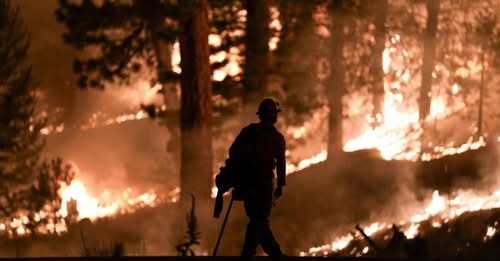
Tell a workforce often enough that its core mission was a historic mistake, and do not be surprised when it stops treating the mission as worth fighting for.
I do not believe entrapment deaths fell only because tactics got smarter, though they did. I believe they fell, in part, because the institutional conviction that a fire was worth the risk of direct engagement has eroded in direct proportion to thirty years of being told the opposite. Why aggressively attack a fire when your own agency’s doctrine, and a great deal of the public conversation around it, suggest the fire might be doing the forest a favor?
I do not offer that as an excuse for anyone to take foolish risks, and I am glad fewer firefighters are dying in burn overs. I offer it as the other half of the explanation that the entrapment-fatality trend never tells you by itself: casualties went down partly because we got better at avoiding entrapments, and partly because we stopped believing, as an institution, that most fires were worth the risk of a direct fight in the first place. Those are two very different stories, and only one of them is praiseworthy.
Entrapment deaths are down, and that is real. But firefighter deaths overall are not, because vehicle and aircraft accidents, hazardous smoke exposure, and cardiac events associated with longer, more diffuse assignments have taken entrapment’s place as the leading causes of death (the emotional toll on firefighter families is another article).
Civilian deaths, meanwhile, have risen sharply, and at least one of those events, Berry Creek, has a documented firing-operations record specific enough that my colleagues and I are prepared to defend it in court.
Millions of Americans, a thousand miles from any fire line, have breathed hazardous smoke for weeks at a time. An unremarkable owl that triggered forest wars my entire career lost more habitat in two years than in the previous thirty-five.
Watersheds have failed, sometimes fatally, months and years after the flames went out. And the agency that is supposed to steward all of it is now being dismantled and handed piecemeal to the states, in no small part because it stopped being able to say, in language the public still recognizes, why any of this land was worth protecting in the first place.
We flipped the risk from a small number of trained professionals, working under real but bounded danger for days at a time, onto an unbounded and unconsenting public for months at a time, including those downwind, downstream, and downslope. We told ourselves this was progress because the entrapment numbers went down.
I do not think it was progress. I think it was a transfer of risk dressed up as a safety improvement, and I think the growing civilian death toll, the ruined watersheds, the vanished owl habitat, the smoke over New York, and the agency’s own collapse are the bill for that transfer coming due.
You have to touch the land to know the land. We stopped letting anyone touch it, and we are now finding out, at considerable cost, what happens to a public resource that nobody is allowed to use, love, or defend.
Cook, James R. “Trends in Wildland Fire Entrapment Fatalities…Revisited.” NWCG Lessons Learned Center, February 2013.
National Interagency Fire Center (NIFC) and National Wildfire Coordinating Group (NWCG), historical wildland firefighter fatality archives, 1910–2018.
Carroll, Franklin O., Joseph G. Reddan, and Van C. Elsbernd (PFMc Professional Forest Management). “Wildfire Impact Analysis: 2020 North Complex, Camp Okizu.” Prepared for FCO Foresters, Inc. dba Forester’s Co-Op, September 2022 (Federal Tort Claims Act supporting document).
Contemporary incident reporting on the North Complex/Bear/Claremont Fire (2020), including Wildfire Today and Plumas News coverage of the September 3\u20139 firing operations and Red Flag Warning.
Ayars, J., Kramer, H.A., and Jones, G.M. “The 2020 to 2021 California megafires and their impacts on wildlife habitat.” PNAS 120: e2312909120.
Audubon and U.S. Fish and Wildlife Service reporting on California spotted owl habitat loss and the 2023 Endangered Species Act listing proposal.
Hanson, M.P., et al. “Disentangling post-fire logging and high-severity fire effects for spotted owls.” 2021, cited alongside Jones, G.M. et al., “Megafire causes persistent loss of an old-forest species,” Animal Conservation 24 (2021), representing the two sides of an ongoing scientific dispute.
News coverage of Canadian wildfire smoke events affecting the U.S. Midwest and East Coast, 2023 and 2026 (CNN, CBS News, ABC News, and Fox Weather).
Reporting on the 2026 USDA Forest Service reorganization and headquarters relocation to Salt Lake City, including Stateline/News From The States, NRDC, and USDA press releases.
Contemporary news reporting on the Hermits Peak/Calf Canyon Fire and Tecolote Creek flooding (2022), and the January 2025 Los Angeles fires.
Your 100% tax-deductible subscription allows us to continue providing science-based forestry information with the goal of ensuring healthy forests forever.