
Keep Our Forests Green!
Rob DeHarpport makes the case for a clear, honest national campaign showing Americans what catastrophic wildfire is costing our forests,
Rob DeHarpport makes the case for a clear, honest national campaign showing Americans what catastrophic wildfire is costing our forests,

What the hell is wildfire economics? The answer runs from firefighting aircraft and litigation to salvage logging, sawmills, replanting, and
Fire ecologist Leda Kobziar on living microbes, public health, and why wildfire smoke must become our responsibility. Coughing and struggling

Evergreen cannot run on good intentions alone.
Independent forestry journalism takes time, travel, research, interviews, editing, photography, web publishing, and decades of earned trust.
It is work - and like the work you do, it has to be supported.
If Evergreen helps you understand the decisions shaping our forests, communities, and future, please subscribe or contribute today.
Subscribe. Contribute.
Help keep Evergreen independent.
Subscribers receive access to many of Evergreen’s back issues in our Archives.
Our archives hold a deep record of forestry reporting, history, policy, people, and practice.
Looking for a specific issue or topic?
Let us know, and we will help you find the Evergreen
coverage you need.
Prefer PayPal?
You can set up an ongoing donation, and we will honor it as a subscription with the same benefits.
Thank-You!
Although we have never met face-to-face, we exchange emails frequently, and his Facebook posts tell me we would both rather fish than eat.
He recently sent me this essay with a request that I read it and offer my suggestions. I told him I thought it was well written, that I wanted to post it on our website, and that I liked his idea for a nationwide healthy forests campaign.
We edited it for clarity, factual accuracy, and context while staying as close as possible to Rob’s original intent and voice.
Here it is. We’ll be interested in what you think about his idea.
By Rob DeHarpport
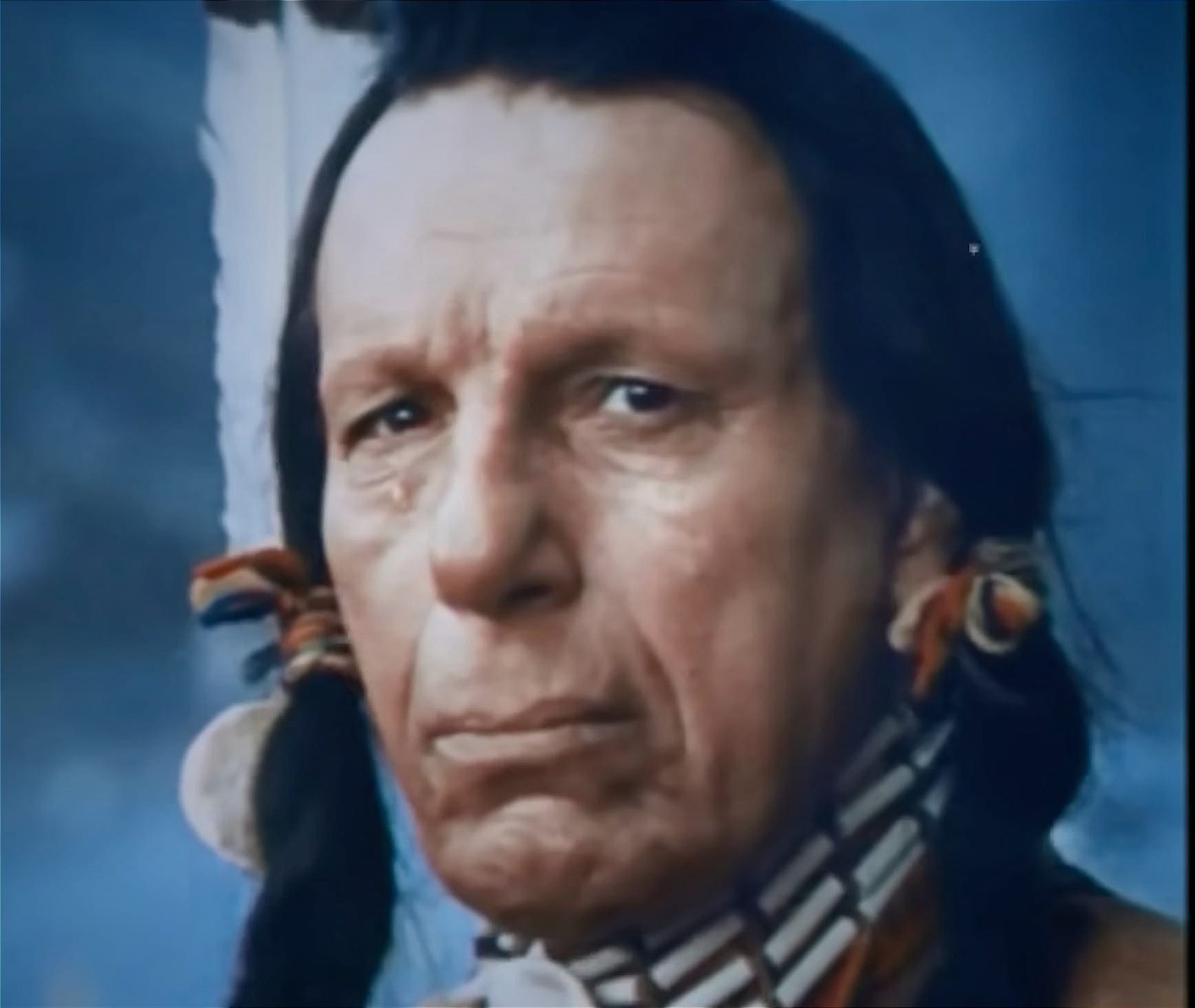
If you are a Baby Boomer, you probably remember one of the most recognizable public-service advertisements of the twentieth century: the Keep America Beautiful commercial commonly known as the “Crying Indian” ad.
It first aired on Earth Day in 1971. The central figure was Iron Eyes Cody, an Italian American actor born Espera DeCorti who spent decades playing Native American characters and presenting himself publicly as Native American.
That history cannot be treated as a footnote. The ad relied on a false Native identity and a generalized stereotype. In 2023, Keep America Beautiful transferred ownership of the advertisement to the National Congress of American Indians, which retired it and said it should be used only in historical context.
There is another criticism that also deserves an honest hearing. Keep America Beautiful was supported by beverage and packaging companies, including Coca-Cola and PepsiCo. Critics argue that its campaign placed responsibility for pollution on individual consumers while diverting attention from the companies producing disposable packaging.
Those criticisms are not irrelevant simply because the advertisement was memorable. They are part of the full story.
But the communications lesson remains powerful. One image and seven words captured the country’s attention:
People start pollution. People can stop it.
A new forest campaign should borrow that clarity, not the imagery. It should be honest, fact-based, and inclusive. It should feature real people, including Tribal foresters and stewards, whose work demonstrates what long-term responsibility for forests looks like.
America’s national forests need a comparable national public-awareness campaign. For roughly three and a half decades, we have watched increasingly large areas burn. The scale of many of today’s fires would have been difficult to imagine when I was growing up in Oakridge, Oregon.
The Great Fire of 1910 burned more than three million acres across northern Idaho and western Montana during a wind-driven firestorm. It killed 78 firefighters and seven civilians and burned about one-third of Wallace, Idaho.
The disaster helped make aggressive wildfire suppression a central Forest Service mission. Congress later expanded federal and state cooperation through the Clarke-McNary Act of 1924. Earlier fires, including the 1902 Yacolt Burn in Washington and Oregon, had already helped spur privately funded wildfire cooperatives across the Northwest.
Public-information campaigns followed. Oregon’s Keep Oregon Green campaign began in 1941 under Gov. Charles Sprague following the Tillamook burns. Its supporters included the Oregon Forest Fire Association, the West Coast Lumbermen’s Association, the Oregon Department of Forestry, and the U.S. Forest Service.
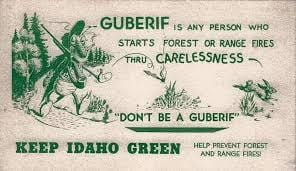
Idaho launched a similarly memorable effort in 1950. The “Don’t Be a Guberif” campaign was the brainchild of Richard Trzuskowski, publicity director for Keep Idaho Green. The Idaho Jaycees, the Idaho Department of Lands, and several Idaho lumber companies funded it.
In case you are wondering, Guberif is firebug spelled backward. The word was stenciled in white on Idaho highways so that drivers saw FIREBUG in their rearview mirrors.
The Forest Service expanded its firefighting capacity after World War II through better equipment, aircraft, roads, and communications. The nation still recoiled at waste, and timber destroyed by fire was considered a loss.
Millions of GIs returned home, married, started families, and needed housing. The greatest industrial expansion in the nation’s history followed. With strong public support, road systems and timber harvest expanded across national forests.
Public attitudes began to shift as the environmental consequences of industrial growth came into view. The first Earth Day in April 1970 brought millions of Americans into the streets. That public pressure helped propel a new era of federal environmental policy.
The forest debate later hardened into opposing camps. Litigation became a routine part of federal land management, and projects designed to reduce hazardous fuels or restore forest health often took years to approve.
Federal agencies also began managing some naturally ignited wildfires for resource benefit. Under the right conditions, allowing fire to perform ecological work can be defensible. Under the wrong conditions, the results can be disastrous. The public is entitled to know when and why those decisions are made, what limits govern them, and who is accountable when weather and fire behavior change.
There is legitimate debate about how much earlier suppression policies contributed to today’s forest conditions. But one fact is difficult to dispute: millions of acres of federal forest have burned in large fires, and communities, watersheds, recreation areas, wildlife habitat, and human health have suffered.
Those of us who work, live, play, and recreate in these forests need to raise the alarm. America needs a national public-service campaign that shows citizens what is happening and asks what we want these forests to look like for our children and grandchildren.
The Forest Service has warned for decades about hazardous fuels and declining forest health. In 2003, then-Forest Service Chief Dale Bosworth identified fire and fuels, invasive species, loss of open space, and unmanaged recreation as the agency’s “Four Threats.”
Today, dense stands, insects, disease, drought, dead and dying trees, and accumulated fuels can combine with extreme weather to produce fires of extraordinary size and intensity.
The human toll extends far beyond the fire line. A national study of long-term exposure to wildfire-smoke particles estimated that more than 10,000 nonaccidental deaths occurred annually in the contiguous United States from 2007 through 2020. Other recent studies have produced different estimates, but they point in the same direction: wildfire smoke is a major and growing public-health threat.
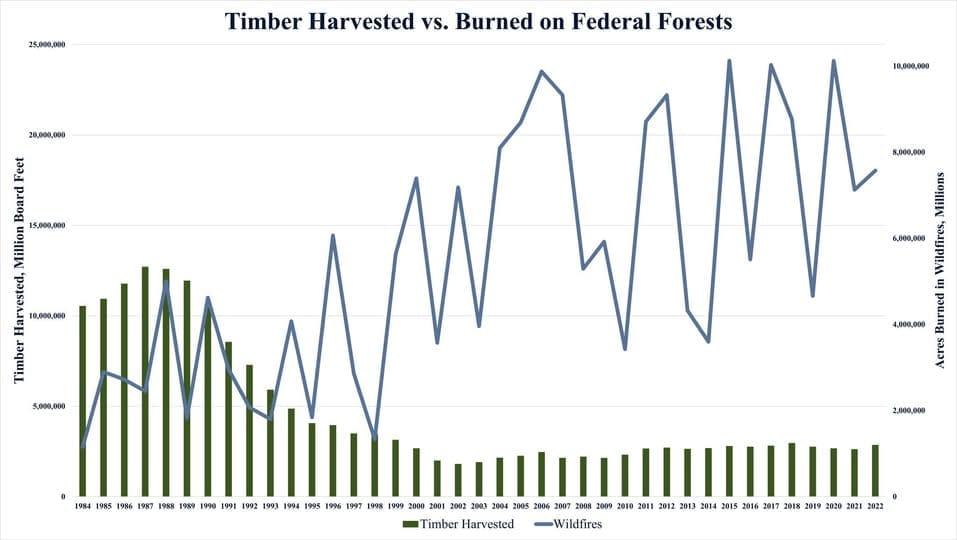
When fires burn severely, the consequences can last for generations. Trees are killed. Fire can create water-repellent soil layers that increase runoff and erosion. Burned watersheds can fill streams with ash, debris, and sediment. Fish and wildlife habitat can be lost, and campgrounds, roads, bridges, and trails can be damaged or destroyed.
The question is not whether fire belongs in forests. It does.
The question is whether we should allow increasingly large, high-severity fires to become one of our principal forest-management tools during the hottest and driest portion of the year.
I believe the answer is no.
Mechanical thinning, carefully designed timber harvests, prescribed burning during appropriate seasons, reforestation, and other restoration techniques all have roles. Where thinning produces merchantable timber, some of its value can help offset restoration costs while providing jobs and keeping mills operating.
After thinning, slash and other fuels can be treated under controlled conditions when weather and fuel moisture provide a reasonable margin of safety.
That approach is fundamentally different from relying on a wildfire during fire season to accomplish forest-health objectives.
One of the most troubling aspects of today’s forest fires is what happens after the flames are gone.
On many burned landscapes, dead trees remain standing until they fall. Brush and young growth develop among the snags. Roads and other infrastructure deteriorate. Reforestation may be slow, uneven, or uncertain.
Supporters of post-fire salvage argue that dead and dying trees should be recovered while they retain economic value and that burned landscapes should then be replanted and restored.
Opponents argue that salvage logging can damage soils, habitat, and natural recovery.
That debate deserves to be conducted honestly, project by project, using site-specific science rather than ideology. Leaving every severely burned acre untouched should not automatically be considered the only environmentally responsible choice.
We have demonstrated for generations that harvested forests can be replanted. Oregon’s forestry history provides countless examples.
In Oakridge, the community understood this clearly.
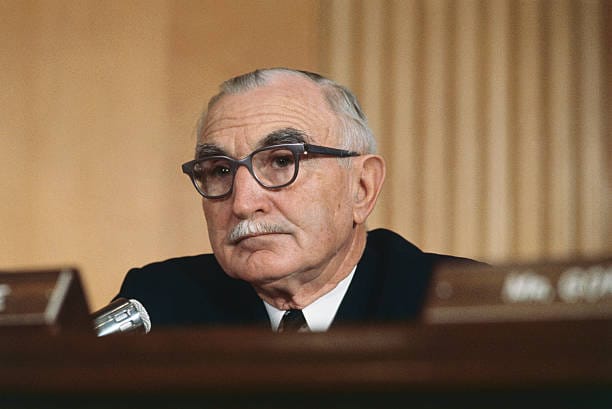
Beginning in 1953, residents, Boy Scouts, and Cub Scouts participated in the Oakridge Tree Planting Festival, planting trees on recently harvested lands. U.S. Sen. Wayne Morse joined one of those plantings.
The purpose was simple: harvest a renewable resource, replant the forest, and provide another generation with timber.
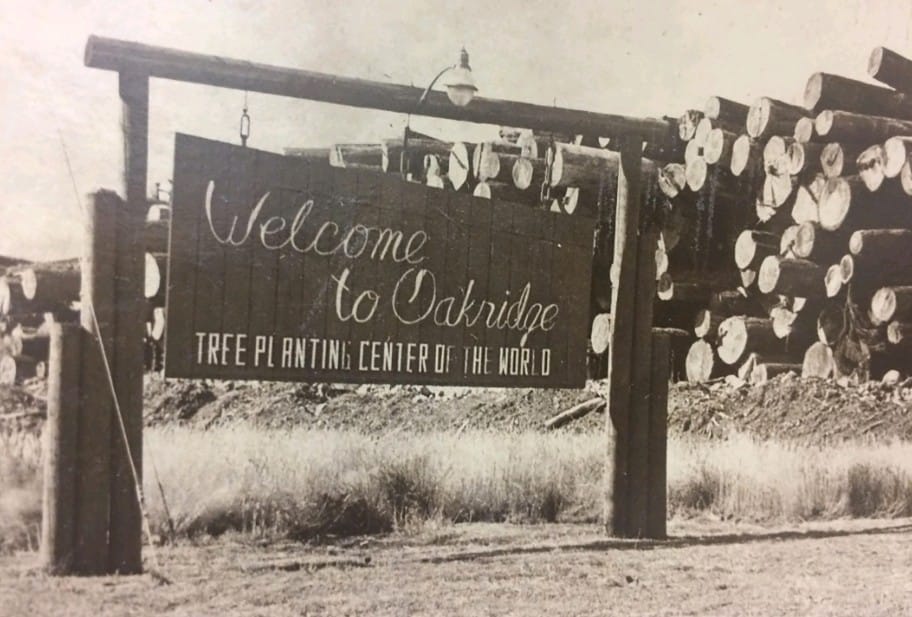
Oakridge was once home to the Pope & Talbot lumber mill, which employed more than 500 people and processed Douglas-fir from 1948 until it closed in 1989. The neighboring Westfir mill, built in 1923 and later operated by Edward Hines Lumber Company, closed in 1984. Their closures foreshadowed the economic upheaval that would spread across federal forest communities in the years ahead.
The consequences extend far beyond trees and sawmills.
The Willamette National Forest has historically supported nearby communities through timber, recreation, and related industries. Today, many of those communities are struggling economically while the forests surrounding them are increasingly affected by wildfire.
The 2020 Beachie Creek Fire burned approximately 193,500 acres and contributed to the devastation experienced by communities in the Santiam Canyon. The 2022 Cedar Creek Fire burned approximately 127,000 acres near Oakridge and damaged recreation sites and infrastructure in the Willamette National Forest.
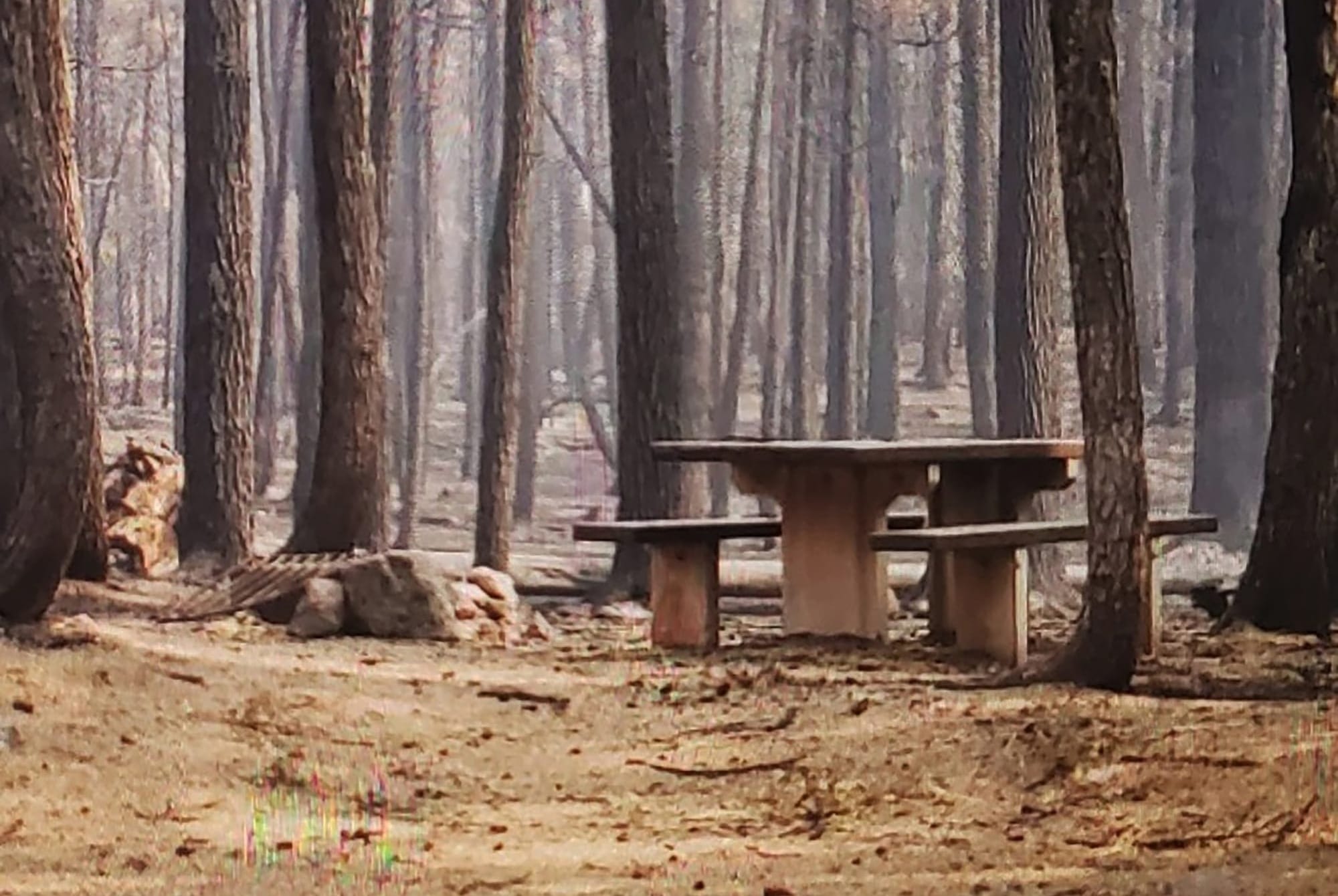
At Waldo Lake, trees at North Waldo, Islet, and Harralson campgrounds were damaged, requiring extensive hazard-tree work. Roads, bridges, trails, and other facilities also face enormous maintenance and replacement needs.
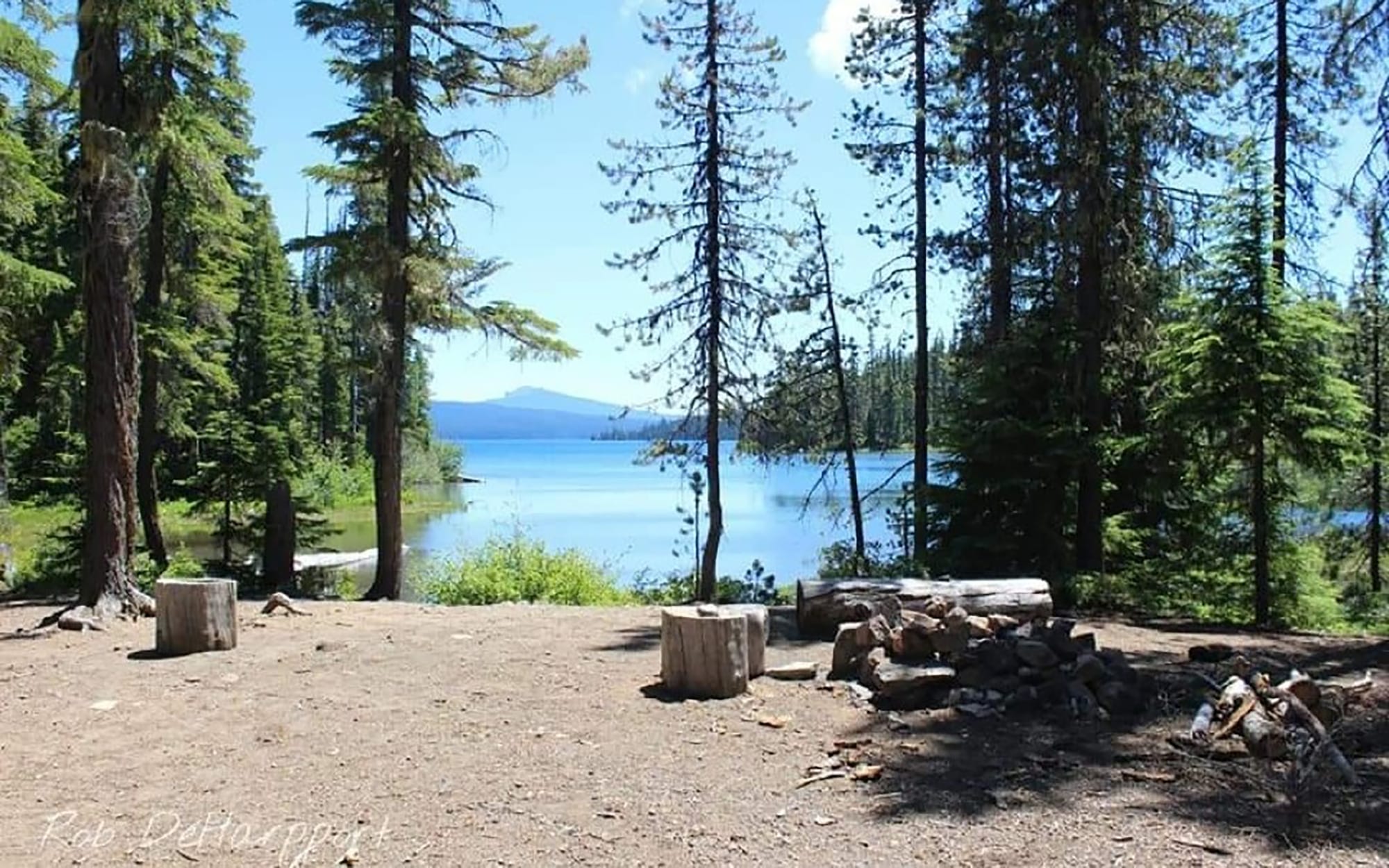
Much of this infrastructure was constructed during decades when federal timber receipts supported roads and local economies. As timber harvests declined, many rural counties became increasingly dependent on federal assistance, including Secure Rural Schools payments.
The argument for forest restoration is not just about sawmills. It is about schools, emergency services, local businesses, county roads, family incomes, and the ability of rural communities to remain viable.
Tourism and recreation are important parts of the rural economy. But tourism cannot replace every job and economic activity lost when a forest-dependent economy disappears. Nor does tourism benefit from landscapes transformed into enormous fire scars.
A burned forest remains a forest, and natural recovery will occur in many places. But recovery can take decades, and repeated severe fire can make that process much more difficult.
We don’t back down when the mission is daunting; we’re in until the fire is out.
The 1994 Northwest Forest Plan was intended to address some of the deepest conflicts surrounding federal forests in the Pacific Northwest.
It attempted to protect older forest ecosystems while maintaining timber production and mitigating harm to rural communities. Federal monitoring has since examined its effects on timber, wildlife, water, communities, and local economies.
The plan was an enormous attempt to resolve what had become known as the timber wars.
More than three decades later, the arguments have not disappeared.
The forests have changed dramatically. The northern spotted owl remains threatened. Wildfire has consumed hundreds of thousands of acres of its habitat. Rural communities continue to debate the economic consequences of federal forest policy, and litigation remains a defining feature of federal land management.
The Forest Service’s own monitoring confirms that socioeconomic goals and relationships with rural communities were central components of the Northwest Forest Plan.
Whether the plan achieved the balance originally envisioned is a legitimate question.
It should be judged by results, not intentions alone.
Lawsuits can serve an essential function by requiring agencies to follow the law and by protecting resources that might otherwise be overlooked.
But litigation can also delay projects intended to reduce hazardous fuels or restore forests. When projects take years to move through analysis, objections, and litigation, forest conditions continue to change while the paperwork proceeds.
The result is especially frustrating when a proposed fuel-reduction project is overtaken by wildfire before work can begin.
The Grasshopper Fire on the east side of Oregon’s Mt. Hood National Forest offers a current example of how these failures compound.
On Jan. 11, 2023, the Forest Service approved the 5,280-acre Grasshopper Restoration Project. The plan had been developed over four years by the Wasco County Forest Collaborative, which brought together Tribal representatives, timber interests, conservationists, local officials, and others. Its stated goals included reducing the extent and severity of wildfire and creating safer areas for firefighters to engage a fire.
On June 27, 2023, Oregon Wild filed a federal lawsuit challenging the project. It argued that commercial logging in mature and older stands would harm northern spotted owl habitat and that the Forest Service had not met its obligations under federal environmental law.
The case remained unresolved for approximately 18 months. It settled in January 2025 after the Forest Service agreed to remove two older-forest units, covering less than 2 percent of the proposed treatment area, and added protections for older trees elsewhere in the project. The federal government also paid Oregon Wild $55,000 in attorney fees.
Oregon Wild points out that it did not seek a preliminary injunction against the entire project. It also reports that 98.4 percent of the contracted noncommercial mechanical work, including thinning, piling, crushing, pruning, and rearranging fuels, had been completed by 2025. That figure requires an important clarification: it refers to contracted noncommercial mechanical work, not 98.4 percent of the entire Grasshopper Restoration Project. The commercial treatments had not occurred.
After the settlement, the project encountered another obstacle. The Forest Service lost nearly 6,000 permanent employees, approximately 16 percent of its workforce, during the first half of 2025. The agency did not complete the presale work or offer the commercial timber contracts.
Then, on July 23, 2026, lightning ignited the Grasshopper Fire about 14 miles south of Dufur.
The fire eventually burned approximately 94,000 acres. The Forest Service placed suppression costs at $120 million. Wasco County reported damage to homes, drinking-water sources, irrigation infrastructure, roads, public access, and years of restoration work. A preliminary Forest Service assessment estimated nearly $50 million would be needed for recovery on federal lands alone.
That puts suppression and preliminary federal-land recovery costs near $170 million before the full economic and ecological losses are counted.
The American Forest Resource Council argues that Oregon Wild’s lawsuit delayed needed commercial treatments and left the landscape more vulnerable. Oregon Wild argues that most noncommercial work was completed, that the Forest Service could have advanced portions of the project during the litigation, and that aggressive commercial logging could have made some stands hotter and drier.
The Forest Service has said it would be speculative to claim that the untreated project determined the fire’s eventual severity.
That does not make the Grasshopper story meaningless. It makes it more revealing.
Litigation from the left delayed the commercial work. Administrative hollowing from the right created a second bottleneck. An overburdened Forest Service was caught in the middle. The fire did not wait for any of them.
What happens when a forest-restoration project is delayed and the forest burns before the work is completed?
That question deserves a documented answer. It requires a clear timeline, the project acreage, the legal claims, the treatment proposed, the acres eventually burned, the fire’s severity, and the public cost. Neither environmental organizations nor federal land managers should be presumed always right or always wrong.
The record should decide.
Public communication helped transform American environmental policy in the 1960s and 1970s. Smokey Bear became one of America’s most recognizable public-service figures by teaching generations about wildfire prevention.
The Keep America Beautiful advertisement also became unforgettable. We should understand why it worked and why its false Native imagery should not be repeated.
The next campaign should not use Native identity as a prop. It should invite Tribal foresters, firefighters, scientists, rural residents, land managers, mill workers, recreationists, and watershed specialists to speak from knowledge and experience.
Show the streams.
Show the campgrounds.
Show the roads.
Show the wildlife habitat.
Show the communities.
Show the blackened snags and brush fields.
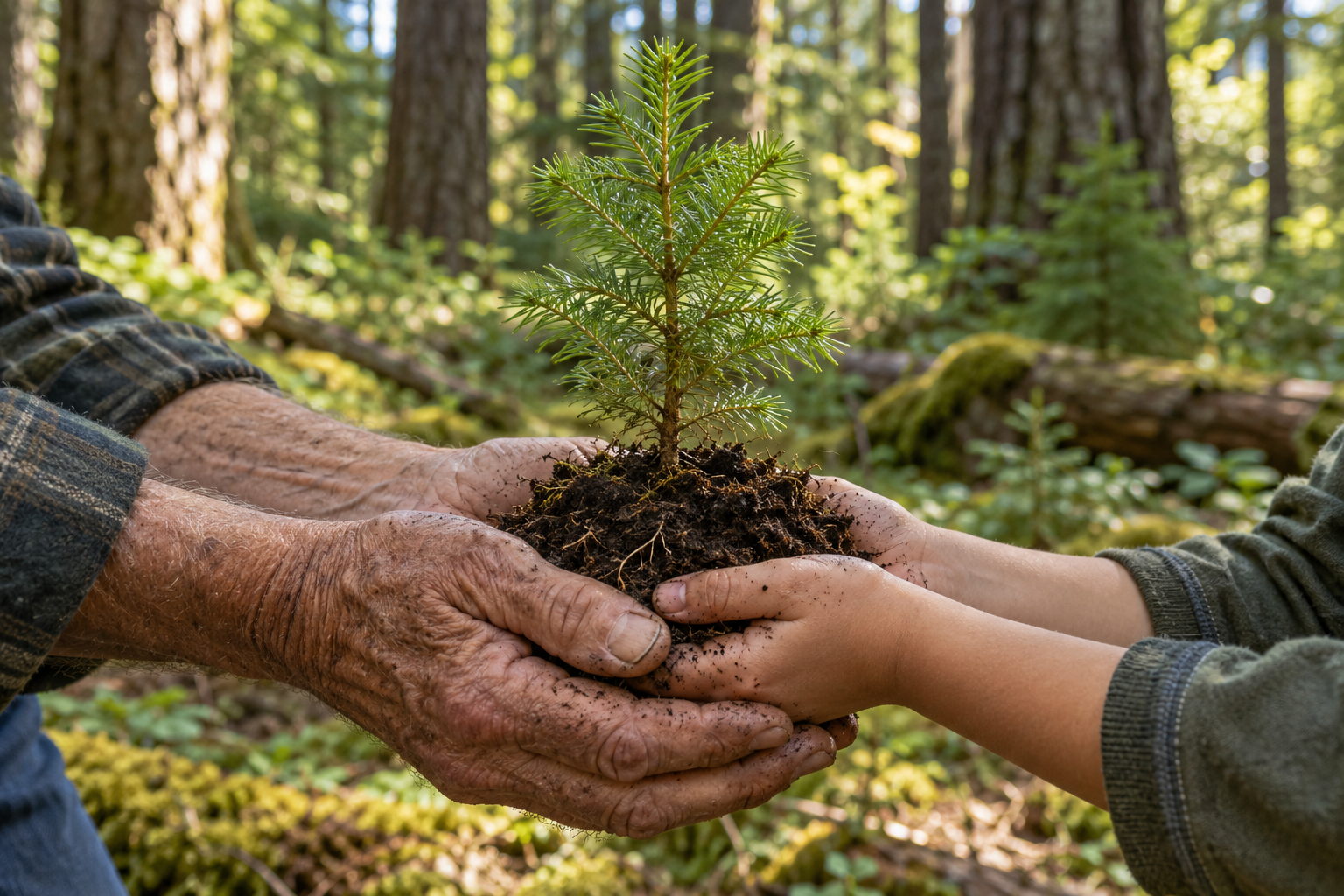
Show young trees growing in a properly restored forest.
Green and healthy?
Or increasingly dominated by enormous fire scars?
This should not be a campaign against environmental protection.
It should not be a campaign against wildlife.
It should not be a campaign against fire.
It should be a campaign for healthy forests.
There is room for disagreement over how forests should be managed. There is room for wilderness, old-growth protection, wildlife habitat, recreation, prescribed fire, timber harvest, restoration, and natural processes.
But there must also be room to recognize when policies are not producing the results forests and communities need.
We have learned a great deal about forest ecology since the logging debates of the twentieth century. We have better technology, mapping, harvesting equipment, wildfire detection, and scientific understanding than previous generations possessed.
We should use that knowledge.
The goal should be forests that are diverse, resilient, productive, and capable of surviving fire.
The goal should be to restore forests before they become emergencies instead of waiting for catastrophic wildfire to make the decision for us.
When forests burn severely, we should have an honest debate about salvage, reforestation, habitat, watershed protection, and long-term restoration.
The same principle should apply to litigation and regulation. Environmental laws exist for important reasons. But they should not become mechanisms that prevent responsible forest restoration indefinitely.
The Northwest Forest Plan was an attempt to find common ground...perhaps it is time for another attempt.
The public understands powerful images.
Americans understand Smokey Bear. They understand what a healthy forest looks like. They also need to understand what is being lost when millions of acres burn, particularly where fire burns at high severity.
The answer does not have to be partisan. It does not have to belong to the timber industry, environmental organizations, federal agencies, Tribal governments, or rural communities.
It belongs to all of us.
Our national forests are public lands. They belong to every American, including generations not yet born.
We should not accept increasingly destructive wildfire as inevitable.
We can improve forest health. We can reduce hazardous fuels. We can restore damaged landscapes. We can replant forests. We can protect communities. We can maintain wildlife habitat. We can provide recreation. We can sustain rural economies.
And we can learn from our mistakes.
More than fifty years ago, America launched a powerful public campaign to confront pollution and litter.
It changed the national conversation.
It also carried problems we can now see clearly.
We can learn from both.
It is time to build an honest national campaign for America’s forests.
Keep Our Forests Green.

Your 100% tax-deductible subscription allows us to continue providing science-based forestry information with the goal of ensuring healthy forests forever.