
Going on Faith
From Wild Bill Hagenstein to the Big Bang, a reflection on curiosity, science, and belief. A Question from a Reader.
From Wild Bill Hagenstein to the Big Bang, a reflection on curiosity, science, and belief. A Question from a Reader.

Bill Hagenstein and I were friends for 43 years. He inspired my early interest in forestry. I first interviewed him
As of this morning — our February 3 interview with Forest Service Chief Tom Schultz has generated more than 600 responses

We understand Senator Mike Lee’s anger over federal monument designations in Utah.
But this isn’t the way to settle the score with political opponents.
A draft copy (RYA25627 4 KV) of Senator Lee’s proposed legislation arrived in our inbox on January 3.
The original reportedly circulated on October 9, but it wasn’t shared with us at that time.
We don’t know who is sharing it now, but it appears to have come from someone within the Senate Legislative Counsel.
The five-page draft—which appears to be a work in progress—is titled:
Reorganization of the Forest Service Under the Department of the Interior
That title is misleading.
There is nothing in the draft that suggests a reorganization.
The proposed legislation would simply transfer the U.S. Forest Service—and the nation’s 193 million-acre federal forest estate—from the Department of Agriculture to the Department of the Interior.
That’s not reform.
It’s a jurisdictional shift with serious consequences.
Senator Lee is among several U.S. Senators on both sides of the aisle who—for very different political reasons—want to eliminate the Forest Service.
Both arguments miss the reality on the ground.
Federal agencies—the Forest Service, BLM, National Park Service, and U.S. Fish & Wildlife Service—collectively manage roughly 676 million acres, with varying levels of success.
Senator Lee’s frustration is no doubt tied to land ownership patterns:
The idea that these lands can be managed for less money through administrative consolidation is fantasy.
It doesn’t matter who does it—the Department of Agriculture, the Department of the Interior, or Howdy Doody.
Effective land management will still cost billions of taxpayer dollars.
The only way to reduce the taxpayer share of land-management costs is to sell land—an idea Senator Lee also favors.
We don’t.
These are publicly owned lands that belong to all Americans, not just elites living in gated communities and high-rise condominiums on the coasts.
We don’t all share the same views on land management, but Congress could take meaningful steps to make federal agencies more effective.
Start by giving Forest Service Chief Tom Schultz the time he needs to implement the administration’s agenda.
Serial litigation remains a major stumbling block. Regulatory tinkering won’t help until Congress puts side rails on the much-abused Equal Access to Justice Act.
Congress also needs to update the Endangered Species Act.
Best science—not politics—should prevail.
A Threatened or Endangered listing should not equal no management.
Population recovery depends on improved habitat.
Evergreen’s grizzly habitat recovery project on Hecla Mining Company timberland in northwest Montana depends on research and monitoring funded by the Forest Service’s Rocky Mountain Research Station in Missoula.
Ironically, federal agencies are not permitted to improve habitat on federal land, though they can act as advisors on state and private land.
This is why the U.S. Fish & Wildlife Service is one of about 20 collaborators in Evergreen's Adaptive Forest Management for Grizzly Habitat project - in the Bull River Valley south of Troy, Montana—along with:
You can read the essays we’ve written about this project.
Go to our main page and type “Grizzly” in the search bar.
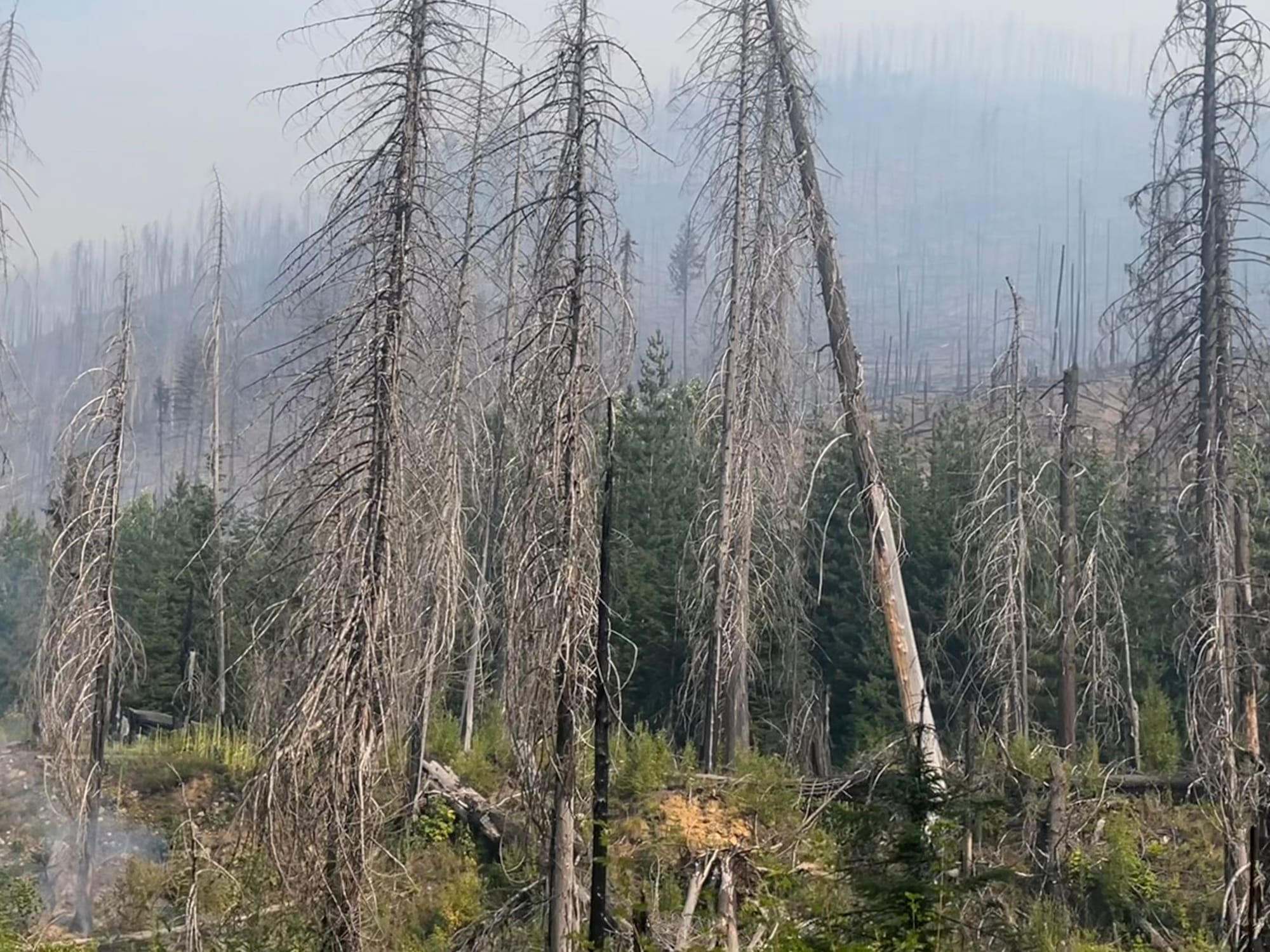
Serial litigators know ESA and NEPA better than the members of Congress who wrote them. This is why those laws continue to be used to block nearly every attempt to improve habitat on federal lands.
Congress did take one positive step by approving Master Stewardship Agreements, which allow counties to partner with the Forest Service on thinning projects within designated Wildland-Urban Interface (WUI) areas.
Lincoln County, Montana recently signed such an agreement with the Kootenai National Forest, allowing it to select treatment areas inside WUI zones at high risk of wildfire.
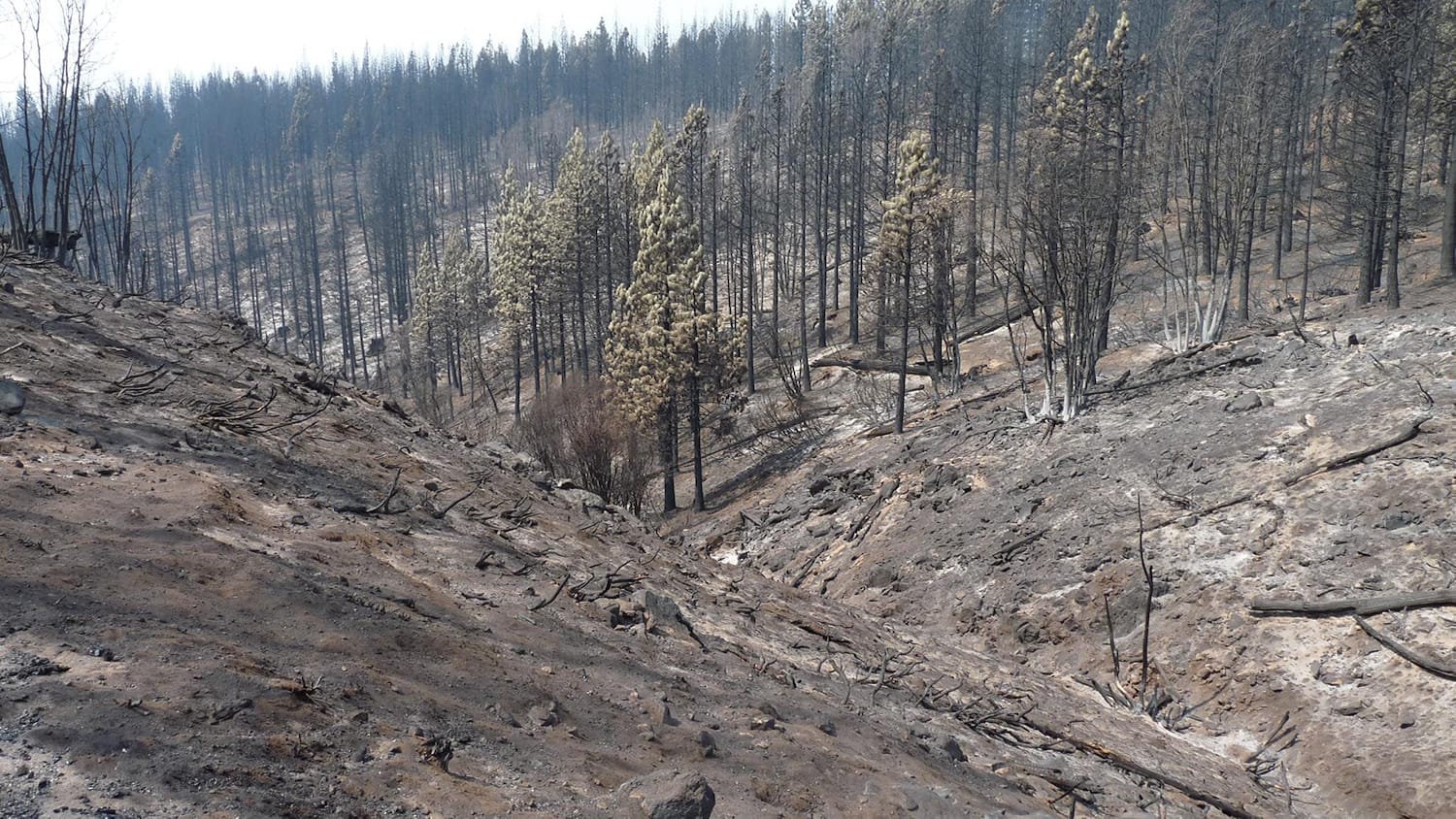
NEPA is another well-intentioned environmental law that has been corrupted by anti-forestry groups.
Congress needs to repair this regulatory morass. It has become a lucrative feeding ground for lawyers who oppose any and all forms of forest management.
We’ve said this before, but it bears repeating:
Anti-forestry groups don’t care if every acre of federally owned forest burns—as long as they retain political power.
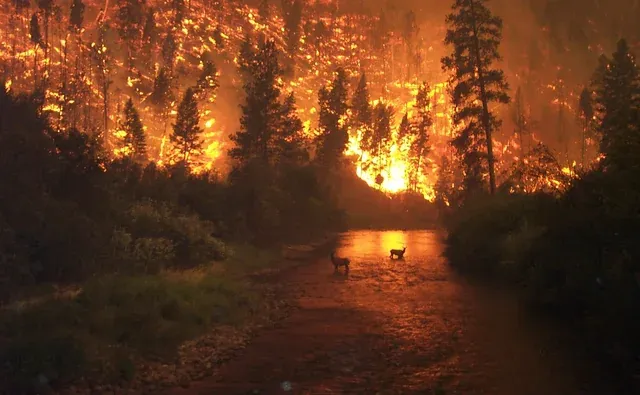
The draft states:
“Not later than 18 months after the date of enactment of this Act, the Forest Service shall be transferred to the jurisdiction of the Secretary of the Interior.”
What happens if—or when—anti-forestry ideologies once again control the federal government?
With all federal land-management agencies consolidated in one department, there would be no checks and balances.

We are still recovering from the last round.
Spotted owl populations continue to decline, yet the role of wildfire in that decline remains largely unacknowledged. Protecting old growth on paper has not protected it on the ground. Stand-replacing wildfires have eliminated vast areas of old-growth and late-successional forest that once supported owl populations.
Other contributing factors are often emphasized, while habitat loss to wildfire is treated as secondary, despite the scale and permanence of the damage. Millions of acres have been lost—much of it in fires that could have been contained when they were still small—while federal agencies remain largely prohibited from restoring habitat on federal lands.
When you look at the map at the top of the article - you can see that Western states and Alaska are far more vulnerable to election-year manipulation than the Midwest and East - because federally owned forests and rangelands are heavily concentrated in the West.
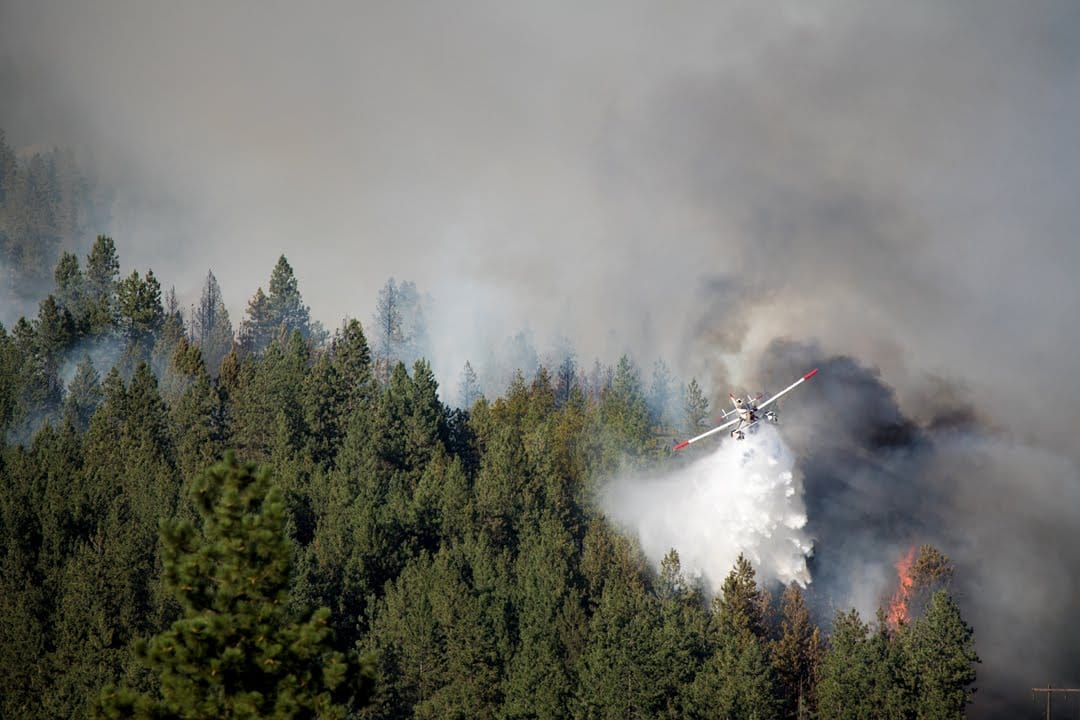
Someday—assuming faster wildfire response and real progress in science-based forest restoration—it may be worth debating the merits of establishing a cabinet-level Department of Natural Resources and Conservation.
But not yet.
And not while anti-forestry groups maintain an election-year chokehold on vulnerable House and Senate members.
Support Evergreen
Evergreen is supported by readers who value independent, science-based forestry reporting.
(Donate or Subscribe)
Your 100% tax-deductible subscription allows us to continue providing science-based forestry information with the goal of ensuring healthy forests forever.