
Keep Our Forests Green!
Rob DeHarpport makes the case for a clear, honest national campaign showing Americans what catastrophic wildfire is costing our forests,
Rob DeHarpport makes the case for a clear, honest national campaign showing Americans what catastrophic wildfire is costing our forests,

What the hell is wildfire economics? The answer runs from firefighting aircraft and litigation to salvage logging, sawmills, replanting, and
Fire ecologist Leda Kobziar on living microbes, public health, and why wildfire smoke must become our responsibility. Coughing and struggling

I don’t know Mike Garrity. I asked for the honor of an interview, but he refused, even after I promised to let him review his answers to my questions to make sure I hadn’t misquoted him. Crickets.
All the more reason why his recent op-ed concerning grizzly bear management and saving old-growth forests caught my eye. It has appeared in several newspapers in Montana and Idaho, among them the Billings Gazette, the Idaho Capital Sun, and our local paper, the Coeur d’Alene Press.
Had these newspapers done some fact-checking, they would have learned that there is much more to the grizzly story than Mr. Garrity’s op-ed reveals. As we say in the news business, the devil is always in the details.
Mr. Garrity is the executive director and treasurer of the Alliance for the Wild Rockies. It has offices in Missoula and Helena, Montana, and is easily one of the best-known serial litigators in the West.
Suing federal and state forest resource management agencies under the aegis of the frequently misused Equal Access to Justice Act has been Mr. Garrity’s business model for years.
If he stops, the Alliance will go broke. I wish he would ditch his taxpayer-paid “sue and settle” model in favor of arbitration before there is nothing left to save. Public criticism of Mr. Garrity’s litigious activities is widespread and increasing rapidly. It’s not a happy time for the Alliance for the Wild Rockies.
Nor is it a fun time for other serial litigators who are rightfully being blamed for litigating forest restoration projects that burned before restoration work could begin. The Grasshopper Project in Oregon’s Mount Hood National Forest is the latest example of the enormous environmental harm litigators are doing in the name of “saving” forests.
The only person who got the Garrity op-ed/grizzly story right, without even mentioning him, was Idaho’s senior U.S. senator, Mike Crapo. Here’s what he said in a recent Facebook post:
“The recovery of the grizzly bear in the West is a conservation success story made possible by decades of work from state, tribal, federal, and local conservation partners. For years, I have advocated for returning grizzly bear management to the states as recovery objectives and benchmarks have been achieved. Secretary Burgum’s announcement moves us one step closer to allowing Idaho wildlife professionals to manage a recovered grizzly population in a way that protects both the species and Idaho communities.”
Interior Secretary Doug Burgum wants to shift grizzly management responsibilities from Interior to the states in which grizzlies are located. The U.S. Fish and Wildlife Service is in Burgum’s wheelhouse, so what he says gets lots of press attention.
Whether Burgum’s proposal will gain any traction in Congress is hard to say, but the mere suggestion is driving Mr. Garrity nuts. His op-ed thus champions the idea that the Alliance’s recent win in the Ninth Circuit Court saves both grizzlies and old-growth forests in northern Idaho’s Selkirk Mountains Ecosystem.
Actually, it does the exact opposite. More on this in a moment.
The Selkirk Mountains Ecosystem and its adjacent Cabinet-Yaak Ecosystem span a combined three million acres in western Montana, northern Idaho, northeastern Washington, and lower British Columbia. That is 4,687 square miles - an area three times the size of Rhode Island.
The lawsuit that the Alliance won concerns a proposed thinning and biomass project at Hanna Flats, near Nordman, Idaho, on State Highway 57. The tree-lined highway links Priest River with many enclaves on Priest Lake.
The proposed project spans 10 square miles - 6,600 acres within the 1.6-million-acre Selkirk Mountains Ecosystem.
It is not the “massive and illegal” disaster that Mr. Garrity alleges. But it is at a standstill for the third or fourth time since the Idaho Panhandle National Forest and the Idaho Department of Lands developed it as a woody biomass fuels-reduction project in 2016.
In its July 16 ruling in Alliance for the Wild Rockies v. Higgins, the Ninth Circuit Court of Appeals wrote that the project could not proceed because it is based on a wildland-urban interface definition associated with the 2003 Healthy Forests Restoration Act.
WUIs are federally designated areas where national forests surround or are adjacent to rural homesites where the risk of wildfire is abnormally high. There are dozens of WUIs in northwestern Montana, northern Idaho, and northeastern Washington. Some are based on the HFRA standard. Others aren’t. Hanna Flats is.
By a 2-1 vote, the three-judge Ninth Circuit panel sent the case back to the federal district court in Missoula for further review. Your crystal ball won’t help you predict what the federal district court in Missoula will do next. Nor will mine.
The Hanna Flats Project is not “unsustainable,” as Mr. Garrity alleges in his op-ed. And it is not a massive clearcut. It is a thinning and prescribed-burning project designed to reduce the woody debris component on 6,600 acres at Hanna Flats.
At Hanna Flats, flammable woody debris averages 30 tons per acre - 198,000 tons of debris waiting for the next lightning strike.
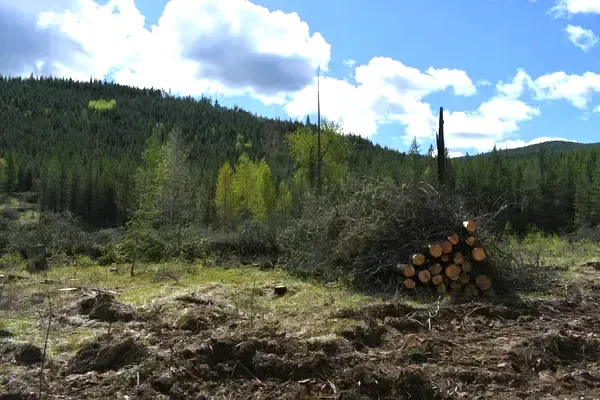
I first saw this kind of forest restoration work done 20-some years ago at the Lick Creek Experimental Forest in western Montana’s Bitterroot Valley. The late Steve Arno, a Ph.D. fire ecologist with the Forest Service’s Fire Sciences Laboratory in Missoula, spent days showing me his Lick Creek work.
Arno’s research involved thinning and prescribed burning, the same work proposed at Hanna Flats. It has since been replicated dozens of times in most of the West’s forested states. Successful replication is key to validating forest research.
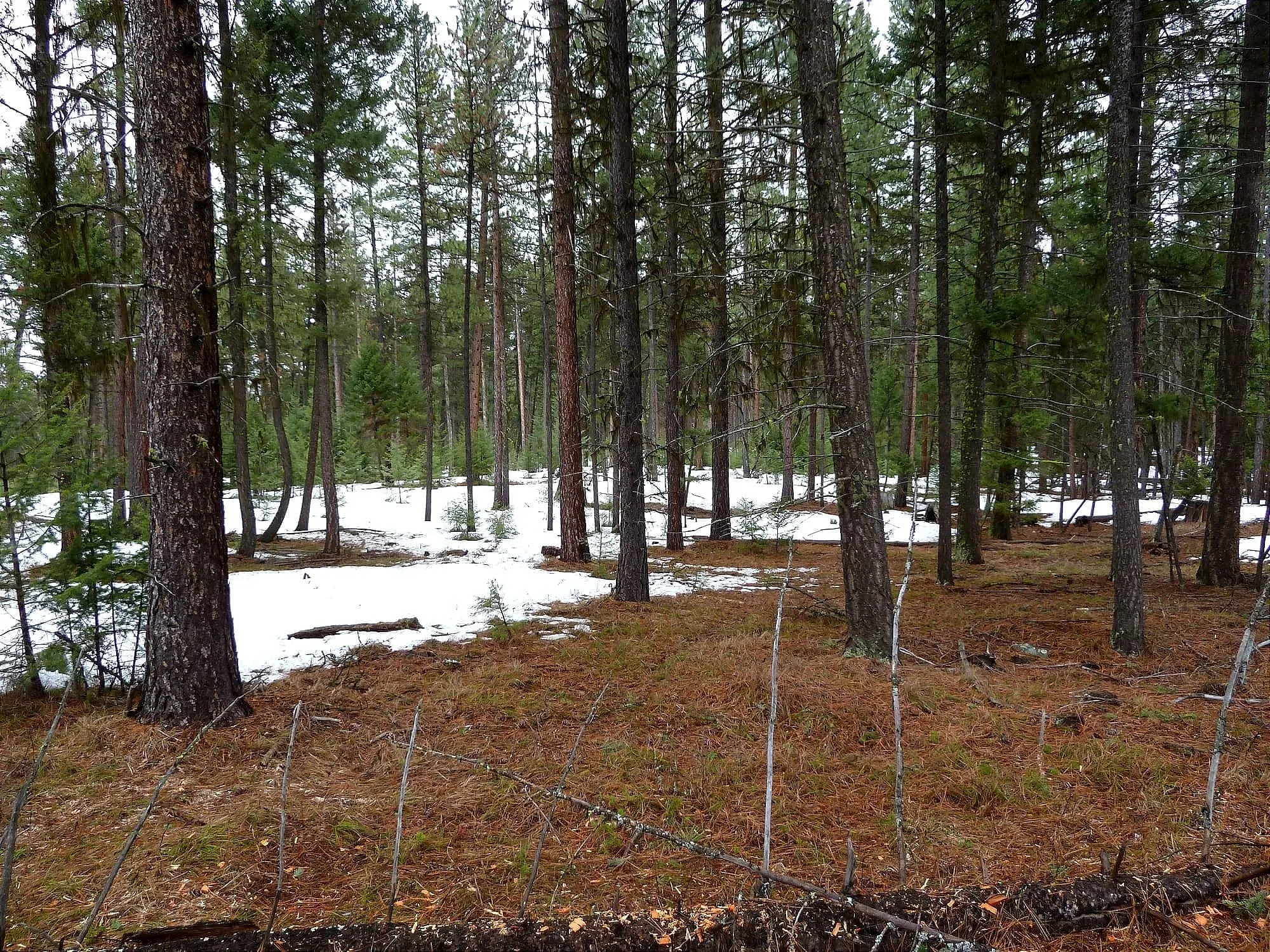
Steve’s 2005 book, Mimicking Nature’s Fire, which he co-authored with the late Carl Fiedler, is well worth reading. You can buy a copy on eBay for about $16.
I doubt Mr. Garrity has read it. If he had, he would not have been foolish enough to write what he wrote in his op-ed:
“This is precisely the kind of conduct that ensures these grizzlies will go extinct if we don’t step in with litigation.”
“This is a big win for endangered grizzly bears, but in addition the court’s ruling also protects the rights of homeowners in this area who strongly opposed the massive clearcutting operations that would destroy the forests around their homes and trails and lead to harmful sedimentation in rivers and streams.”
Let’s be clear:
No “massive clearcutting operation” is planned at Hanna Flats. Just some thinning and prescribed burning that is needed to reduce the risk of catastrophic wildfire in the Nordman area - replicating natural fires that have burned across northern Idaho for eons.
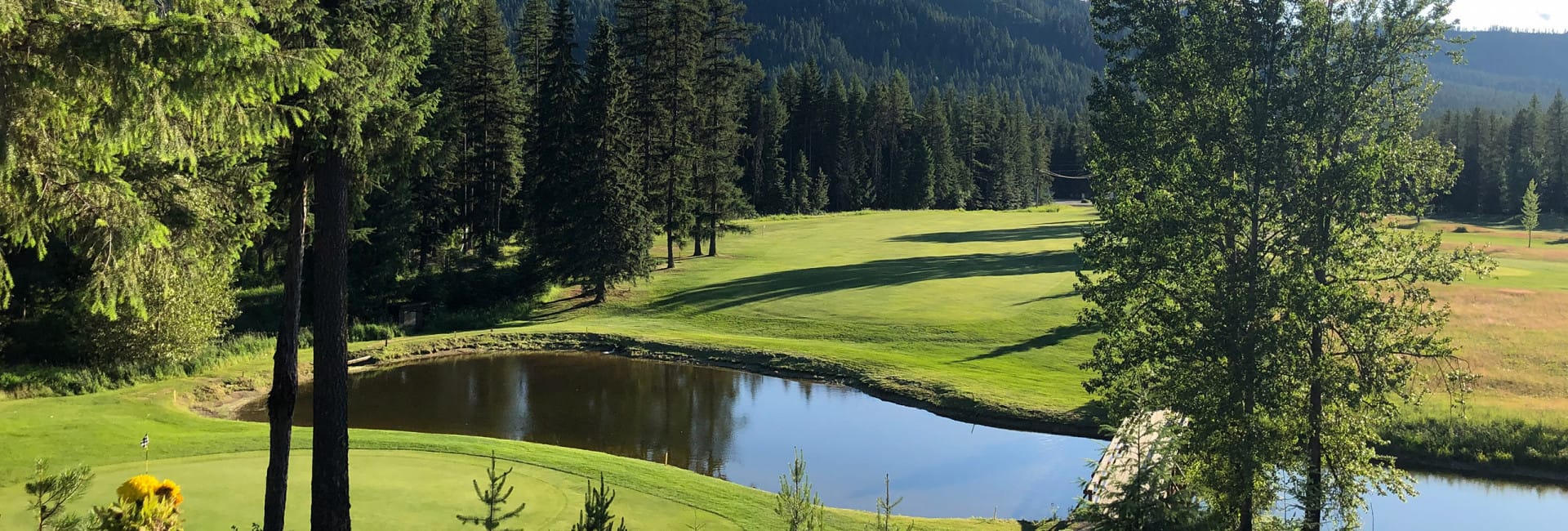
There are two beautiful lakeside resorts nearby: Hill’s on Luby Bay and Elkins on Reeder Bay, just north of Nordman.
Hill’s also owns a nearby 18-hole, par-72 championship golf course. Several years ago, the Idaho Panhandle National Forest completed a thinning project along the road that leads to the resort.
The objective was to reduce wildfire risk. Same as Hanna Flats.
We don’t back down when the mission is daunting; we’re in until the fire is out.
And by the way, grizzlies aren’t “endangered.”
The U.S. Fish and Wildlife Service added them to the Endangered Species List as a threatened species in the lower 48 states in 1975.
There is a big difference between endangered and threatened species listings.
Threatened listings permit experiments aimed at improving grizzly habitat. Endangered listings don’t.
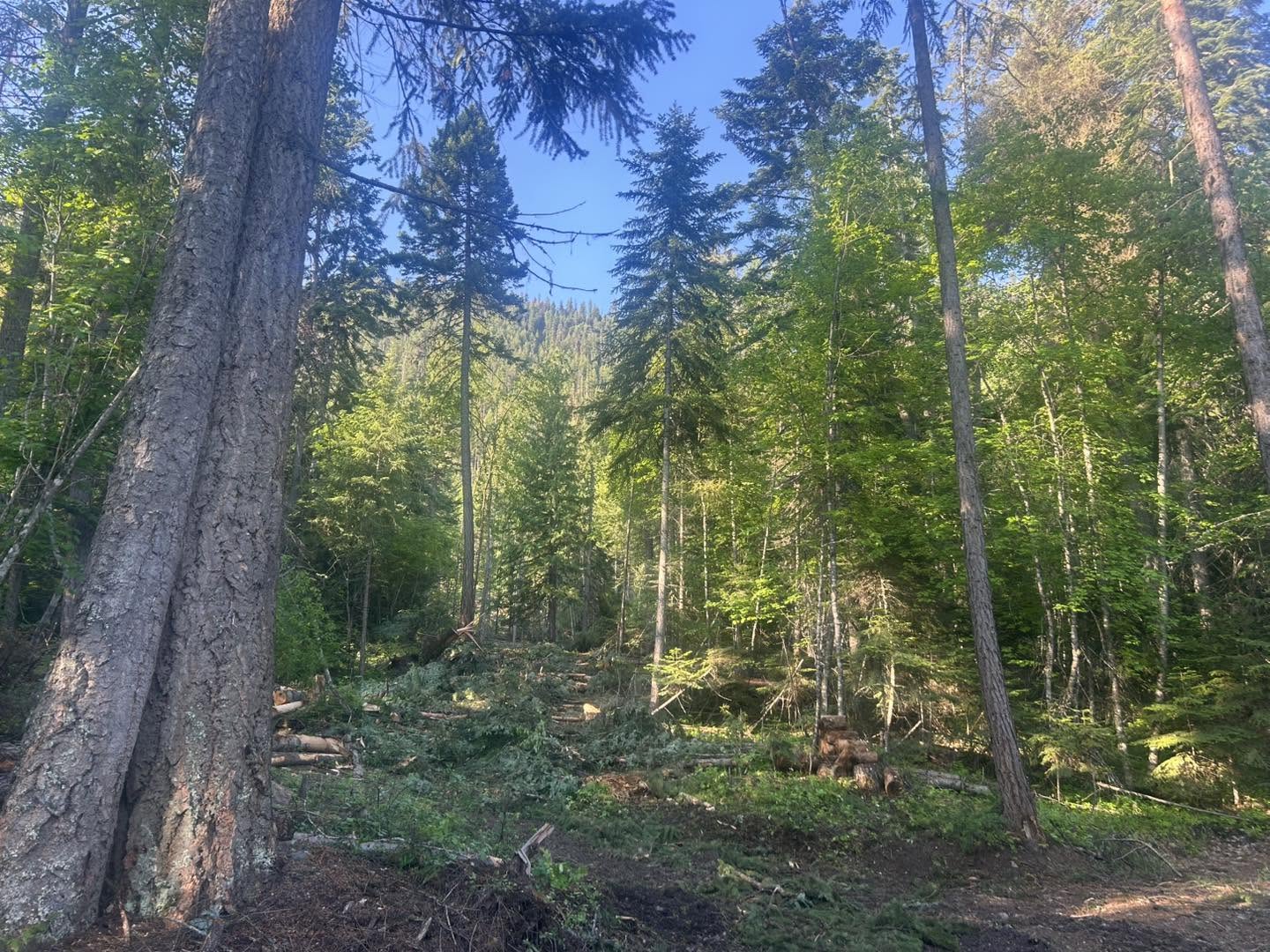
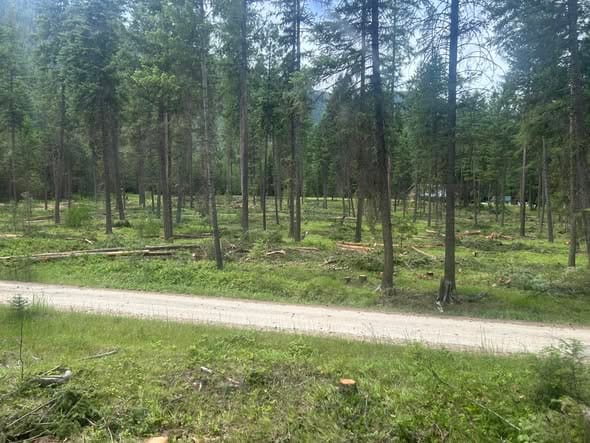
We have photographed both Hanna Flats and the Priest Lake thinning projects. Like the other “catastrophic conditions” that don’t exist, the sedimentation Mr. Garrity alleges simply is not there.
When we set aside the drama and misinformation Mr. Garrity so often uses to gain attention and objectively look at the facts, the solution is clear.
The proposed Hanna Flats Project is science-based and easily the best and most sustainable option for reducing the risks associated with stand-replacing wildfires and preserving watersheds, homes, recreation sites, habitats, and ecosystems.
This brings us to the Selkirk and Cabinet-Yaak ecosystem reports. We know these reports well because one of the co-authors is Wayne Kasworm, a renowned grizzly expert who lives in Libby, Montana. Definitely grizzly country.
You can read the detailed reports for both ecosystems:
We met Mr. Kasworm several years ago when we toured the first of several grizzly habitat restoration thinnings on Hecla Mining Company timberland in the Bull River Valley south of Troy, Montana. He helped the logger, Chas Vincent, lay out the thinning. You’ll find a related video interview with Wayne on our website. At Evergreen, our job is public outreach.
We have two goals on the Hecla tracts: (1) thin trees to reduce wildfire risk, and (2) create new food sources for hungry grizzlies so they’ll stop shopping for groceries in residential garbage cans and around school playgrounds in Libby and Troy.
Sunlight in our thinning powers new growth in roots, bulbs, and berries that haven’t germinated in many years. These are very important food sources for grizzlies - especially huckleberries loaded with sugar that grizzly metabolism turns to fat before they hibernate.
Our thinnings include secluded travel routes that bears from Glacier National Park and southeastern British Columbia can use to circumvent neighborhoods around Libby and Troy. Grizzlies are solitary animals that prefer not to be seen.
Trail cameras hung with the help of wildlife biologists from the Rocky Mountain Research Station in Missoula are monitoring grizzly movements. Monitoring will continue for several years before research station biologists write a peer-reviewed report that will define the next steps.
We believe this report and Mr. Kasworm’s Cabinet-Yaak and Selkirk ecosystem studies will help light the way to a much brighter future for all fish and wildlife species - including grizzlies - living in northwestern Montana, northern Idaho, northeastern Washington, and lower British Columbia.
It will also do much to protect millions of acres of forest and grassland, thousands of homes, and a four-season recreation paradise that all Americans can enjoy. As we’ve written dozens of times: clean air, clean water, abundant fish and wildlife habitat, and a wealth of year-round outdoor recreation opportunities.
How Adaptive Forest Management Can Increase Biological Diversity - Part 2 is a good example of the public outreach work Evergreen is doing in support of our grizzly habitat restoration project south of Libby, Montana. We’re hoping to launch a similar effort in grizzly habitat in Boundary and Bonner counties in northern Idaho.
Congress is the only body that can stop Mr. Garrity and his fellow litigators from burning the West’s great forests to the ground. The Equal Access to Justice Act must be replaced with binding arbitration.
Your 100% tax-deductible subscription allows us to continue providing science-based forestry information with the goal of ensuring healthy forests forever.