
Keep Our Forests Green!
Rob DeHarpport makes the case for a clear, honest national campaign showing Americans what catastrophic wildfire is costing our forests,
Rob DeHarpport makes the case for a clear, honest national campaign showing Americans what catastrophic wildfire is costing our forests,

What the hell is wildfire economics? The answer runs from firefighting aircraft and litigation to salvage logging, sawmills, replanting, and
Fire ecologist Leda Kobziar on living microbes, public health, and why wildfire smoke must become our responsibility. Coughing and struggling

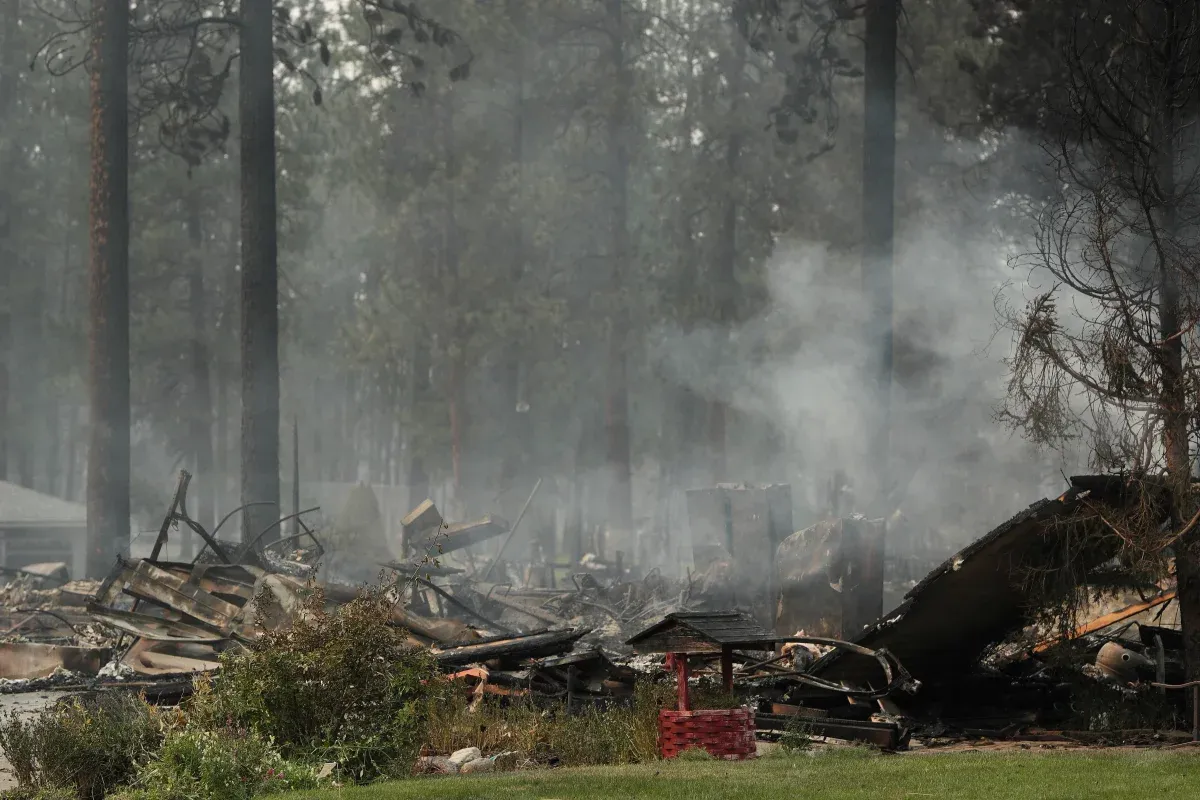
Coughing and struggling to breathe for days may not be the worst of it. A single mature ponderosa pine consumed by Spokane’s Old Trails Fire could release as much benzene as 30 million cigarettes - the equivalent of 1.5 million packs.
In this riveting interview, Dr. Leda Kobziar, a University of Idaho professor who helped establish the field of pyroaerobiology, explains the living microbes carried in wildfire smoke and what they may mean for human and animal health.
Leda Kobziar holds Master of Science and PhD degrees in Ecosystem Science, Policy, and Management from the University of California at Berkeley, plus Bachelor of Biological Science and Bachelor of Arts degrees from Evergreen State College in Olympia, Washington.
The University of Idaho in Moscow and Coeur d’Alene is very lucky to have her.
She is an exceptionally well-educated young woman whose twin passions for nature and science began during her growing-up years in Ithaca, a heavily forested area about 60 miles south of Syracuse, New York. White settlers arrived in the area in the 1700s. Cornell University was founded at Ithaca in 1865. Ithaca College followed in 1892.
Dr. Kobziar is Ukrainian American. Her parents immigrated from her homeland before she was born in Boston. She grew up speaking her native language and enjoys maintaining Ukrainian traditions in her home not far from where Julia and I live in Dalton Gardens, Idaho.
Following her “getting up to speed” years at Evergreen State College and her time at Cal Berkeley, she went to work for the Forest Service’s Forest Inventory and Analysis [FIA] in Idaho and Colorado State Forestry in Boulder, Colorado. Then, while conducting forest inventory for Boulder Open Space, she trained to be a wildland firefighter. That is not surprising once you know that she also enjoyed rock climbing for many years.
Eventually, Dr. Kobziar made her way to the University of Idaho, where she is a professor of wildland fire science and, for the past decade, director of the College of Natural Resources [CNR] Master of Natural Resources Program.
Dr. Kobziar’s areas of expertise include fire ecology, wildfire smoke, prescribed fire, airborne microbes that travel in smoke, bioaerosols, microbial dispersal, and pyroaerobiology, a term she and a colleague invented.
CNR’s dean, Dennis Becker, whom we’ve known for years, referred us to her because he knows we have an abiding interest in our nation’s wildfire pandemic and the downstream environmental, social, cultural, and human health risks big fires pose.
We met Dr. Kobziar in her University of Idaho Harbor Center office overlooking the outflow from Coeur d’Alene Lake and the beginning of the Spokane River. Tough digs, to say the least, though on the day we met, the air was full of smoke generated by multiple large fires west of Spokane.
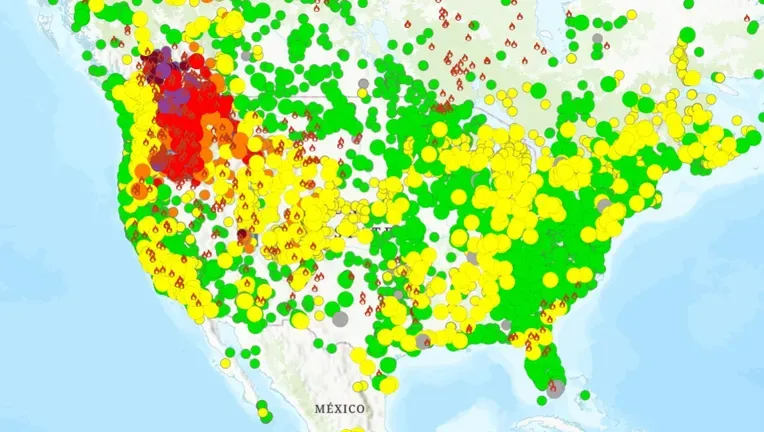
My voice was gravelly, and I was coughing so much it was embarrassing. She seemed fine.
“How do you handle this?” I asked between coughs.
“I wear a mask when I go outside,” she replied. “What you are inhaling is worse than smoking a pack of cigarettes. We still need longer-term studies, but public health recommendations will surely change as we learn more about the health risks posed by wildfire smoke.
“We already know that the exposure effects often don’t show up for a week or more,” she continued. “But we don’t yet understand this as it relates to longer-term health impacts on people and animals.”
Evergreen: How did you decide on a career in forestry?
Kobziar: I’ve always felt the forest was my place of personal refuge, where I connected with greater things and my purpose - a place for contemplation, observation, and learning. From a young age, I also found that learning the names of plants and their uses - medicinal, as food, and for building things - made the forest like a home to me. My first job out of high school was teaching kids how to survive in the woods through knowledge of plants.
I was also an avid reader on religion and philosophy in high school and loved the poetry of the Zen masters who invariably secluded themselves in forests and found meaning there. I had planned on studying eastern religion, dance, and philosophy in college.
My passion for lasting stewardship and conservation of forests - where I gained so much personally - morphed into a need to better understand the building blocks of stewardship so that I could make my own contribution.
That led to a commitment to understanding the science of forestry - the patterns of stand development, the deep history of forest management in the U.S., the specific relationships between forest structure and function, and what factors govern forest composition, soil ecology, growth, and natural change.
It was inevitable that fire would become a critical part of my learning early in my forestry research. Fire’s key role in forest ecosystem change and, in many cases, maintenance drove my commitment to lifelong learning, research, and teaching in the realms of forestry and fire ecology.
We don’t back down when the mission is daunting; we’re in until the fire is out.
Evergreen: What do you teach on the UI campus in Moscow?
Kobziar: I currently teach three online graduate courses, including Advanced Fire Behavior, graduate-level Fire Ecology, and the Master of Natural Resources Final Portfolio course. Each of these courses serves Master of Natural Resources, Master of Science, and PhD students from across the country and around the world. Included in this mix are numerous fire and natural resource management personnel.
Our students at the University of Idaho usually have a lot of natural resource management experience when they enroll. This makes teaching these students both enlightening and rewarding. I learn from them, and I also know that what I teach will be applied in the real world.
Evergreen: Ah, yes. The real world. There aren’t many real-world forestry schools left.
Kobziar: No, there aren’t. The University of Idaho is one. It’s why I’m here.
Evergreen: What are the focal points of your research?
Kobziar: One of my previous postdoctoral research colleagues and I coined the name “pyroaerobiology” to describe a new subdiscipline that explores the emission, transport, and impacts of living microbes that travel in wildland fire smoke.
On average, global wildfires emit about 25 million tons of particulate matter (PM2.5) annually. These emissions have been studied extensively in the context of their atmospheric impacts, chemistry, and public health.
Download Biological Highways in the Sky, co-authored by Leda Kobziar (PDF, 6 MB)
Smoke is a major consideration in carbon flux and climate forcing models. However, the biological component of smoke has only recently been recognized.
I’ve been working with several multidisciplinary collaborators over the last eight years. Our research has established for the first time that living microbes are a ubiquitous component of wildfire or prescribed fire smoke.
These microbes can be traced from source materials to the atmosphere and back into terrestrial environments, so smoke is not only full of particles and gases, it’s also a global biological dispersal agent.
Thousands of bacterial and fungal taxa are present in smoke. They may have pathogenic, beneficial, or neutral impacts on terrestrial and aquatic environments, as well as on human and animal health.
Evergreen: The recent Spokane fires are a timely reminder of the importance of your research.
Kobziar: I hope so...but first I want to recognize the incredible work done by all the emergency first responders to protect people during these fast-moving fires.
The fact that injuries were limited and no fatalities occurred is a tremendous accomplishment and shows how preparedness for this type of event makes a critical difference.
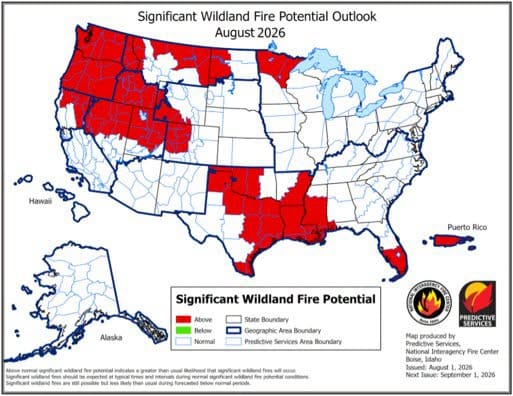
I think many people in North Idaho and eastern Washington are shaking their heads about the duration and intensity of the smoke exposure they are experiencing this summer.
Add the longer-burning and wind-driven wildfires in north-central Oregon, on the eastern slopes of the Cascades, and in central Washington, and we have even more very unhealthy smoke.
Smoke from fires that burned in residential areas, like the Old Trails Fire, added significantly more hazardous content than typical wildfires. So, we’ve had a long couple of months of high smoke concentrations from both wildland and wildland-urban interface sources.
Even my colleagues in health sciences were remarking on this summer having the highest number of smoke-related health complaints they’d witnessed. The data is still forthcoming, but we are interested in investigating how this summer of smoke has affected the rates and types of health concerns in the region.
There is also really interesting research being done at the University of Idaho on the effects of smoke on animals such as free-ranging cattle - research that ties together wildfire and rangeland considerations. In light of climate change impacts on prolonged drought, these smoky summers are likely the new abnormal in our region.
Evergreen: What might Spokane expect in terms of microbes in wildfire smoke?
Kobziar: We have studied the concentrations of microbes emitted from fires in natural vegetation sources but have not yet looked at what types of microbes are emitted from urban conflagrations.
From vegetation fires in similar coniferous forests, our estimates of smoke’s microbial content average around 1-2.5 million bacteria per cubic meter of air near a fire and around 200,000-500,000 fungal spores per cubic meter.
That level of spores is about 2-5 times higher than what would cause respiratory effects in healthy individuals. Keep in mind, these are estimates for locations where smoke is in the yellow/orange AQI [Air Quality Index] category or higher.
In an urban fire, there would be the potential for the emission of common household molds and bacteria, many of which are innocuous, but some can cause concerns when inhaled. One example is “black mold,” like Aspergillus fumigatus, which we often see in smoke. With collaborators at the University of Florida, we have tested fungal pathogens that we isolated from smoke on mice and found that they do indeed cause pneumonia-like symptoms.
This is an active area of research that deserves attention - both for emissions during the fire and for the conditions following the burn and during the rebuilding process when microbes in soils tend to be dislodged.
Evergreen: I presume you see this as a serious health threat.
Kobziar: Yes, we do. If there is one thing we know about wildfire smoke, it is that it is not innocuous. We are still learning about how much is too much, who needs to be most concerned, and what longer-term exposures can lead to. Nearly every study conducted has shown harmful health impacts for all people.
It doesn’t matter if you are healthy or not, or young or old. Even short-duration wildfire smoke exposure can be harmful.
Evergreen cannot run on good intentions alone.
Independent forestry journalism takes time, travel, research, interviews, editing, photography, web publishing, and decades of earned trust.
It is work - and like the work you do, it has to be supported.
Subscribe. Contribute.
Help keep Evergreen independent.
Subscribers receive access to many of Evergreen’s back issues in our Archives.
Our archives hold a deep record of forestry reporting, history, policy, people, and practice.
Looking for a specific issue or topic?
Let us know, and we will help you find the Evergreen
coverage you need.
Prefer PayPal?
You can set up an ongoing donation, and we will honor it as a subscription with the same benefits.
Evergreen: How many cigarettes in a burning tree?
Kobziar: I love this question. And I’m sorry to have to say this, but it depends. Let’s assume the entire tree burns in flaming combustion and that it is a mature ponderosa pine about 30 inches in diameter growing in a semi-arid climate.
That tree has a dry weight of roughly 6,600 pounds. Now, let’s pick benzene, a carcinogenic pollutant that we know is emitted from both natural vegetation and cigarettes. Emission factors for benzene emitted from burning western conifers suggest that our tree produces about 3.3 pounds of benzene. Estimates of inhaled smoke from one cigarette equal roughly 50 micrograms of benzene per cigarette.
The math here gets complicated, but the bottom line is that our one burning tree produces the same amount of benzene as roughly 30 million cigarettes.
Evergreen: Wow! That’s 1.5 million packs of cigarettes.
Kobziar: Yes. Using the same approach for particulate solid or liquid matter in the PM2.5 size class produced by a burning cigarette (full stream produced, a subset of which is inhaled), we get approximately 1 million cigarettes of particulate matter produced by a burning tree.
A single human hair is about 30 times larger than a PM2.5 particle, so we are talking about very small particles that are capable of doing damage to your health.
Evergreen: Federal and state air quality regulations use the same PM2.5 standard to severely limit the number of days per year that forest landowners can burn logging slash, which is a very important step in post-harvest site preparation and replanting. How do we bridge the gap between science-based forest management and concerns for public health?
Kobziar: This is a huge question.
I think the short answer is that we need to start considering wildfire smoke as our responsibility.
In prescribed burning, we teach that you have to “own your smoke,” but we do no such thing when it comes to wildfires, because about 60% of the time they are not fires that people cause (these are Idaho numbers; however, the percentages are different in every state and each year).
Federal regulatory agencies allow state air quality regulators to submit exceptions for time periods during which wildfire smoke is spiking the 24-hour average PM values, the values they are required to maintain below a certain threshold. That way, states are not flagged as exceeding national ambient air quality standards.
It’s very challenging to identify any single entity that would be responsible for wildfire smoke. It does not abide by state or even national or international boundaries, and we certainly can’t control lightning.
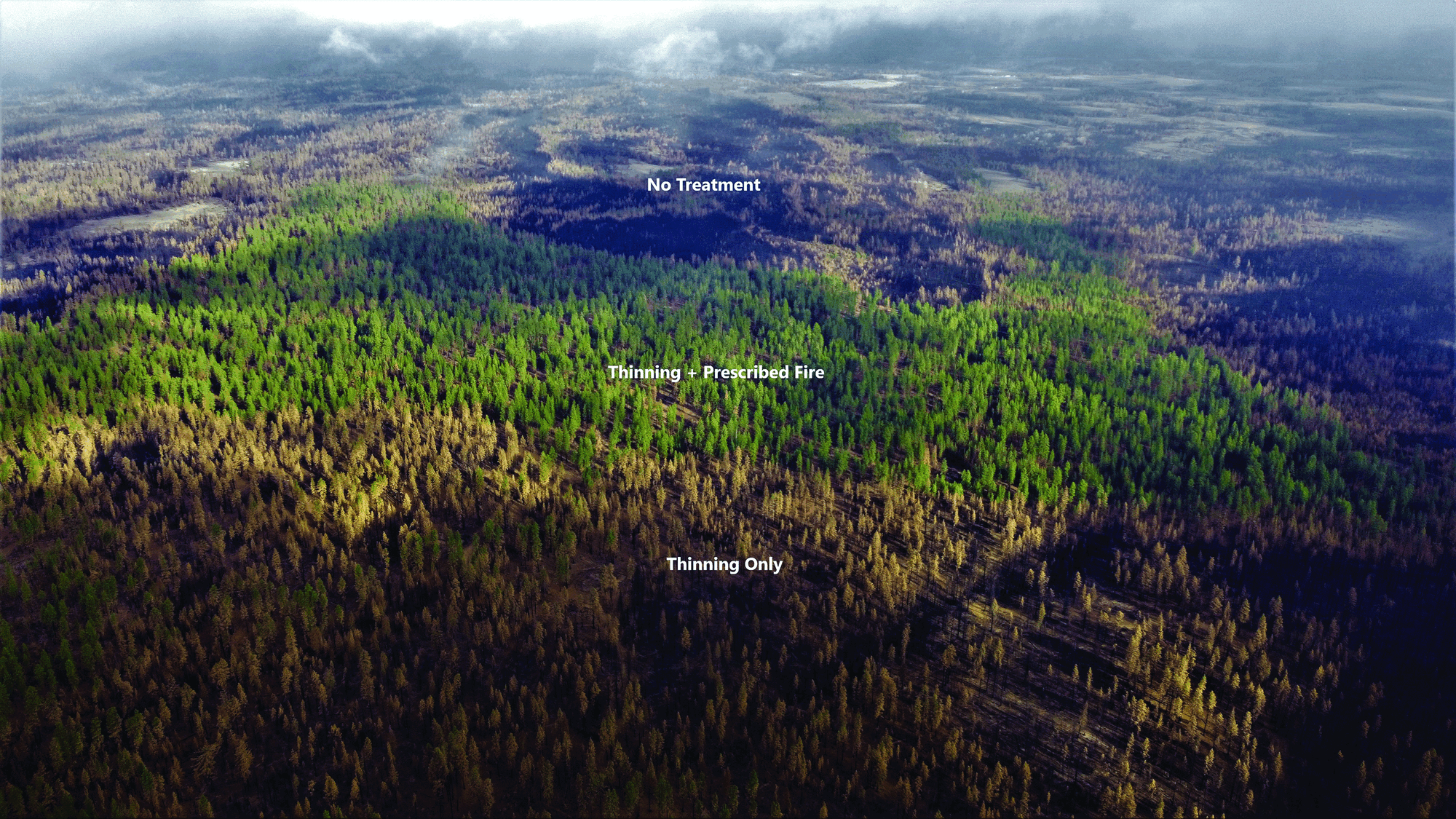
But we can do something about fuels and the climate. Prescribed burning is one of the most important fuels reduction, public health, and safety protection tools we have in our natural resource management toolbox. We also have good evidence that increased prescribed burning reduces wildfire smoke.
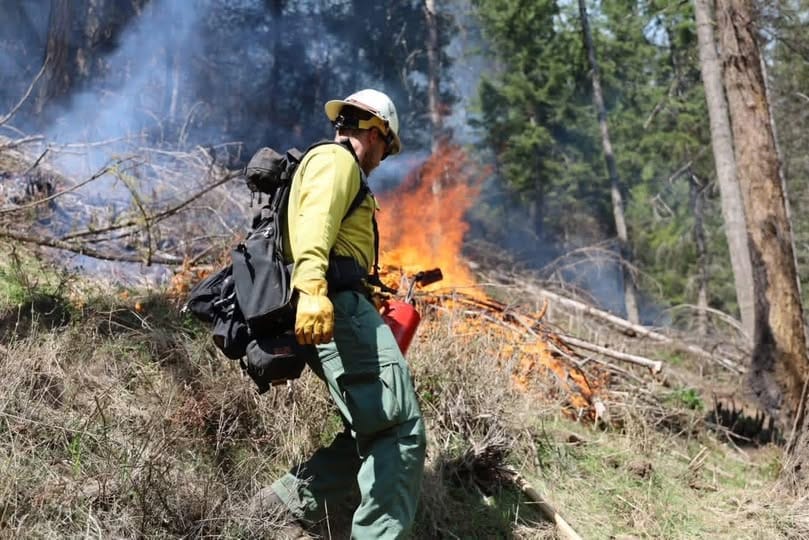
In a way, prescribed fire smoke is being treated “unfairly” in comparison to wildfire smoke, because no one is responsible for wildfire smoke.
The solution is not simple.
I think the first thing we need to do is to augment our regulatory system so that it reflects a recognition of the preventative value of prescribed burning, especially where smoke is concerned, and no longer suppresses safe, effective prescribed burning practices.
As for wildfire smoke, excluding it from our yearly averages is simply inaccurate and could be seen as counterproductive to promoting change. Luckily, the public now has access to excellent data through low-cost air quality sampling networks available on the web.
Fortunately, there are many fire scientists working together with astute lawyers and legislators to create new regulatory frameworks that address this critical issue for the future of our forests. I think all of us, myself included, need to do more to promote public awareness of how prescribed burning can reduce the smoke impacts we are all increasingly exposed to.
Evergreen: Thanks, Leda. The more we learn about wildfire smoke, the clearer our responsibility becomes.
Your 100% tax-deductible subscription allows us to continue providing science-based forestry information with the goal of ensuring healthy forests forever.