
The Pack-A-Day Club, Reconsidered
Editor's Note: This article was first drafted in October 2017 and published in January 2018. Here we are
Editor's Note: This article was first drafted in October 2017 and published in January 2018. Here we are


"Constant procedural tinkering does not, I fear, lead to efficiency or simplicity." Long before the recently announced Forest
You, dear reader, are reading our Evergreen posts - (we love that) - for free (we would like to change
Wildfire has become the magnet among those who share our concern for the damage stand-replacing fires have done on public and private forestland over the last 25 years.
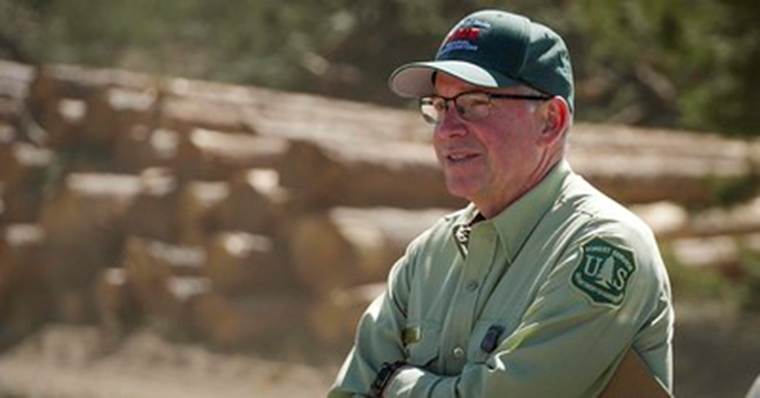
Tom Schultz, 21st Chief of the U.S. Forest Service
We first profiled Forest Service Chief Tom Schultz in a March 8, 2025 essay titled “Tom Schultz: Big Picture Thinker” published in Evergreen four days after he was named Chief. We wanted to get our oar in the water early concerning what we believed to be the most important issues facing him.
We first met Schultz in Boise several years ago when he was Director of the Idaho Department of Lands, a position he held from August 2011 until January 2018. He was later hired by the Coeur d’Alene-based Idaho Forest Group as Vice President of Resources and Government Affairs, a post he held until he was named Chief.
Last October, Schultz reached out to ask if we would like to interview him. We finally spoke during an hour-long Microsoft Teams call on January 12.
Schultz is the seventh Forest Service Chief Evergreen has interviewed. The others were Dale Robertson, Dale Bosworth, Tom Tidwell, Vicki Christiansen, Randy Moore, and Jack Ward Thomas, whom we came to know well after he left the agency and accepted a Boone and Crockett-funded Chair in Wildlife Conservation at the University of Montana.
Schultz studied forestry — silviculture, wildlife, and watershed management — at the University of Montana after moving on from the University of Wyoming. While there, he took a class in environmental politics taught jointly by the controversial former Interior Secretary James Watt and Dr. Gregg Cawley, a 1960s-era environmentalist.
What impressed Schultz most was their ability to conduct respectful dialogue — a quality notably absent from much of today’s political debate. We’ve seen this most recently in the brouhaha that erupted in the House and Senate over Utah Senator Mike Lee’s proposal to transfer the Forest Service from the Department of Agriculture to the Department of the Interior.
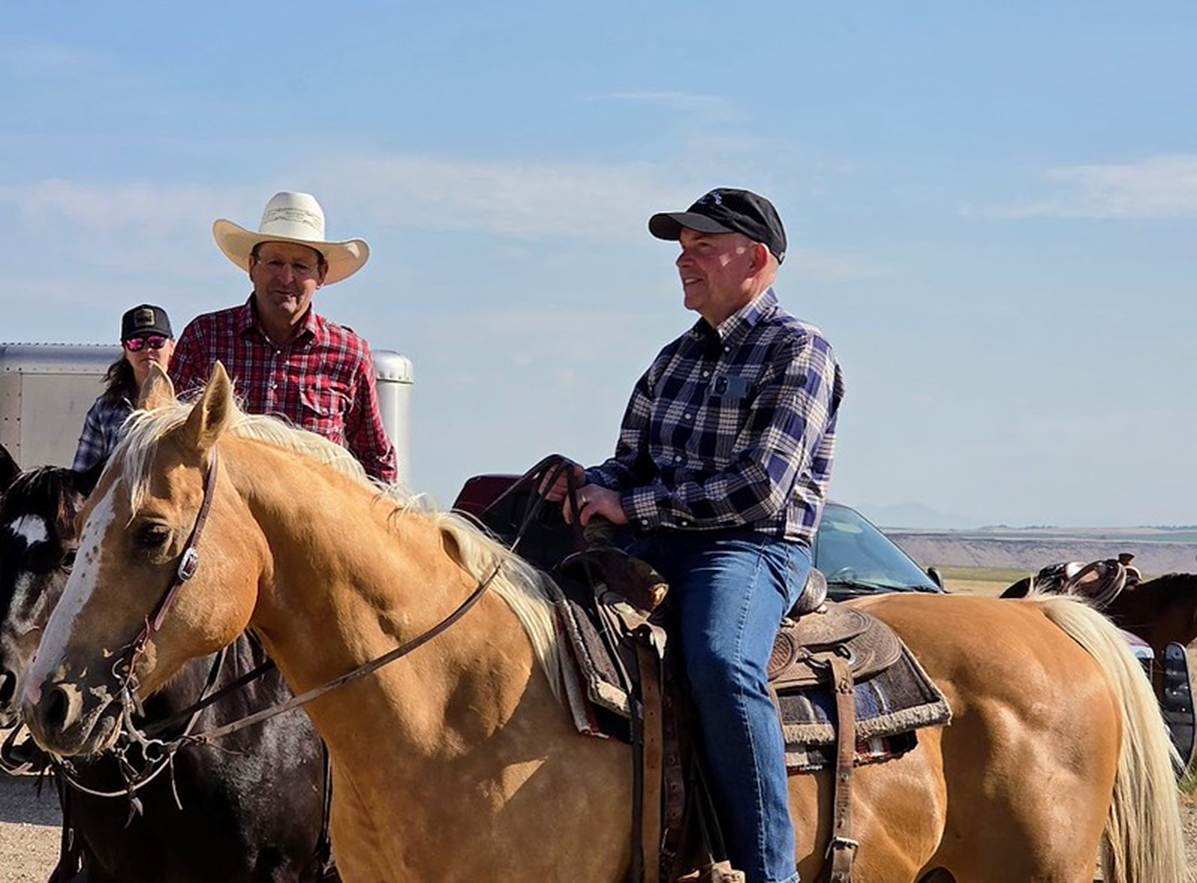
Evergreen: Chief, tell us about your upbringing and how it led you to Washington, D.C.
Schultz: I grew up roaming the woods along the Occoquan River - about 20 miles south of D.C. Our family did lots of camping and fishing when I was young. It sparked my early interest in forestry. My grandfather was an avid birder and early Scout leader, and my father-in-law was a professor at Montana State University and an avid sportsman who spent 30 years living and working in Gallatin County, Montana.
Evergreen: You grew up very close to forestry’s beginnings in America.
Schultz: I did, for sure. Many westerners don’t know that the history of forestry and sawmilling in this country began on the Atlantic seaboard. There are many parks and museums here, including one in (including in Occoquan, VA, marking early sawmills that produced lumber, roof shakes, and siding for some of the earliest communities in Pennsylvania, New York, New Jersey, Maryland, and Virginia — including Colonial Williamsburg, which served as the capital of the Virginia Colony from 1699 to 1780.
Evergreen: We’ve toured Williamsburg twice. The restoration work funded by the Rockefeller Foundation is very impressive.
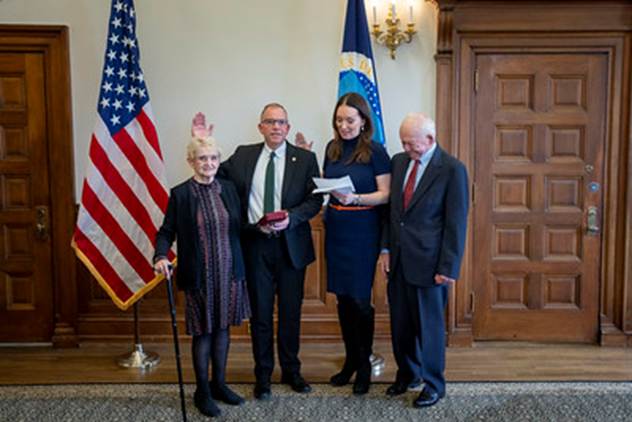
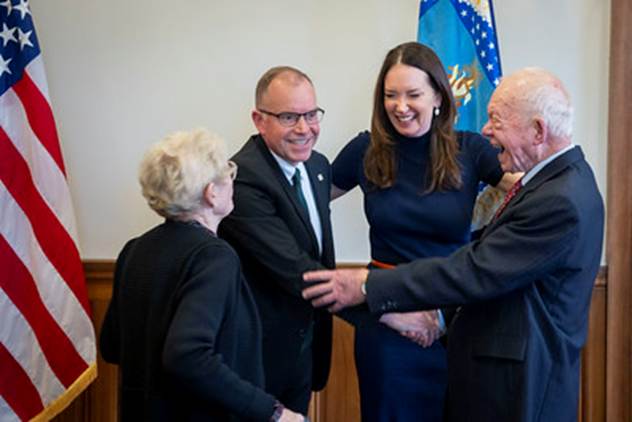
Evergreen: Who first contacted you about the Chief’s job?
Schultz: Jim Hubbard, when he was Agriculture’s Undersecretary of Natural Resources and Environment. He didn’t know what might be available, but he wanted me to think about what might interest me. He knew I had both western and southern experience, which was a plus.
Evergreen: We’ve visited with Jim at a couple of forestry conferences in Idaho. He held several federal forestry positions before retiring, including one at the Department of the Interior. Wildfire always seemed to be on his to-do list. Nice man. Very capable.
So here you are — Chief of the Forest Service at a precarious time. Americans are deeply divided over how National Forests should be managed, or whether they should be left to nature’s vagaries. Is this gap bridgeable?
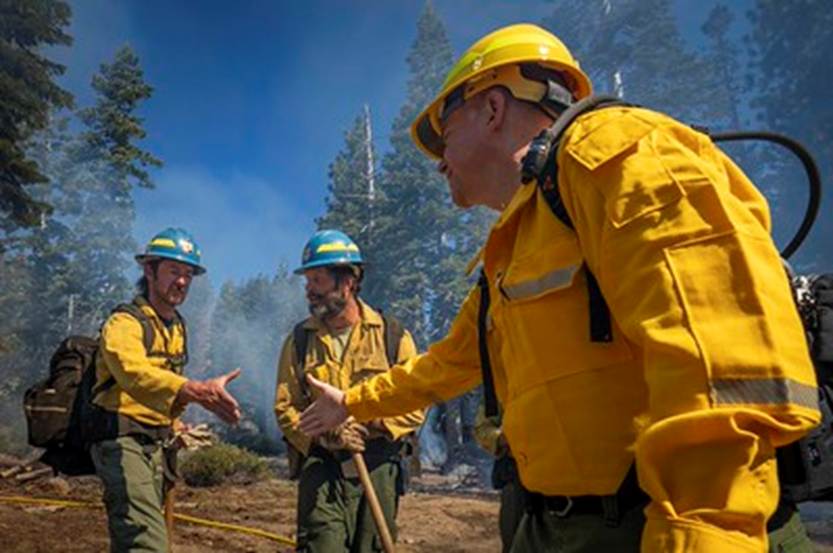
Schultz: My mind goes back to Jack Ward Thomas’s often-quoted comment about environmentalists going around the battlefield bayoneting the wounded and the dead.
Yes, the gap can be bridged. Wildfire has become the magnet among those who share our concern for the damage stand-replacing fires have done on public and private forestland over the last 25 years.
Evergreen: We agree. How did you come to that conclusion?
Schultz: I’m living out of a suitcase now, traveling from coast to coast and meeting with Forest Service employees, community leaders, elected officials, conservationists, and industry groups. Most people want to tell me a personal story about how one of these fires destroyed their community, a watershed, or a place where they took their kids camping or fishing.
Evergreen: That must be exhausting. What do you tell them?
Schultz: I’ve long believed we have two ears and one mouth because we’re supposed to listen before we talk. So I’m doing a lot of listening before I say anything.
Evergreen: And when you do respond — what do you tell people?
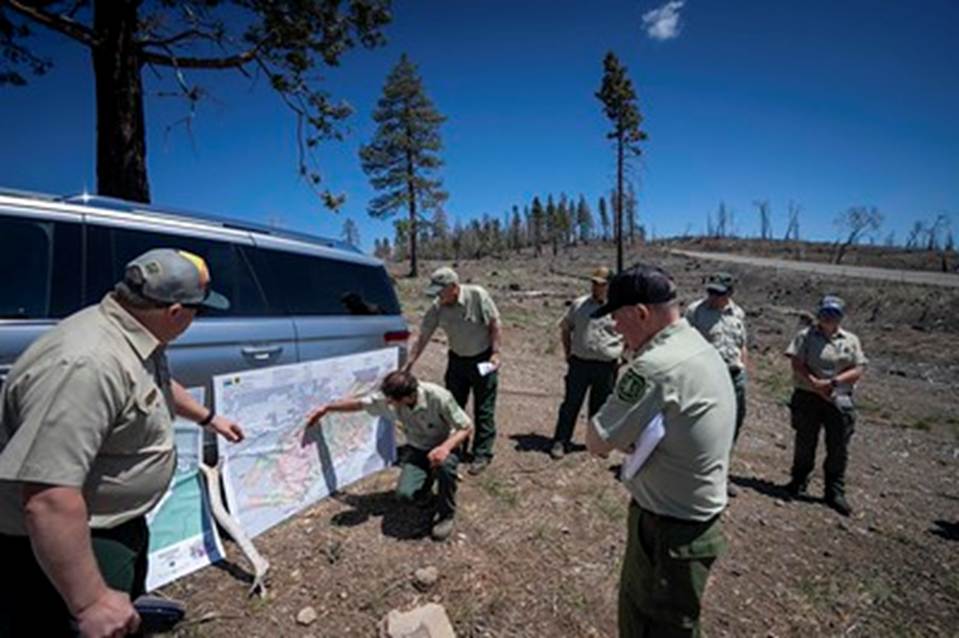
Schultz: I tell them adaptive forest management is the answer. We have to address the underlying causes of these fires. Our safest and most reliable tools for reducing wildfire risk are harvesting overstocked forests, salvaging dead timber as quickly as possible, and prescribed burning of the debris left behind in diseased and burned forests.
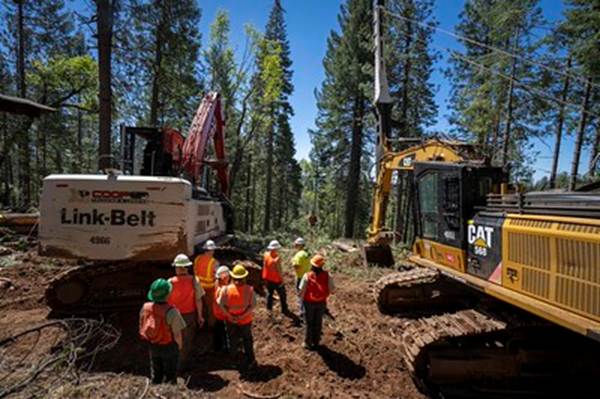
Evergreen: That answer resonates in much of the rural West, but it’s far less popular in urban and metropolitan areas along the West Coast — despite the fact that more than half of the National Forests in the West under your watch are dying, dead, or burned as a result of decades of mismanagement or no management at all.
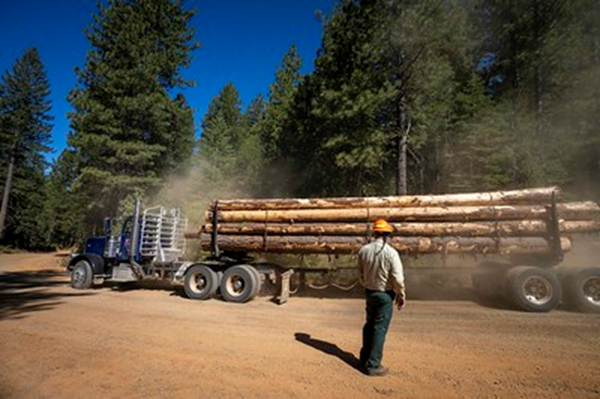
Schultz: Many people in cities believe timber in National Forests is being overharvested and that there isn’t much old growth left. That’s not true. What is true is that only about 25 percent of our 193 million acres of National Forest System land is legislatively available for timber production — and we’re actively managing less than one percent of that on an annual basis through our timber sale program ~ 250,000 acres in FY24. We managed another 3.6 million acres with mechanized fuels treatments and prescribed fire in FY24.
Evergreen: So a reliable back-of-the-envelope estimate is that you’re actively managing approximately 4 million acres out of 193 million annually.
Schultz: Exactly. That’s why ramping up harvest levels is a priority for this Administration — and why we need to attack fires when they’re small, when they can be extinguished quickly and at far lower cost.

Evergreen: Assuming the new Wildland Fire Service is activated — and it appears it will be — do you foresee rapid response, or a return to what the previous Administration called “managed fire for ecosystem benefit”?
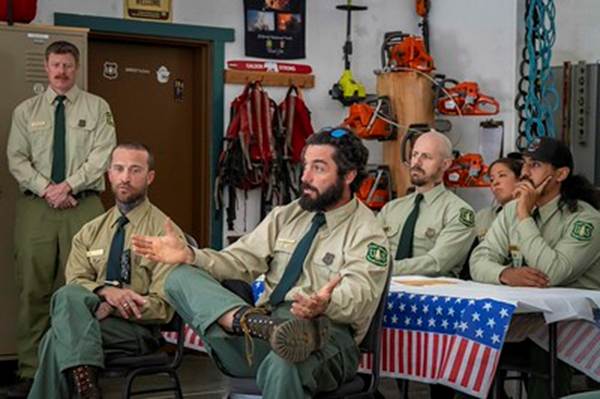
Schultz: The recent record is very clear. It’s not possible to herd large fires across landscapes without unacceptable losses to forests and communities. It doesn’t matter whether it’s the Forest Service or the Wildland Fire Service — we have to put fires out as quickly as possible. That means rapid response, not waiting to see what a fire will do next.
Schultz: To do this, we must double down on bringing divergent groups together under collaborative umbrellas. I played a key role in this during my leadership years with Montana’s Department of Natural Resources and Conservation. Our greatest success came through the Montana Forest Action Plan, first completed in 2010 and updated twice since. It’s a practical roadmap that any group can use.
Evergreen: How has the Administration’s downsizing affected the Forest Service?
Schultz: We’ve lost a good number of non-fire employees to voluntary early retirement. Some probationary employees were let go, but there hasn’t been the widespread upheaval some allege. When the President took office a year ago, he ordered an immediate hiring freeze. At the time, the Forest Service faced a budget hole roughly $750 million deep. To remain credible with taxpayers, we have to be fiscally sound.
Evergreen: How do you do that when everything costs more?
Schultz: By decentralizing and deregulating. Decision-making needs to move much closer to the ground, where men and women can make informed choices. Leadership’s role is to help boots-on-the-ground employees succeed.
Evergreen: How do you do that with fewer people?
Schultz: By focusing on what matters most: reducing wildfire risk, increasing harvests in high-priority areas identified by Forest Service research stations, salvaging fire-killed timber, disposing of woody debris, and replanting quickly. California is a prime example. On the Eldorado Forest, active management is down roughly seventy percent over the past 10 years because the focus was placed on the northern spotted owl rather than its habitat. After the Caldor fire about half that habitat was incinerated. That’s unacceptable.
Evergreen: Many believe your plans will lead to overharvesting.
Schultz: Taxpayer-funded forest surveys — some dating back to the early 1900s — tell a different story. In Montana, mortality exceeds growth on all but one National Forest. The same is true in Idaho, California, New Mexico, and Arizona.
It’s less pronounced in western Oregon and Washington because there’s a large base of well-managed state and private timberland. The sweet spot for many mills is a good-quality tree around 15 to 20 inches in diameter. Logs smaller or larger than that sell at a discount in many parts of the country.
Are National Forests Becoming “Tree Farms”?
Evergreen: Let me play devil’s advocate for a moment. Some critics argue that your approach would turn our beloved National Forests into giant tree farms.
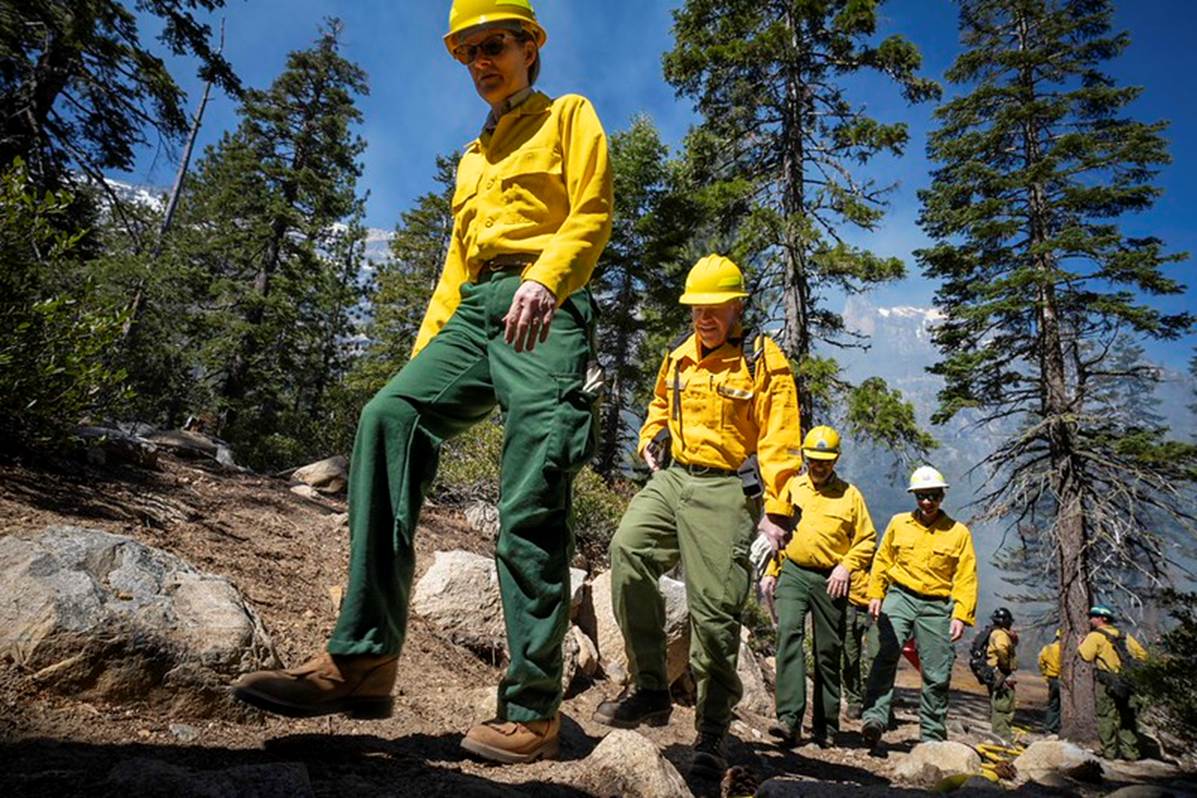
Schultz: Not at all. What we need are structurally diverse forests with many species and age classes — from seedlings to old growth. That’s what wildfires have taken from us. It’s why initial attack is so important. Fires are far safer and easier to control when they’re small. “Managing” large fires doesn’t work. Trees that are dying or dead don’t grow back quickly. We currently have a backlog of more than 3.5 million acres of forestland that needs to be reforested, much of that due to impacts from wildfire.
Evergreen: Assuming your approach works, where are we in board-foot terms?
Schultz: We’re headed toward four billion board feet annually. If we implement existing forest plans, we could reach about 6.5 billion board feet. In 1989, annual harvest was roughly 12.4 billion board feet.
Evergreen: So the pre-spotted-owl glory days are gone.
Schultz: Yes. But at 6.5 billion board feet, we’re creating biologically diverse forests that implement forest plans that will lead to healthier forests, improved fish and wildlife habitat, increased recreation opportunities, and improved access for firefighters to suppress wildfires.
Evergreen: Mill owners we know prefer sourcing logs from state, private, and tribal lands. They don’t believe the federal government can sustain harvest levels that attract investment capital.
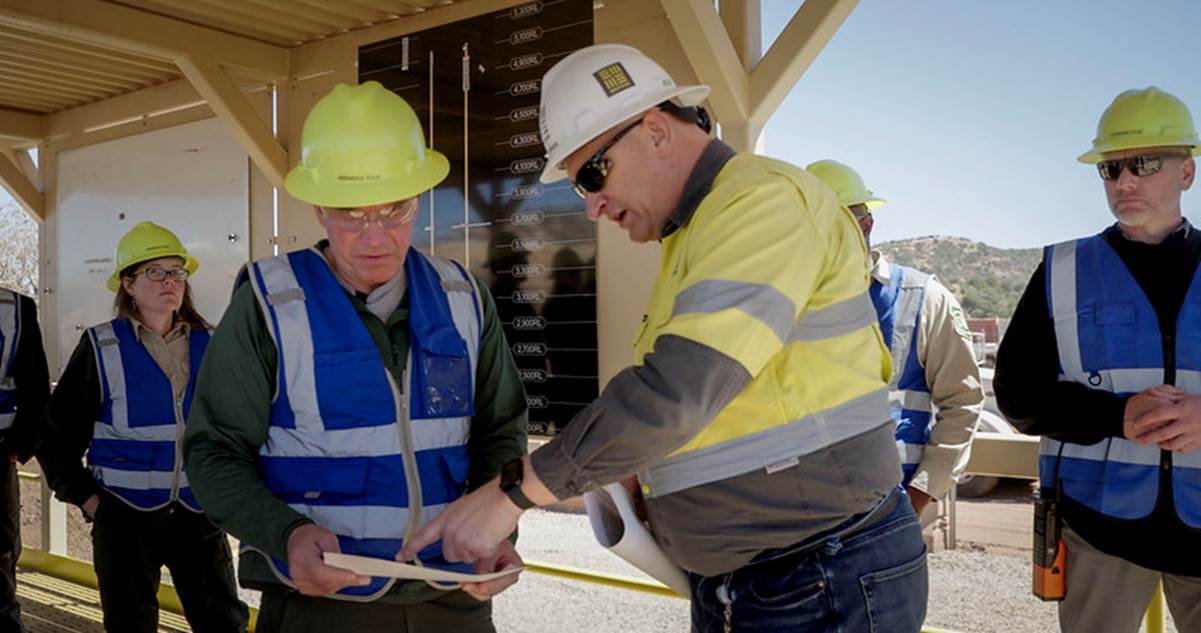
Schultz: Hundreds of small, family-owned mills that depended on federal timber have gone out of business over the last 30 years. Today, it costs $250 to $300 million to greenfield a new mill. No investor will commit until there’s assurance of adequate log supply. That’s why so much U.S. and Canadian capital has flowed into the Southeast, where most timberland is privately owned and the business climate is welcoming.
That’s also why the Forest Service must play a leadership role in encouraging diverse stakeholder collaboration in the West — and why leadership must help boots-on-the-ground decision-makers succeed. Industry needs the Forest Service to provide a predictable and stable supply of raw material. If we do that, I believe that we will see increased investment in existing infrastructure and consideration of new investments where adequate supply exists.
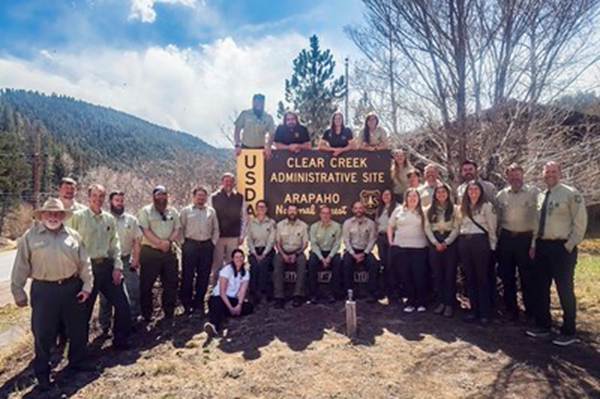
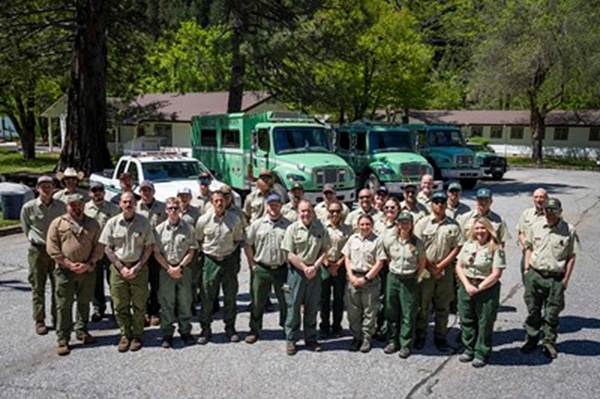
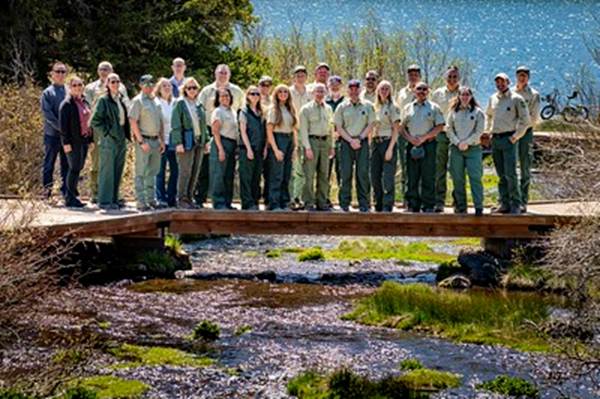
Evergreen: Last question. How can we overcome the obstacles of the past and move the Forest Service forward in a positive direction?
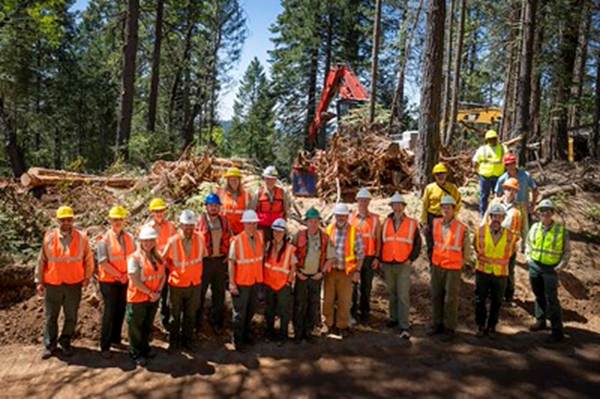
Schultz: What matters most is leadership. Employees need clear expectations, objectives, and direction. The original Forest Service Use Book, written in 1905 under Pinchot’s direction, was a pocket-sized 142-page guide describing a ranger’s job.
Today, we operate under thousands of pages of regulations — what Jack Ward Thomas called “the Gordian Knot.” In Greek mythology, Alexander the Great severed the knot with his sword.
We don’t have a sword, but we do have a moral and public obligation to actively manage our National Forests to the very best of our ability.
Evergreen is supported by readers who value independent, science-based forestry reporting.
(Donate or Subscribe)

Our mission is public education as it relates to all things forestry - so your contributions matter. Your support means

Our mission is public education as it relates to all things forestry - so your contributions matter. Your support means

Our mission is public education as it relates to all things forestry - so your contributions matter. Your support means

In this article you will find Doug's essay on Reinventing the Forest Service. It is an extensive article
Your 100% tax-deductible subscription allows us to continue providing science-based forestry information with the goal of ensuring healthy forests forever.
