
Defining wildfire economics
What the hell is wildfire economics? The answer runs from firefighting aircraft and litigation to salvage logging, sawmills, replanting, and
What the hell is wildfire economics? The answer runs from firefighting aircraft and litigation to salvage logging, sawmills, replanting, and

Fire ecologist Leda Kobziar on living microbes, public health, and why wildfire smoke must become our responsibility. Coughing and struggling
How Wildland Fire Policy Shifted Danger from Firefighters to Everyone Else - and How the Forest Service Lost the Public Along

Handwringers and doomsayers are in full throat over the Trump Administration’s proposal to rescind the 2001 Roadless Area Conservation Rule.
To hear them tell it, road construction and clearcut logging will begin tomorrow across the more than 111 million acres in the nation’s designated Wilderness system.
This isn’t true. There are no plans for road building or logging of any kind inside the nation’s designated Wilderness system.
Interestingly, only 9.1 million acres of Wilderness were designated when President Lyndon Johnson signed the Wilderness Act into law in September 1964. More than 100 million acres have been added to the system over the last 62 years.
Inventoried Roadless Areas and designated Wilderness areas are very different land classifications. The Roadless Rule followed 37 years after President Johnson signed the Wilderness Act.
Bill Clinton signed the Roadless Area Conservation Rule on January 12, 2001 - eight days before George W. Bush was inaugurated. The Clinton Administration’s goal was to severely limit road building and logging in federal forests, principally in the West. Politically, roadless areas became de facto wilderness areas.
It was the last nail in the coffin of timber-based economies in rural western communities. The first nail had been driven 11 years earlier when the U.S. Fish and Wildlife Service added the northern spotted owl to its threatened species list.
The original Roadless Rule encompassed 58.5 million acres of Inventoried Roadless Areas managed by the U.S. Forest Service.
Idaho and Colorado subsequently developed their own state-specific roadless rules. The Forest Service’s current proposal would rescind the national rule governing approximately 44.7 million acres while leaving the Idaho and Colorado rules in place.
Agriculture Secretary Brooke Rollins announced the Administration’s intention to rescind the national rule in June 2025. On August 18, 2026, the Forest Service filed its proposed rule and draft environmental impact statement.
The rescission is not yet final.
It is important to watch the seemingly unrelated bouncing ball rolling through this bare-knuckle political fistfight.
Designated Wilderness areas are managed by four federal agencies: the U.S. Forest Service in the Department of Agriculture and the National Park Service, U.S. Fish and Wildlife Service, and Bureau of Land Management in the Department of the Interior.
Inventoried Roadless Areas are part of the National Forest System and are managed by the Forest Service.
Interior Secretary Doug Burgum is another target of activist opposition. His support for expanded domestic energy and mineral production, streamlined permitting, and greater state authority over grizzly bear management runs counter to much of the environmental establishment’s agenda.
These are complex issues, and we do not assume that every project or policy is environmentally sound simply because Burgum supports it. Our point is narrower: Opposition to Burgum helps explain why activists are so eager to blur the distinction between Forest Service roadless areas and Interior-managed Wilderness.
At Evergreen, we come at this controversy from a completely different perspective.
For 40 years, we were tasked with developing plain-English versions of the science-heavy Indian Forest Management Assessment Team reports funded by Congress.
One of the first things we learned from visiting with Native American tribes was that they detest the phrase “untrammeled by man,” written into the 1964 Wilderness Act by Howard Zahniser, then executive director of The Wilderness Society.
Tribes resent Zahniser’s phrasing because they lived in and managed lands now designated as Wilderness for eons before western settlement began.
Along the Eastern Seaboard between Florida and Virginia, they perfected row-crop farming techniques still in use today. In the arid Southwest, they built extensive irrigation systems centuries before Europeans reached North America.
Native Americans share a deep commitment to protecting the land for those who will follow in their footsteps. Across Indian Country, natural resource decisions are shaped by a responsibility to the next seven generations and by gratitude for the gifts the land provides: food, clothing, medicine, fuel, shelter, and the places and materials essential to ceremony.

This Native American Wisdom is reflected in Earth’s Gifts, an essay co-written by Jim Petersen and Gary Morishima. It first appeared in the Spring 2014 edition of Evergreen, titled Forestry in Indian Country: Solving Forestry’s Rubik’s Cube.
There are 305 forested reservations in the United States. They span 18 million acres. Forty-one tribes own 10,000 or more acres of timberland that form the economic, social, educational, and cultural lifeblood of their communities.
Julia and I are well acquainted with tribal forestry and culture because her father, Wes Rickard, became one of the nation’s most sought-after expert witnesses in a dazzling string of courtroom dramas that won billions of dollars for tribes forced to sue the federal government for treaty violations and forest mismanagement.
Subscribers receive access to Evergreen’s Archives which includes many of our issues over the last 40 years.
Our archives hold a deep record of forestry reporting, history, policy, people, and practice.
Looking for a specific issue or topic?
Let us know, and we will help you find the Evergreen
coverage you need.
Prefer PayPal?
You can set up an ongoing donation, and we will honor it as a subscription with the same benefits.
This brings us to the well-footnoted and illustrated Roadless Rule background report assembled by Travis Joseph, president and CEO of the Portland-based American Forest Resource Council.
The report’s focal point is the direct connection between stand-replacing wildfires and the absence of science-based forest management within roadless areas.
Its findings again remind us that vast portions of the nation’s federal forest estate are dying, dead, or burnt to a crisp.
Nowhere in the West is the consequence of this failure more visible than within Idaho’s 2.366-million-acre Frank Church-River of No Return Wilderness.
Somewhere along the way, a comment reached us from someone familiar with the area who had flown over the Frank Church many times en route to Boise. The description was blunt: Much of what could be seen below was burnt black.
We no longer recall who made the observation, so we cannot attribute it by name. But the description has remained with us because it captures the question at the heart of this debate.
Is this what Americans who love forests - and Wilderness - want to happen within the roadless areas that forest activists claim will be destroyed if they are entered?
Their prediction is that aggressive road building and logging will inevitably follow.
We don’t believe this, and we aren’t advocating for it. But the only way to keep these millions of acres from dying and burning is to develop thinning and prescribed-fire programs that replicate the forest management regimes Nature and Native Americans have used since time immemorial.
This appears to be the direction in which Forest Service Chief Tom Schultz is headed.
We don’t back down when the mission is daunting; we’re in until the fire is out.
We are literally surrounded by proof that restoration forestry works when it is adapted to meet local silvicultural conditions: climate, elevation, aspect, moisture, soil fertility, tree species, and wildfire frequency.
The tragedy is not the proposed Roadless Rule rescission or the direction in which the Forest Service appears to be headed.
The tragedy is our continued refusal to acknowledge the destructive roles that litigation, delayed forest restoration, and subsequent stand-replacing wildfire are playing in America’s forested playgrounds.
National forests and grasslands receive an estimated 164 million recreation visits annually. Virtually all these visits depend, at some point, on existing road networks.
The same is true in our national parks.
Glacier National Park in Northwest Montana recorded 3,136,557 recreation visits in 2025. Almost all these visitors traveled the spectacular Going-to-the-Sun Road in a park bus, private automobile, or one of the restored White Motor Company “Red Jammers.”
It’s a good thing this scenic two-lane road was completed in 1933. Today, it would likely be litigated to death.
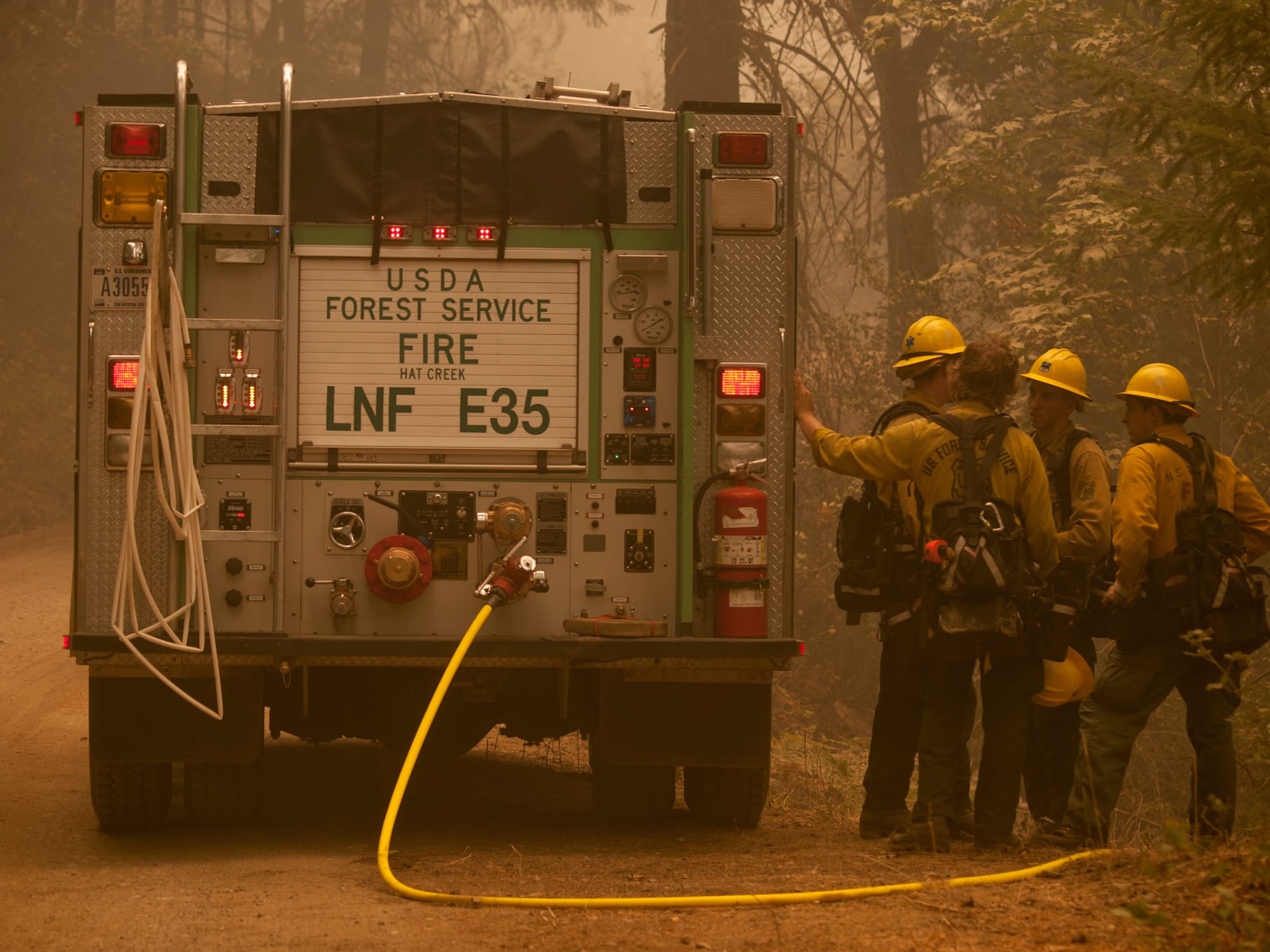
During our seemingly endless fire seasons, the national forest road system that forest activists and their serial litigators detest is used countless times each day by wildland firefighters who risk their lives to protect forests, grasslands, national parks, wildlife habitat, watersheds, homes, and rural communities from environmental and economic devastation.
As we have been documenting, Mike Garrity’s Alliance for the Wild Rockies leads the way in serial litigation designed to prevent the U.S. Forest Service from implementing science-based forest restoration projects that would reduce the environmental and economic threats posed by insect and disease infestations and inevitable wildfire.
Garrity is our focus because he openly touts the numbers behind his litigation model as evidence of success - lawsuits filed, forest projects stopped, and taxpayer-funded attorney fees collected. He has turned obstructing the management of public lands into a source of revenue and is remarkably proud of it.
But Garrity does not operate alone. He is part of a larger network of organizations, financial supporters, and serial litigants that frequently work together.
Some of the organizations supporting this litigation raise money by selling merchandise, memberships, and an idealized vision of untouched forests to urban recreationists.
Meanwhile, rural communities and the forests they steward pay the price for obstruction that disregards every consequence.
Next week, we follow the money - and examine what the deliberately misleading accounting of Garrity and his allies conceals.
Coming next week: Mike Garrity Can’t Count, Part Two.
We Want to Hear From You!
Please leave a comment below. Share your experience, tell us what we have missed, and let other Evergreen readers know what is happening in your National Forests and rural communities.
This conversation is too important to leave to litigants, lawyers, and politicians.
To comment - Sign up and log in - you don't have to subscribe, but we would sure appreciate it if you did. 💚
Your 100% tax-deductible subscription allows us to continue providing science-based forestry information with the goal of ensuring healthy forests forever.