
Keep Our Forests Green!
Rob DeHarpport makes the case for a clear, honest national campaign showing Americans what catastrophic wildfire is costing our forests,
Rob DeHarpport makes the case for a clear, honest national campaign showing Americans what catastrophic wildfire is costing our forests,

What the hell is wildfire economics? The answer runs from firefighting aircraft and litigation to salvage logging, sawmills, replanting, and
Fire ecologist Leda Kobziar on living microbes, public health, and why wildfire smoke must become our responsibility. Coughing and struggling

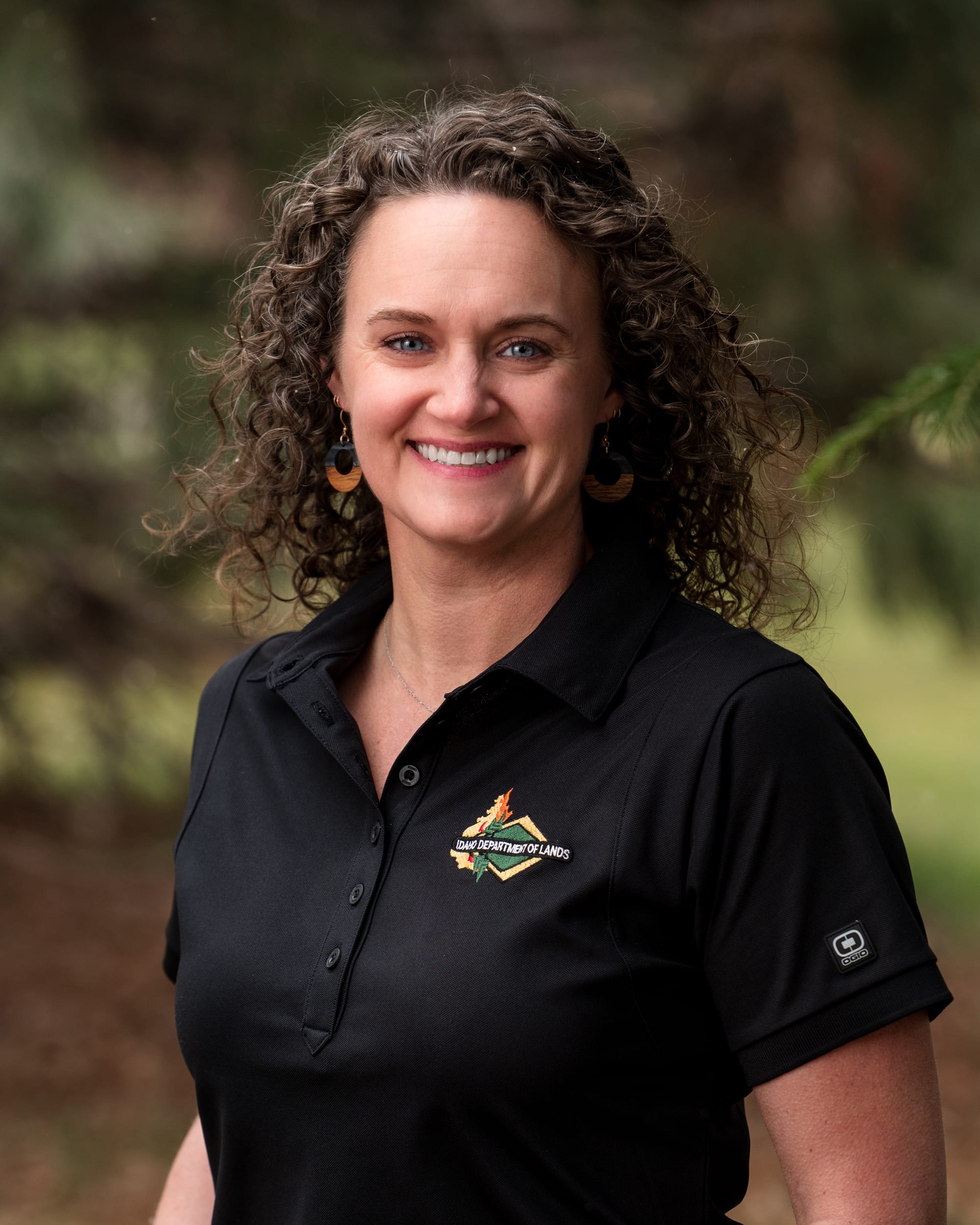
I would never say this about another woman were it not for the fact that women say it all the time about other women they admire.
Idaho State Forester Julia Lauch is a badass.
There, I said it, and, frankly, I meant it.
Julia is one of the toughest young women I’ve ever met. The Idaho Department of Lands is very fortunate to have her.
Here are just a few reasons why I think she’s a badass:
After you read our Q&A interview with Julia, I suspect you’ll draw the same conclusion about her. She is definitely a badass in the best sense of the term.
Evergreen: Tell us a bit about you: hometown, family, education, and career track.
Lauch: I grew up in western Oregon. By a friend’s suggestion, I started working as a wildland firefighter when I graduated from high school. I was curious about the full-time staff employed by the Oregon Department of Forestry (ODF), where I first worked, which led to my pursuit of a bachelor’s degree in Forest Management from Oregon State University (Go Beavers!). At the time, I thought it was my discovery and my idea. However, my mom’s side of the family were loggers, and my dad’s father was a forester, so, as it turns out, care for the natural environment is probably in my blood, by nature or nurture, or both.
I worked for ODF for 11 years, including my seasonal time, in a variety of fire, forestry, and management positions. In 2011, I moved to Boise and began working for the Idaho Department of Lands (IDL) as an Assistant Fire Warden, which had quite a bit less responsibility than where I was in Oregon.
I’ve held a number of positions with IDL since then. I helped establish Rangeland Fire Protection Associations in Idaho; spent a couple of years as the Regional Operations Chief, South; and was the Deputy Fire Chief, Operations, prior to the position I am in now. I should also mention that I took 2.5 years away from the workforce completely, other than minimally to maintain my Fireline qualifications, after my second child was born. I wanted to spend that time with my kids while they were tiny and couldn’t find the balance that felt right while I was working.
Evergreen: You were a wildland firefighter. How long?
Lauch: I still am. I’ve had a red card for more than 25 years. While I cannot commit to an incident management team in this position, I still fill gaps here and there for a few days at a time if needed. I think it’s important to stay connected to the realities of those jobs to ensure appropriate priorities and relevancy in my day job.
Evergreen: It’s tough duty. What prompted your interest?
Lauch: I was athletic growing up and enjoyed being outdoors, as well as the physical labor. But honestly, I had no idea what I was getting myself into that first season or two.
Evergreen: Were you a crew boss?
Lauch: I was a firefighter, engine boss, crew boss, and heavy equipment boss, and then moved into higher-level positions that supervise multiple resources on the fire line, as well as incident commander. These days, it’s my Incident Commander Type 3 qualification that I utilize the most.
Evergreen: Did you ever say to yourself, “I could get killed doing this?”
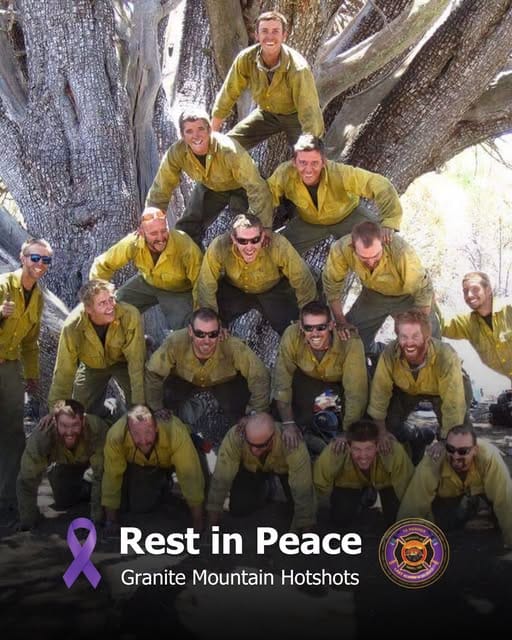
Lauch: Yes. I know that some of my family had those thoughts as well. Anybody who fights fire should have those thoughts and consider the risks. If you don’t, you’re likely to get complacent at some point, and that will affect safety.
Evergreen: Because you were a wildland firefighter, I am going to hazard a guess that you have a Type A personality. Am I correct?
Lauch: I believe you to be correct. I can be competitive and am highly self-driven. This is why I feel so fortunate to have found a career field in which I find the work valuable and rewarding.
Evergreen: Now you are the Idaho State Forester. What prompted you to apply?
Lauch: Having spent my career in state forestry agencies, I know that the State Forester position is not only a pinnacle, sought-after position, but it comes with responsibility and influence to truly make a difference. I have always thought that I’d like to be a State Forester someday. When the opportunity presented itself in 2024, I decided to throw my name in the hat.
Evergreen: What are your responsibilities, and how many people work for you?
Lauch: I am responsible for the Division of Forestry and Fire within IDL, which includes Fire Management, Forestry Assistance, Shared Stewardship, and Good Neighbor Authority. This is the administrative side of those programs: budget, policy, procedures, and coordination with partners within and outside of Idaho. I have also been delegated the title and responsibilities of the State Forester by the Director. As such, it is my charge to ensure that the duties and responsibilities set forth in the Idaho Forestry Act are properly carried out.
Evergreen: We assume your responsibilities are fiduciary. Correct?
Lauch: Correct. The Bureau Chiefs within IDL are primarily responsible and accountable for managing their budget units. The Division of Forestry and Fire contains three.
Evergreen: Do your responsibilities include testifying before the Idaho Legislature?
Lauch: Yes, when the Director would like me to be the one to testify. I testified in one committee hearing during the 2026 legislative session and sat in several others as backup in case the Director received a question that he wanted to defer to me.
Evergreen: What is IDL’s chain of command, and to whom do you report?
Lauch: IDL has a Director and two Deputy Directors. I report to the Deputy Director, Resource Management, who supervises all four Division Administrators.
Evergreen: What are your best legislative and administrative tools for getting work done on the ground at the state and federal levels?
Lauch: Well, Jim, I’m still figuring this out by asking questions and observing. I lean on the IDL leadership, as well as leadership and policy staff of the Council of Western State Foresters and the National Association of State Foresters. Partnerships with other entities and agencies are also incredibly important to me.
Evergreen: Everything we read, including National Interagency Wildfire Center reports, leaves no doubt that the West is headed into one of the worst wildfire seasons ever. How are you preparing for this possibility?
Lauch: We are ready. We are staffed at better levels than the last few years, we have increased our number of detection cameras, and our relationships with both federal and local partners have never been better.
Evergreen: You lead a double life of sorts because your other major responsibilities include managing the Idaho Trust Lands timber sale program and partnering with the Forest Service in firefighting and forest restoration work. Do I have this about right?
Lauch: Actually, the Trust Lands Division is managed by a different Division Administrator, Jim Elbin.
Evergreen: Describe a typical workday to us, or is there such a thing?
Lauch: The only thing that is consistent is that I have a lot of meetings and cannot ever keep on top of the emails that come in. The odd day is the day that I get to visit with staff in an office other than my primary office in Boise or when I participate in a field tour. I welcome those days, and they don’t come often enough.
Evergreen: During fire season, are you on call 24/7?
Lauch: Not in the same way that I used to be, as I don’t get involved unless criteria are reached, prompting notification to me. However, unless I’m in the middle of summer adventures with my kids and don’t have cell service, I’ll answer my phone for IDL staff and partners at any time during fire and field season.
Evergreen: We’ve been up to our eyeballs in the West’s forest health and wildfire mess for almost 40 years. We’ve concluded that one of the most important aspects of this is early detection and rapid response. As a former wildland firefighter and now State Forester, how are you addressing these challenges?
Lauch: Great question, Jim. I agree wholeheartedly with your conclusion. We continue to increase the number of mountaintop detection cameras managed by IDL, as well as participate in the Interoperability Committee generated through the 2024 Governor’s Wildfire Report Recommendations. Through that committee, we share camera feeds and data with partners, including other state agencies, federal agencies, and utility companies, to expand our detection capabilities. Those detection cameras have proven to be the most effective early detection tool for our protection that we have found thus far.
Rapid response means that we must have a diverse set of resources in strategic locations, ready to respond quickly. Our engines and hand crews are always ready during their assigned shifts, with identified on-call resources every night as conditions warrant. We adjust those shifts as fire danger and wildfire threat increase. The start dates of our exclusive-use aircraft contracts are staggered. This allows us to have aviation assets available when we need them, from the beginning to the end of the timeframe that we need coverage. In addition, our aviation assets move around the state to the areas of highest need or risk.
Evergreen: Over the years, our rapid-response research has led us to the conclusion that amphibious Single Engine Air Tankers [SEATs] are perhaps the best asset you could have in your hip pocket: first, because they can scoop water from remote lakes and rivers, and second, because they can land almost anywhere, including dirt roads, to refuel and get back in the air. Do you see amphibious SEATs the same way we do, or is there something better out there?
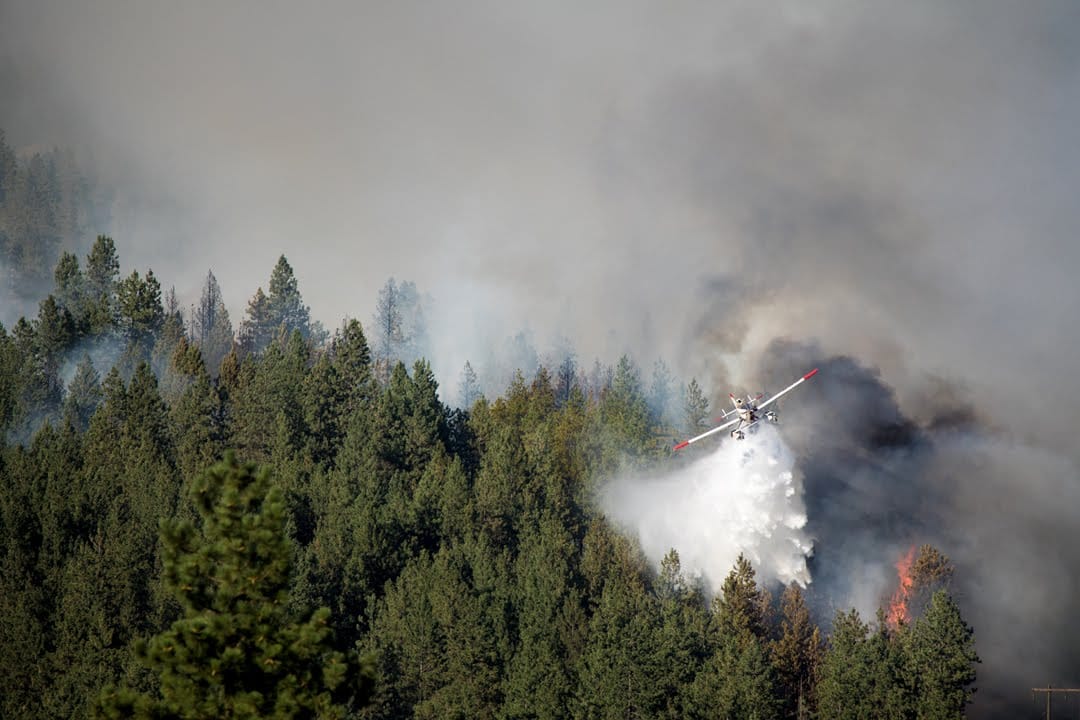
Lauch: Single Engine Air Tankers (SEATs) and Single Engine Water Scoopers (SEWS), which is new terminology in the last few years, have the same airframe as their foundation. Both are the smallest and most nimble of the retardant- and water-dropping fleet. SEATs can be loaded with retardant or water but cannot scoop.
SEWS are aircraft that can scoop in water bodies. Our last contracts for these assets expired at the end of last season. It gave us the opportunity to reassess for the next contract cycle that we are in now. We have moved from having four SEATs and two SEWS to two SEATs and four SEWS, based on usage and effectiveness. Based on that, it is safe to say I agree with you that SEWS are an incredibly effective resource for rapid response on our protection in Idaho.
Evergreen: Are you driven to succeed, and how do you measure your own success?
Lauch: I am driven in that I like to know and see that my efforts pay off in a way that I find personally valuable, though I find it challenging to articulate how I measure my own success. Is the work I spend time and energy on making a positive difference for the people on the ground carrying out the mission of the Department? Am I able to stop or slow a negative impact before it hits those same people? Are we collectively in Idaho making a measurable difference regarding declining forest health and the increasing risk of catastrophic wildfire? Do the people who report to me feel heard and supported? Do our external partners understand our missions and why we do what we do? Does the public have an increased understanding of the challenges related to forestry and wildland fire in Idaho, as well as how they can also make a positive impact? Success can also be found daily, in small ways, if you’re looking.
Evergreen: Any higher ambitions related to your work?
Lauch: I still have quite a bit of work, and hopefully time, in me for that answer to be anything other than yes. However, I’ve not exactly had a career plan, but rather, I stay open to opportunities where I feel like I can make a difference, such as the position I am in now.
Evergreen: Any final thoughts? Have I missed anything you’d like to discuss?
Lauch: Thank you, Jim, for your dedication and care for the natural environment around us and the work to which so many of us have dedicated our working lives!
Evergreen: Thanks for your time and talents, Julia. We wish you well.
Your 100% tax-deductible subscription allows us to continue providing science-based forestry information with the goal of ensuring healthy forests forever.